
Wine is not only a drink. For some people, it becomes a way to connect with place, people, food, memory, art, and even parts of themselves they did not expect.
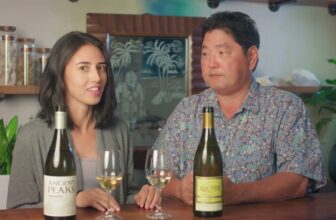
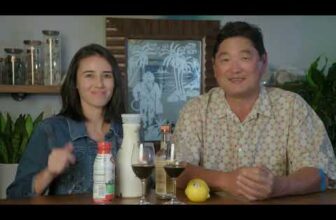
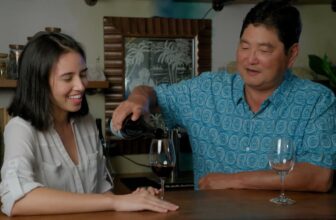
In this episode of Chuck Furuya Uncorked, Chuck and Kale sit down with Jan “Jam” Aquino, a professional photographer, musician, and deeply passionate wine lover. Jan is not introduced as a sommelier or restaurant professional. He comes from another world: photography, music, journalism, sharks, family meals, travel, and curiosity.
That is what makes the conversation so valuable.
This episode is about wine, but it is also about why certain experiences stay with us. A shark appearing silently out of blue water. A musician bending a note. A winemaker sharing a bottle from a family cellar. A pizza and Dolcetto pairing that suddenly makes wine make sense.
The result is one of the most personal episodes in the series.
What This Episode Is About
Chuck introduces Jan as a professional photographer for the Honolulu Star-Advertiser, a musician, and someone with a real passion for wine. He also mentions Jan’s work photographing great white sharks in Guadalupe, Mexico — a passion project that reveals a lot about the way Jan sees the world.
Jan explains that wine became one of his passions almost by accident. Like photography and music, it began with curiosity and then turned into a rabbit hole. Once he started going deeper, he never really came back out.
That phrase captures the spirit of the episode.
Wine is not presented as a hobby where you memorize labels and show off facts. It is something that pulls you deeper when it connects with the things you already care about: craft, beauty, place, food, people, and emotion.
From New World Wine to Food Pairing
Jan started with New World wines and a simple understanding of pairing: red wine with meat, white wine with fish or chicken.
That changed around 2006, when he and his wife Erica went to Vino during Restaurant Week. They ordered food and wine without knowing that the evening would become an aha moment.
The pairing he remembers clearly was Palmina Dolcetto with pizza.
It was not a huge, rich, opulent red. It was not the kind of wine he expected to be impressive. What made it memorable was how well it worked with the food. The acidity, temperature, and freshness made the wine more enjoyable and made the pizza better.
That was the beginning of a different kind of wine journey.
Instead of thinking only about grape names or red-versus-white rules, Jan began understanding wine as something that can become harmonious with food.
Wine as a Rabbit Hole
After that first food-and-wine aha moment, Jan kept going deeper.
He would visit Chuck at the restaurant or at home, sometimes before or after work, to ask about grapes, vineyards, producers, vintages, and regions. He considered studying formally and even thought about taking an introductory exam when his work in the news industry felt uncertain.
But the deeper point is that Jan’s interest was driven by genuine curiosity.
He was not studying wine just to pass a test. He wanted to understand why a wine moved him, why a place mattered, why a producer’s story changed the way the bottle felt, and why certain wines made food more alive.
That is a more powerful kind of learning.
Great White Sharks and Sense of Place
Before going further into wine, Chuck asks Jan about his shark tattoo and his trip to Guadalupe to photograph great white sharks.
Jan explains that he has loved sharks since childhood. He still has a rubber shark from when he was young, and sharks have always fascinated him. In Guadalupe, being in the water with great whites was not about fear or aggression. It was humbling, quiet, and almost spiritual.
Underwater, he could hear only his breathing and the bubbles from the regulator. Then the shark appeared out of the blue, moving silently and gracefully. Its eye followed him as it passed. It was not trying to attack. It was simply present.
Chuck connects this to Jan’s photography. The pictures are not about terror or teeth. They are about grace, power, beauty, and peacefulness.
Jan then connects the experience back to wine.
When a wine truly connects with you, it can create a similar feeling. It goes beyond what is in the glass. It becomes a connection with place, life, memory, and something larger than the surface.
Visiting Vineyards and Touching the Soil
Jan talks about traveling to Europe and visiting some of his favorite vineyards in southern France and Italy.
One of the first things he did when arriving at a vineyard was touch the ground. He put his hands into the soil, closed his eyes, listened to the birds, and tried to take in the place.
That may sound unusual to some people, but it makes sense in the context of the episode.
If wine is shaped by place, then walking the land matters. Seeing the vines matters. Meeting the people matters. Smelling the air, feeling the soil, and standing where the grapes grow can deepen the way a wine is remembered.
Wine becomes less abstract.
It becomes physical.
It has a landscape.
Fantino and Soulful Nebbiolo
One of the producers Jan visited was Fantino in Piemonte.
He explains that Fantino appealed to him because of the value and honesty of the wines. In a region where some wines can become very expensive, Fantino’s wines felt well made, old-school, deeply grown, and connected to family work.
The winery is run by brothers who have been making wine for decades, carrying on a family tradition. Jan describes the wines as coming from heart and soul.
That idea becomes central to the episode.
When tasting Nebbiolo, especially a wine like Rosso dei Dardi, a beginner might notice acidity, tannin, sourness, darkness, or savory grip before they understand its deeper appeal. Jan explains that the attraction is in the search. You smell and taste the wine, and within that search you find its soulfulness.
For him, Fantino works beautifully with pasta, pizza, salami, and simple Italian food. The wine is not only about structure. It is about how the wine, food, people, and story come together.
What Does “Soulful Wine” Mean?
Kale asks Jan what he means when he calls a wine soulful.
Jan explains it through music.
When a guitar player bends a note, when you hear fingers slide on strings, or even when a small imperfection becomes part of the feeling, the performance can move you. It does not have to be technically perfect to have soul.
Wine can be the same.
A soulful wine is not always polished. It may have rusticity. It may have funk. It may even have something that technically counts as a flaw. But if it reflects the heart of the person making it and moves the drinker, it can have a deeper kind of beauty.
Chuck adds a story from Santorini, where he tasted a flawed wine made naturally by a woman working with old vines, concrete, family tradition, jams, tomatoes, and inherited methods. The wine had oxidation, volatile acidity, and other technical issues. But when he looked into her eyes and tasted what she had made, it moved him to tears.
That is the kind of soulfulness this episode is talking about.
It is not perfection.
It is transmission.
Small Producers and Intimacy
Jan agrees that many of his favorite wines come from small families who have worked their land for generations.
When he drinks those wines in Hawaii, he feels the intimacy of that work traveling across the world. A small producer in Europe may never imagine that a bottle could end up in Hawaii and move someone so deeply.
That is one of the most beautiful ideas in the episode.
Wine can carry a human story across distance.
The vineyard may be half a world away, but the bottle can still bring the land, the family, and the labor to the table.
That is why Jan and his friends brought small gifts from Hawaii when visiting producers in Europe. It was a gesture of appreciation, a way of saying that the work mattered and had reached them.
Scherrer Zinfandel: A New World Aha Moment
When asked about a New World aha moment, Jan chooses Fred Scherrer’s Zinfandel.
Before tasting Scherrer, his idea of California Zinfandel was shaped by bigger, riper, more tannic, higher-alcohol wines. Many examples felt jammy, fruit-forward, robust, or too rich.
Scherrer changed that.
At a dinner in 2012, Jan tasted Scherrer Zinfandel and was surprised by its elegance. It had enough fruit, but not too much. It had earth, balance, and soul. It connected with the food and felt well made without feeling overly polished.
In the episode, they taste a 2016 Scherrer Zinfandel Old and Mature Vines.
Chuck explains that the wine carries 15% alcohol, but it does not taste hot because the intensity and balance of the wine absorb the alcohol. That becomes a useful tasting lesson: alcohol percentage alone does not tell the whole story.
A wine can be high in alcohol and still feel balanced if the fruit, texture, acidity, and concentration are in harmony.
Zinfandel Does Not Have to Be Overdone
The Scherrer discussion also shows that grape stereotypes can be limiting.
Zinfandel is often associated with big, jammy, high-alcohol California reds. But this bottle shows another possibility: civilized, elegant, refined, seamless, textured, and stylish without being overdone.
Chuck explains that Zinfandel can be challenging because it ripens unevenly. On the same cluster, there may be raisins and greener berries at the same time. Deciding when to pick becomes difficult, and that can lead to higher alcohol and glycerin.
Fred Scherrer’s achievement is in making Zinfandel feel balanced and elegant despite those challenges.
That is why the wine moves Jan. It does not fit the stereotype.
It expands the idea of what Zinfandel can be.
Wine, Music, and Personal Connection
Fred Scherrer is also a musician, and Chuck notes that Jan and Fred connect through music as well as wine.
That matters because this episode keeps returning to the same idea: wine is not isolated from the rest of life. Jan’s passions — photography, sharks, music, wine, food, travel — are all connected by creativity, craft, and emotional response.
When he shares a wine with someone, or plays music with someone, or remembers a bottle opened with friends, the experience becomes personal.
Wine attaches itself to memory.
Jan compares remembering wines to remembering sports stats. Once a bottle connects with you, the details stick because passion gives them meaning.
That is a useful lesson for anyone trying to learn wine.
Facts are easier to remember when they are tied to real experience.
Domaine Tempier and the Beauty of Funk
The conversation also turns to Domaine Tempier in Bandol.
Jan remembers first tasting Tempier at Vino. At first, the wine smelled funky: leather, barn, hay, and something deeply earthy. Chuck compares it to the intense smell of real French andouille sausage.
That kind of wine can take time to appreciate.
It may not be immediately fruity or pretty. It can be wild, savory, and unfamiliar. But once you understand it, it becomes mesmerizing. You keep smelling it. You keep returning to the glass. It becomes intriguing rather than off-putting.
This is another recurring theme in the series:
A wine does not need to smell like simple fruit to be beautiful.
Some wines reveal themselves slowly.
Chevalier Chardonnay: Old World Chardonnay Without the Butter
For an Old World aha moment, Jan chooses Chevalier Chardonnay from the Loire Valley.
He explains that when many people hear Chardonnay, they think of New World examples with vanilla, oak, butter, smoke, caramel, richness, and roundness.
This wine was different.
It was high-acid, lean, elegant, mineral, and almost like lemon on fish. It did not behave like the Chardonnay he expected. It showed him that the same grape can taste completely different depending on where it grows and how it is made.
Chuck explains that the wine comes from the Loire Valley, likely under a broader Val de Loire designation, and that the area’s cool climate and proximity to the Atlantic contribute to its lightness, airiness, minerality, and refreshing character.
Jan says it works beautifully on a hot day, well chilled, and with food — even something as casual as fried chicken.
That is a great example of the episode’s practical side.
Wine can be soulful and thoughtful, but it can also be delicious with Popeyes.
Temperature Changes Everything
Temperature comes up repeatedly in the episode.
Jan’s early experience with Palmina Dolcetto was partly memorable because the wine was served slightly cool. In Hawaii, “room temperature” can mean 80 degrees, which is often far too warm for many wines.
A slightly chilled red can become more refreshing, more gulpable, and more food-friendly.
Later, they discuss ice, dilution, wine on the rocks, and how bigger or smaller sips can change the way wine pairs with food. Chuck explains that the size of the ice, the speed of melting, and how long the wine sits with ice all matter.
This connects wine back to cocktails. Just like a great Daiquiri depends on the right balance, shake, glass, and ice, wine enjoyment can depend on serving temperature, sip size, and context.
The lesson is simple:
Do not treat wine temperature as an afterthought.
It can change the whole experience.
Wine During Hard Times
Jan asks an important question near the end: how do people continue enjoying wine when prices rise, tariffs increase costs, and people have less money?
Chuck’s answer is not to simply buy worse wine.
Instead, he suggests thinking differently. Focus more on wine and food. Change the way you serve the wine. Use smaller or larger sips. Try wine over ice in the right context. Add a little water if it makes the wine more enjoyable with food. Stretch the experience rather than chasing cheaper, less satisfying bottles.
The idea is not to be precious.
The idea is to keep pleasure alive.
Wine does not have to be consumed in only one formal way. If changing temperature, dilution, or serving style makes the wine work better for the moment, that can be valid.
Cooked Wine and Corked Wine
Jan also asks how to tell if a wine is cooked or corked.
Chuck explains that cooked wine is often learned through comparison. If you know what a wine should taste like, and another bottle tastes dull, tired, or lifeless, heat damage may be part of the issue. He gives the example of tasting the same wine from different stores where one bottle was fresh and alive while the other was dull.
Corked wine is different. Chuck describes it as often smelling like wet newspaper, wet cardboard, or mold. He also notes that people have different levels of sensitivity to cork taint.
The broader lesson is that wine condition matters.
Storage, shipping, heat, temperature control, and closure all affect what ends up in the glass. A wine that tasted alive in Europe may taste very different after poor shipping or storage.
For wine lovers in warm climates, this matters even more.
Wine Is for Everyone
Near the end, Jan says being on the podcast shows that anyone from any walk of life can enjoy wine.
You do not have to be in the service industry.
You do not have to be a chef.
You do not have to know how to cook.
You simply need curiosity, enjoyment, food, people, and passion.
That is the heart of the episode.
Wine is not only for professionals. It is for photographers, musicians, families, home cooks, friends, and anyone willing to pay attention.
Filipino Food and Riesling
Chuck asks Jan about a dish he brought: calabasa, a Filipino-style dish with sautéed pumpkin, long beans, okra, onions, patis, white rice, and crispy pork crackling.
When asked what wine he might pair with it, Jan mentions Riesling — specifically the kind of versatile Riesling that appears throughout the series.
That makes sense. The dish has vegetables, salt, savory depth, possibly umami, and pork richness. Riesling can handle many of those elements because it can bring acidity, freshness, fruit, and flexibility.
This small moment is one of the best examples of what the series does well.
It brings wine out of the formal restaurant and back to real home cooking.
Final Takeaway
This episode is not only about specific bottles. It is about why wine matters to people who truly connect with it.
Jan Aquino approaches wine the way he approaches photography, music, sharks, and travel: with curiosity, emotion, and respect for craft. He is drawn to wines that have soul, wines made by real people, wines that connect with food, and wines that become part of memory.
The episode gives several practical wine lessons: serve some reds cooler, do not judge Zinfandel only by its stereotype, remember that Chardonnay can be lean and mineral, learn how cooked and corked wines show up, and think about wine in relation to food rather than only as a trophy object.
But the deeper lesson is simpler.
Wine becomes meaningful when it connects.
To food.
To people.
To memory.
To land.
To music.
To the hands that made it.
That kind of enjoyment does not require a title or certification. It only requires attention, openness, and the willingness to follow the rabbit hole.
FAQ
Who is Jan “Jam” Aquino?
Jan “Jam” Aquino is a professional photographer, musician, and passionate wine lover featured in this episode of Chuck Furuya Uncorked.
What is the main idea of this episode?
The episode explores how wine connects with passion, photography, music, food, travel, memory, soulful producers, and everyday enjoyment.
What was Jan’s first wine-and-food aha moment?
One of his first major aha moments was Palmina Dolcetto paired with pizza at Vino. It showed him how wine and food could work together harmoniously.
Why does Jan talk about great white sharks?
Jan photographed great white sharks in Guadalupe, Mexico. The experience becomes a metaphor for connection, beauty, nature, and the emotional side of wine.
What does “soulful wine” mean?
A soulful wine is one that feels connected to the heart, land, and people behind it. It does not have to be technically perfect, but it should move you.
Why does Jan like Fantino wines?
He likes Fantino because the wines feel old-school, well grown, family-driven, soulful, and excellent with foods such as pasta, pizza, and salami.
What Zinfandel is discussed in the episode?
The episode discusses Scherrer Zinfandel, including a 2016 Old and Mature Vines bottling.
Why is Scherrer Zinfandel important to Jan?
It showed him that Zinfandel could be elegant, balanced, earthy, soulful, and food-friendly rather than only big, jammy, and high in alcohol.
Can a 15% alcohol wine still taste balanced?
Yes. In the episode, Chuck explains that intensity, texture, and balance can make a higher-alcohol wine feel integrated rather than hot.
What Chardonnay is discussed in the episode?
Jan discusses Chevalier Chardonnay from the Loire Valley, a lean, high-acid, mineral style that changed his expectations of Chardonnay.
Why was Chevalier Chardonnay surprising?
It did not taste like buttery, oaky New World Chardonnay. It was lighter, leaner, more mineral, and more like a squeeze of lemon with food.
Why does wine temperature matter?
Temperature can change how refreshing, balanced, alcoholic, or food-friendly a wine feels. In warm places like Hawaii, many wines benefit from being served slightly cooler.
What is cooked wine?
Cooked wine is wine damaged by heat or poor storage. It may taste dull, tired, or lifeless compared with a fresh bottle.
What is corked wine?
Corked wine often smells like wet cardboard, wet newspaper, or mold. Sensitivity to cork taint varies from person to person.
What is the biggest lesson from this episode?
The biggest lesson is that wine is for anyone with curiosity and passion. You do not need to be a professional to find deep enjoyment in wine, food, people, and place.



What a fascinating perspective! How do you think the experiences with wine differ between those who visit vineyards versus those who drink it at home? Do you think this connection to place really enhances the taste?
That's a great question! I feel like visiting a vineyard adds a layer of appreciation. You get to see where the wine comes from, which makes it feel more special.
I loved Jan's connection between wine and his shark photography! It reminds me of my own experiences diving with sharks. The beauty and grace of those creatures is similar to how a good wine can evoke emotion. I’ve had a wine that transported me to a special memory just like those dives do!
I can relate! I once had a glass of Chardonnay while watching the sunset on the beach, and it took me right back to my childhood. Wine really is more than just a drink.
When Jan talks about 'soulful wine,' does that mean it has to have some flaws to be considered good?
From what I gathered, it seems that what makes a wine soulful is how it resonates with you. A little rusticity can add character!
I’m not sure I buy into the idea that wine needs to come from small producers to be good. Isn’t there great wine made by larger brands too?
I see your point, but I think the personal touch of small producers often brings something unique. It’s about the story behind the bottle!
Pairing wine with food really makes a difference! I've tried a simple pasta dish with a Nebbiolo, and it was a game-changer for me.
How do the wines Jan mentions compare to others in the same region? Are there specific characteristics that set them apart?
Definitely! The terroir and the winemaking methods are crucial. Many wines can taste very different based on those factors, even from the same area.