
Great hospitality is not only about a drink.
It is the greeting at the door. It is the way a glass is placed. It is the ice. It is the reservation system. It is the last goodbye as someone leaves. It is whether the guest feels lucky to be there, not intimidated by being there.
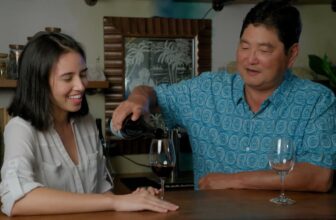
In this episode of Chuck Furuya Uncorked, Chuck and Kale sit down with Justin Park, the award-winning bartender behind Bar Leather Apron in downtown Honolulu. Justin is known for cocktails, technique, competitions, Japanese-inspired precision, and one of Hawaii’s most carefully considered bar experiences.
But the conversation is not only about cocktails.
It is about work ethic, service, small details, Hawaii pride, the difference between volume and craft, and why the best beverage experiences — whether wine or cocktails — come down to balance, heart, technique, and atmosphere.
The episode also moves into wine, with two different expressions of Syrah: one from Fred Scherrer in California and one from Lionel Faury in the Northern Rhône. That tasting becomes a useful bridge between cocktail craft and wine craft.
What This Episode Is About
Chuck introduces Justin as one of Hawaii’s top cocktail professionals and one of the people who helped raise the level of modern mixology in Honolulu.
The episode begins with Justin’s personal history. He grew up around Chuck’s extended family, spent time in the same house as a kid, and built a reputation early for being hardworking. One story stands out: when Cheryl hired Justin and a few others to help clean the backyard, Justin kept working while the others took breaks. Cheryl noticed that drive immediately.
That story matters because the rest of the episode keeps returning to the same idea.
The best professionals do not suddenly become detailed, disciplined, and hospitality-driven at the top. Those traits show up early. Then craft gives them a direction.
From Restaurant Work to Bar Ownership
Justin’s first restaurant job was at Buca di Beppo, where he started without much experience. He quickly discovered that he loved the restaurant industry.
What attracted him was not only the food or drinks. It was the ability to make a living by connecting with people, talking story, learning the menu, and helping guests enjoy themselves.
Later, he became involved with a sports bar project called Richter’s. That experience taught him the reality of ownership.
When you work in a restaurant and the toilet breaks, you tell a manager.
When you own the bar and the toilet breaks, you fix the toilet.
That distinction became part of his foundation. Ownership is not only glamour, menus, and ideas. It is labor, responsibility, details, and always being on the clock.
Hospitality Starts With How People Feel
Justin explains that even in a sports bar, hospitality matters.
The bottles behind the bar may be the same as the bar across the street. The happy hour might be similar. The drinks might not be wildly different. So what makes people come back?
How they feel.
A familiar face creates comfort. Remembering someone’s drink, making them feel seen, and giving them a place to return to can matter more than the cocktail list itself.
That is one of the strongest ideas in the episode.
Hospitality is not reserved for fine dining or luxury cocktail lounges. It exists anywhere people are made to feel welcome.
Bar 35, Manifest, and the Shift Toward Cocktails
After Richter’s, Justin worked at Bar 35 in Chinatown. At first, he was not deeply involved in creating cocktails, but he noticed what people ordered. Lychee martinis, Cosmos, and drinks that required actual building caught his attention.
He did not hate making them. He found them interesting.
Then came Manifest, where he began thinking more seriously about spirits. Gin was one of his first deep dives. He started bringing in different gins, replacing more generic bottles with more distinctive options, and trying to understand what made each spirit different.
From there, spirits led naturally into classic cocktails.
Manifest became a place where people could come to a nightlife environment but still order serious drinks. Justin remembers guests coming in, asking for a cocktail menu, and showing real interest. That was his aha moment.
It was not one specific cocktail.
It was the moment when guests started showing up because they wanted what the bar was doing.
Competitions as a Way to Bring People In
Justin also talks about cocktail competitions.
At first, competitions were a way to get attention for the bar. If he did well and his name appeared in print or online, people might come in and ask for the drink they had read about.
That gave him a chance to go beyond the competition cocktail and show the broader program.
Eventually, competitions led him to national and international stages, including representing the United States. For Justin, that carried real responsibility. He was not only representing himself. He was representing Hawaii, his family, and the local bar community.
That matters because Hawaii often sits outside the major mainland markets. People may not expect Hawaii bartenders or sommeliers to compete at the highest level, but the episode makes clear that Hawaii has a long history of serious hospitality, wine, food, and bar talent.
Hawaii Has Always Had Game
Chuck uses Justin’s story to talk about Hawaii’s larger hospitality history.
He mentions local professionals who broke barriers in restaurants and wine service, and he points out that Hawaii has long produced people with serious skill. In the early days of advanced sommelier exams, Hawaii had a surprisingly strong presence.
The same idea applies to bartending.
Justin, Dave Newman, Chandra, Christian Self, and others are part of a generation that helped move Hawaii cocktail culture forward. It is not only one bartender doing something interesting. It is a broader movement.
That movement is built on skill, pride, sharing, and the desire to show that Hawaii belongs in the conversation.
Bar Leather Apron as a Beverage Counter
One of the most important parts of the episode is the discussion of Bar Leather Apron.
Chuck compares the experience to sitting at a chef’s counter. In fine dining, people understand the idea of reserving a seat to watch a chef create something special. Justin applied that kind of thinking to beverages.
At Bar Leather Apron, many guests reserve seats ahead of time. That was unusual for a bar, especially at first. Some people expected to walk in and sit wherever they wanted. If told that a seat was reserved, they sometimes interpreted it as pretentious.
But Justin’s point was not exclusion.
He wanted to create a different kind of experience.
A controlled environment allows the team to focus on the guest, the drink, the pacing, the glassware, the ice, the menu, the service, and the atmosphere. It turns the bar into something closer to a tasting counter.
That is a major shift in how cocktails can be presented.
Craft vs Volume
Justin and Chuck also talk about the tension between craft and volume.
A larger bar can serve more people, but something changes when the scale grows. More seats mean more variables. More variables make it harder to maintain the same level of detail.
That does not mean bigger is always worse. It means every business has to decide what it wants to be.
Bar Leather Apron is not built around maximum volume. It is built around a specific experience.
That choice affects everything: reservations, staffing, pacing, seating, ice, glassware, prep, and how the team communicates during service.
Japanese Precision and the Power of Detail
A large part of Justin’s approach was influenced by Japanese bartending.
While preparing for an international cocktail competition, he found a video from the Nippon Bartenders Association showing a bartender making a cocktail with extreme precision. The movements were quiet, controlled, purposeful, and beautiful.
Justin watched that video over and over, mimicking the movements.
Later, at the competition in Cape Town, he realized the bartender from the video was standing in front of him. That moment eventually led to a connection and trips to Japan.
Japan changed how Justin thought about service and presentation.
It was not only the taste of the drinks. It was the way objects were handled, gifts were wrapped, customers were thanked, and every movement seemed intentional.
Even buying glassware became a lesson. A shopkeeper followed Justin and his wife to the elevator, bowing and thanking them as they left. That kind of genuine gratitude made an impression.
The Door Matters
Chuck and Justin both emphasize the importance of the door.
The guest’s first impression happens at the door.
The guest’s last impression also happens at the door.
If someone enters and feels ignored, confused, or unwanted, that affects the whole experience. If someone leaves and nobody acknowledges them, that also matters.
Justin trains his team to address guests when they arrive and when they leave. Even if someone is carrying dirty dishes or in the middle of something, they should stop, turn, and thank the guest genuinely.
That is hospitality.
Not when it is convenient.
When it is required.
Genuine Hospitality Under Pressure
One of the clearest ideas in the episode is that true hospitality is tested when things are difficult.
It is easy to be warm when the room is quiet and everything is running smoothly. It is harder when guests are late, reservations shift, seats change, drinks are backed up, and people are waiting.
At Bar Leather Apron, the team has to communicate constantly. Reservations change dynamically. A party of two becomes three. A party of four becomes two. Someone is late. A seat opens. Someone walks in.
That requires rhythm and awareness.
Good hospitality is not only friendliness. It is operational intelligence plus genuine care.
Preparation Is Professionalism
Chuck brings up a photo from a Hawaii Food & Wine Festival event with Justin, Micah Suderman, and Chris Ramelb. What mattered to Chuck was not the glamour of the event. It was that these professionals were there early, setting up, preparing ice, wrapping bottles, making sure labels would not move from condensation, and getting everything ready before the public arrived.
That is the real standard.
The guest sees the final experience.
The professional sees all the preparation behind it.
That is true in wine, cocktails, restaurants, and service.
Great hospitality is often invisible because the work happens before the guest notices a problem.
Heart, Technique, and Atmosphere
Justin offers one of the most useful frameworks in the episode:
To be successful, you need heart, technique, and atmosphere.
Heart is the sincerity behind the work.
Technique is the skill to execute.
Atmosphere is the environment that makes the experience feel complete.
This applies directly to cocktails. A drink can be technically correct but cold and lifeless. A bar can have good intentions but poor execution. A beautiful room can still fail if the service lacks heart.
But the idea also applies to wine.
A great wine has the heart of the grower, the technique of farming and winemaking, and the atmosphere of the place it comes from.
That becomes important later in the episode when Ariana connects this idea to the two Syrahs in the glass.
Why Syrah Deserves More Attention
The wine portion of the episode focuses on Syrah.
Chuck explains that when he was growing up in the wine industry, Syrah was considered one of the noble red grapes, alongside Cabernet Sauvignon and Pinot Noir. The noble white grapes were Riesling and Chardonnay.
But while Cabernet, Pinot Noir, and Chardonnay get a lot of attention, Chuck believes Syrah and Riesling deserve more discussion.
Syrah is special because it can sit between Pinot Noir and Cabernet Sauvignon.
It can have some of Pinot Noir’s elegance, transparency, finesse, intricacy, and nuance.
It can also have some of Cabernet Sauvignon’s depth, power, structure, and darker energy.
That makes Syrah especially useful when a table is split between people who want Pinot and people who want Cabernet.
A well-grown, well-made Syrah can bridge both worlds.
Scherrer Syrah from California
The first Syrah is from Fred Scherrer in Green Valley, near the Russian River Valley in Sonoma, California.
Chuck describes Scherrer as one of his favorite winemakers, a small-production one-man show who makes wines with texture, balance, layering, and grace. His wines can age, but more importantly, many of them get better with age.
This California Syrah represents a New World expression. It has more body and ripeness than the Northern Rhône example, but it is not clumsy or overdone. It is suave, textured, balanced, and food-friendly.
The important point is that California Syrah does not have to be huge, sweet, heavy, or alcoholic in feel.
In the right hands, it can be refined and deeply expressive.
Northern Rhône Syrah from Lionel Faury
The second Syrah comes from Lionel Faury in the Northern Rhône.
Chuck uses this wine to show how place changes Syrah. Compared with the California wine, the Northern Rhône wine is lighter, more lifted, more peppery, more earthy, more gamey, and more savory. It suggests peppercorn, smoked meat, beef jerky, and earth.
Both wines are made from Syrah, but they do not say the same thing.
That is the point.
Grape variety is only part of the story. Climate, hillside, soil, farming, tradition, and winemaker all shape what ends up in the glass.
The Northern Rhône version has a savory, umami-driven quality that makes people keep returning to it.
Syrah and Food
The episode also touches on classic Syrah food pairing.
Northern Rhône Syrah and lamb is one of the great classic pairings. The savory, peppery, meaty character of Syrah can connect beautifully with lamb’s richness and flavor.
But the wine can also be enjoyed on its own when it is balanced and delicious.
That is an important distinction.
A wine may be brilliant with food, but it should still have enough harmony to be enjoyable in the glass.
For Syrah, the key is balance: fruit, savoriness, tannin, acidity, texture, and alcohol all need to fit together.
Umami in Wine
Ariana asks whether umami can be a thing in wine.
The answer is yes, especially in wines that have savory, mouthwatering qualities. The Faury Syrah has that kind of pull. It makes you want to go back to the glass. It feels food-connected even before there is food on the table.
That kind of wine is not only about fruit.
It is about savoriness, texture, salivation, and appetite.
This is one reason Syrah can be so compelling. It can move beyond cherry, blackberry, and plum into pepper, meat, herbs, smoke, flowers, earth, and umami.
Heart, Technique, and Atmosphere in Wine
Ariana connects Justin’s framework back to the two wines.
Scherrer and Faury are very different people in very different places. Scherrer’s wine comes from California, with riper fruit and a different environment. Faury’s wine comes from France, with more savoriness and Northern Rhône character.
But both wines have heart, technique, and atmosphere.
The heart is the person behind the wine.
The technique is the farming and winemaking.
The atmosphere is the vineyard, climate, place, and culture.
That is a beautiful way to understand why two wines made from the same grape can both be excellent while expressing completely different personalities.
Wine Without Intimidation
Justin says one of the reasons he likes the podcast is that it makes wine approachable.
He knows cocktails, whiskey, spirits, and tasting. But wine can still feel intimidating. The same is true in the spirits world: people can make a category feel scary by loading it with jargon, status, and gatekeeping.
The episode pushes against that.
Chuck brings deep expertise. Ariana brings passion and a developing professional perspective. Kale asks layman’s questions. Justin brings a beverage professional’s mind from outside the wine world.
Together, they show that wine does not need to be flattened or dumbed down to be approachable.
It just needs to be talked about honestly.
Hawaii’s Main Export: Happy Memories
Near the end, Ariana brings up something Micah Suderman says: Hawaii’s main export is not pineapples, but happy memories.
That line fits the whole episode.
People save for years to visit Hawaii. When they choose to spend one of their nights at a bar, restaurant, or wine dinner, that choice matters. The hospitality professional has a chance to become part of their memory.
That is why the details matter.
The drink matters.
The glass matters.
The greeting matters.
The goodbye matters.
The sense of aloha in the room matters.
Hospitality is not only service. It is memory-making.
Final Takeaway
This episode works because it connects two worlds that are sometimes treated separately: cocktails and wine.
Justin Park’s story shows how a bartender can build a world-class experience through work ethic, curiosity, Japanese precision, hospitality, and a refusal to accept “that is just how bars work” as an answer.
The Syrah tasting shows the same principles in wine. Two wines made from the same grape can express different places, people, and philosophies. Scherrer shows texture, balance, and California refinement. Faury shows Northern Rhône savoriness, pepper, lift, and umami.
The deeper lesson is that great beverage culture is not about categories.
It is about care.
A cocktail, a glass of wine, a bar seat, a reserved table, a bottle, a goodbye at the door — all of it can carry heart, technique, and atmosphere.
That is what makes a drink more than a drink.
And that is what makes hospitality last.
FAQ
Who is Justin Park?
Justin Park is a Hawaii-based bartender and the founder of Bar Leather Apron in downtown Honolulu. In this episode, he talks about hospitality, cocktails, Japanese precision, competitions, and beverage culture.
What is Bar Leather Apron?
Bar Leather Apron is a cocktail lounge in Honolulu known for reservations, detail, hospitality, carefully made cocktails, glassware, ice, and a refined bar experience.
What is the main idea of this episode?
The episode is about cocktail hospitality, Japanese-style attention to detail, Hawaii’s bar culture, the difference between craft and volume, and how those ideas connect to wine through a tasting of Syrah.
What did Justin learn from early restaurant work?
He learned work ethic, ownership responsibility, guest connection, and the idea that hospitality begins with making people feel comfortable.
What was Justin’s cocktail aha moment?
It was not one specific drink. His aha moment was when people began coming to the bar because they were interested in the cocktail program and wanted to see what he was doing.
Why did competitions matter to Justin?
Competitions helped him promote his bar, sharpen his craft, and eventually represent Hawaii and the United States on a larger stage.
How did Japan influence Justin’s bartending?
Japan influenced his attention to detail, movement, presentation, guest care, and the idea that every gesture in service should be intentional.
Why does the door matter in hospitality?
The door creates the first and last impression. Greeting guests and thanking them when they leave can shape the entire memory of the experience.
What does “heart, technique, and atmosphere” mean?
It is Justin’s framework for success. Heart is sincerity, technique is skill, and atmosphere is the environment that completes the experience.
Why does Chuck talk about Syrah in this episode?
Chuck uses Syrah to show a grape that deserves more attention. It can combine Pinot Noir-like elegance with Cabernet-like depth and power.
What Syrah wines are tasted?
The episode discusses a California Syrah from Fred Scherrer and a Northern Rhône Syrah from Lionel Faury.
How is California Syrah different from Northern Rhône Syrah?
The California Syrah is riper, textured, and suave, while the Northern Rhône Syrah is lighter, peppery, earthy, savory, and more gamey.
What foods pair with Syrah?
Syrah can pair beautifully with lamb, roasted meats, savory dishes, grilled foods, and foods with herbs, pepper, smoke, or umami.
Can wine have umami?
Yes. Some wines, especially savory reds like Northern Rhône Syrah, can have a mouthwatering, umami-like quality that makes you want to keep going back to the glass.
What is the biggest lesson from this episode?
The biggest lesson is that great beverage experiences come from care. Whether it is cocktails or wine, the best results combine heart, technique, atmosphere, balance, and genuine hospitality.





I’m curious about the differences in cocktail culture between Hawaii and the mainland. Does anyone know if there are specific ingredients or techniques that are unique to bars in Hawaii?
Absolutely! The use of local ingredients not only enhances flavor but also ties into the cultural significance of hospitality in Hawaii.
Great question! I think the tropical ingredients play a big role. Many bars in Hawaii incorporate local fruits like lychee and passionfruit, which are less common elsewhere.
I recently visited Bar Leather Apron, and the cocktail experience was exceptional! The attention to detail really stands out.
I agree! The atmosphere there is so intimate. It felt more like a culinary experience than just a night out.
It's interesting how Justin emphasizes hospitality. It really shows that creating memories is just as important as the drinks themselves.
I’ve been to bars in both California and Hawaii, and while California has a wider variety of cocktails, I found the service in Hawaii to be way more personal and warm. Is that a common experience?
You're spot on! The cultural emphasis on hospitality in Hawaii really enhances the guest experience, creating lasting connections.
Definitely! I think the way Hawaii's culture emphasizes ‘Aloha’ makes a huge difference. It’s not just about the drinks; it’s the whole experience.
Can someone clarify what he means by 'craft vs volume'? I think I understand, but I’d love to hear more thoughts on it.
Exactly! The choice between craft and volume impacts everything from the type of service to the overall guest experience.
From what I gathered, it's about balancing the quality of drinks with how many customers you serve. Bars focusing on craft may prioritize detailed cocktails over serving a large number of drinks.