
Some wine journeys begin with study.
Others begin with food, curiosity, friendship, and one bottle that makes you stop and ask what just happened.
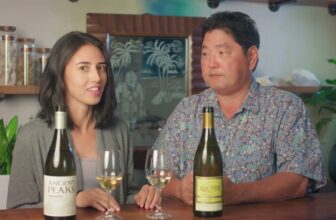
In this episode of Chuck Furuya Uncorked, Chuck is joined by Ariana Suchia and special guest Michael Pang, a longtime wine lover whose path into wine came through pure enjoyment.
Michael did not begin as a formal wine student. He began as someone who loved good food, drank what was recommended in restaurants, moved into Napa Cabernet, then Bordeaux, then Burgundy, Champagne, Sauternes, and eventually far more unusual wines from places like Corsica, Liguria, Monferrato, and Alto Piemonte.
The episode is really about how wine opens up over time.
It covers:
- Michael’s early wine path;
- his Bordeaux and Riesling aha moments;
- how wine travel completes the picture;
- Corsica and Abbatucci;
- Dolceacqua and Rossese;
- Valpane and aromatic forgotten grapes from Piemonte;
- Alto Piemonte and Antoniotti Bramaterra;
- why regional food and wine naturally fit together;
- and why the best wine experiences are often not trophy bottles, but wines that make food, place, and memory come alive.
The big lesson is simple:
Wine becomes deeper when you connect the glass to the people, roads, vineyards, food, and culture behind it.
Michael Pang’s Early Wine Path
Michael’s wine journey did not begin with Burgundy, Bordeaux, or rare indigenous grapes.
It began simply.
He jokes about drinking inexpensive wines and Lancers Rosé. At that point, wine was not a serious subject. It was just something someone might recommend at a restaurant.
Outside restaurants, he was more likely to drink bourbon or beer. But because he liked good food, he would ask what wine should go with the meal.
In a steakhouse, that often meant Napa Cabernet.
In an Italian restaurant, it might mean Chianti Classico.
That was the basic starting point.
It was not technical.
It was practical: good food, restaurant setting, and someone else choosing the wine.
From Napa Cabernet to the Dark Side
When Chuck first met Michael, Michael was drinking California Cabernet, especially Napa Valley Cabernet.
That makes sense.
For many wine drinkers, Napa Cabernet is a natural early step. It is bold, familiar, fruit-forward, structured, and often easier to understand than older European wines.
Then Chuck began moving him toward what he calls “the dark side.”
That meant Old World wine.
At first, Michael did not fully understand it. When he tasted aged Bordeaux next to the kind of Napa fruit he knew, his reaction was basically:
Where is the fruit?
That is an important moment in many wine journeys.
A wine drinker moves from obvious fruit into tertiary flavors, earth, age, structure, and subtlety. At first, it can feel confusing. Then, once the switch flips, the whole world changes.
The Bordeaux Aha Moment
Michael’s Bordeaux aha moment came through a bottle of 1975 Cheval Blanc.
Before that, he had tasted serious Bordeaux, including famous 1986 bottles such as Margaux and Lafite. But the first reaction was not immediate understanding. Those wines were so different from Napa fruit bombs that he had to recalibrate.
The 1975 Cheval Blanc was different.
That was the bottle that made him say, in effect:
Now I am starting to get it.
That is how Old World wine often works. It may not reveal itself instantly to someone used to fruit, richness, and power. It can take repeated exposure before the architecture, age, aroma, and quiet complexity begin to make sense.
The Riesling Moment: Bacon and Eggs in a White Wine
Another major aha moment came from an old German Riesling Eiswein.
Michael tasted a 1975 J.J. Prüm Auslese Eiswein during a staff tasting. At first, it was just good. Then it kept changing in the glass.
Every 15 minutes, it seemed to become something else.
By the end of the night, Michael tasted it and said it reminded him of bacon and eggs.
That is a wild thing to find in a white wine.
For Michael, that was proof that Old World wine could do something completely unexpected.
It could move beyond fruit.
It could become savory, changing, layered, and strange in the best way.
That bottle helped open the door to a much wider wine world.
Why Steps Matter in Wine
Chuck makes an important point about the transition from Napa Cabernet to Bordeaux.
You cannot always jump straight from fruit-driven Napa Cabernet to first-growth Bordeaux and appreciate it immediately.
There are steps.
Michael took those steps through older, less famous Bordeaux bottles, steakhouse meals, repeated tastings, and gradual exposure.
That matters because wine education is not only about drinking famous bottles. It is about building context.
A wine that seems confusing at first may make sense after ten related bottles.
A flavor that seems strange at first may become beautiful after you understand where it comes from.
Wine appreciation often grows through repetition.
Michael as a Food Lover
Michael’s wine journey is inseparable from food.
Chuck describes him as someone who loves eating, not just expensive restaurants, but genuinely good food.
That becomes clear in the Piemonte truffle story.
In Alba during white truffle season, the fresh truffles are shaved over food and charged by weight. Michael understands that this is a once-in-a-lifetime kind of moment. The truffles are fresh, local, and far less expensive there than they would be in Hawaii or New York.
So when the server keeps shaving, Michael lets it happen.
The point is not extravagance for its own sake.
The point is being present when something is at its peak.
That same mindset carries into wine.
When you are in the place, with the local food, with the local wine, the experience becomes complete.
Why Wine Travel Matters
Michael says wine travel makes the picture complete.
You can like a wine at home. You can learn the grape, the producer, and some basic details. But when you go to the region, walk the vineyards, meet the people, drive the roads, eat the food, and see the landscape, the wine becomes more real.
It is no longer just a label.
It becomes:
- a road;
- a hillside;
- a family;
- a vineyard;
- a meal;
- a weather pattern;
- a smell in the air;
- a local dish;
- and a memory.
That is one of the most important themes of the episode.
Wine travel is not just luxury tourism.
It is education through place.
Regional Food and Wine Grow Together
Michael’s first observation from wine travel is that every region has a cuisine, and the wines of that region usually fit that cuisine.
The connection did not happen overnight.
Over centuries, people grew grapes, cooked local food, drank the wine with the food, adjusted both, and created a natural fit.
That is why regional pairings often work so well.
Local wine and local food evolved side by side.
This is not always about “perfect pairing” in the modern restaurant sense. It is more organic than that.
The wine belongs to the food because both belong to the place.
Corsica: Between France and Italy
One of the major travel sections in the episode is Corsica.
Corsica is politically part of France, but geographically and culturally it sits in the Mediterranean between France, Italy, and Sardinia.
Chuck had wanted to visit Corsica for years after tasting a wine that smelled like wild, sun-baked countryside. Eventually he traveled there with Cheryl and Michael.
They landed in Bastia in the north and drove across the island.
The landscape was rugged, mountainous, remote, and full of winding roads. Michael compares the roads to the Road to Hana. There were narrow coastal routes, steep drops, animals in the road, and long stretches with little sign of civilization.
This is not a polished wine-tourism region built around large wineries.
It is country.
It is rugged.
It is its own world.
What Corsica Feels Like
Michael describes Corsica as a place that feels both French and Italian, but not fully either.
The food is not exactly French and not exactly Italian.
The people are not simply French in identity.
They are Corsican.
That matters because the wines also feel like that.
They do not taste like generic French wine or generic Italian wine. They taste like a Mediterranean island with mountains, herbs, sun, granite, livestock, and a strong local identity.
That is what makes Corsica so compelling.
It is not just another wine region.
It is a place with its own voice.
The Ajaccio Restaurant and the Perfect Accident
One of Michael’s strongest wine-and-food memories came in Ajaccio.
The restaurant they had planned to visit was closed, so they went to a backup: a small, dark, local restaurant with a short menu and a short wine list.
The food was simple and Corsican.
The wine list happened to include Abbatucci Valle di Nero, a rare wine they were going to visit the next day.
Michael ordered country-style lamb stew with tomato gravy and mashed potatoes.
The wine and food matched perfectly.
It was not planned.
It was not constructed as a formal pairing.
It just happened.
That is part of the magic of regional wine travel. Sometimes the place does the pairing for you.
Abbatucci Valle di Nero
Chuck explains why the Abbatucci bottle was so special.
The production was tiny, only around 175 to 200 cases. The fact that it appeared in a small local restaurant was surprising enough. The fact that it paired so perfectly with Michael’s lamb stew made the moment even more memorable.
Abbatucci is discussed as a champion of biodynamic farming and indigenous Corsican grapes.
The wine in the glass is savory rather than fruit-driven.
That savoriness is exactly why it worked with the lamb stew.
It was not about big tannin, heavy oak, or obvious fruit.
It was about the wine’s savory core connecting with the tomato, lamb, herbs, and rustic food.
Savory Wine and Rustic Food
Ariana describes the Abbatucci wine as sitting in a middle place.
It is not a big, bold, black-fruited Napa Cabernet.
It is also not thin, meek, or without backbone.
It has:
- savory herbs;
- grit;
- texture;
- even flow;
- no obvious oak;
- no harsh alcohol;
- no bitterness;
- and a savory center.
Michael points out that a Napa Cabernet would have dominated the lamb stew.
That is the key.
The right wine for rustic food is not always the biggest wine.
Sometimes it is the wine that shares the food’s savory language.
Herbs, Myrtle, and the Corsican Landscape
The Abbatucci visit adds another layer.
The vineyards are surrounded by herbs and shrubs, including myrtle. Chuck describes myrtle as having a camphor-like aromatic lift, and he connects that to what they smell in the wine.
The idea is not that someone added herbs to the wine.
The idea is that the vines grow inside a living landscape. The surrounding vegetation, soil, air, and farming philosophy all contribute to the feeling of the wine.
Abbatucci’s world is not just a vineyard.
It is an ecosystem.
That is why the wine tastes like place.
Biodynamic Farming as a Way of Life
Abbatucci is presented not as someone who uses biodynamics as a marketing word, but as someone who lives it.
Chuck describes old vines, careful grafting, indigenous grape preservation, sustainable living, and a deep attention to the vineyard.
Instead of simply ripping out old vines when the tops became less productive, Abbatucci preserved old root systems and grafted new material onto them.
The reason was not convenience.
It was respect for the living root system and the biodynamic life already established in the soil.
That kind of care changes how you think about the wine.
You are no longer drinking a product.
You are drinking the result of extreme attention.
Wine Travel with Chuck
Michael gives a funny and revealing description of traveling with Chuck.
You do not start in the tasting room.
You go to the vineyard.
Chuck wants to walk the land, ask questions, see the soils, understand the vines, and hear the grower’s passion directly.
At first, a grower may be polite. Then they realize Chuck truly wants to understand the vineyard. The energy changes. They open up. They show more. They explain more.
That happens again and again.
For Michael, that is what makes wine travel with Chuck different.
You can taste wine anywhere.
You cannot walk that vineyard anywhere else.
Dolceacqua and Rossese
The episode then moves to Dolceacqua in Liguria, near the French border and close to Monaco.
Dolceacqua is described as an old medieval town with narrow streets, steep hillsides, and a timeless feel. The vineyards are dramatically steep and difficult to work.
The grape discussed is Rossese, especially Rossese di Dolceacqua.
Chuck says Rossese appears elsewhere in Liguria and may be connected to Tibouren in Provence, but it reaches a special level in Dolceacqua.
The wine in the glass is from Anfosso.
This is another wine that expresses place through energy, not weight.
Why Dolceacqua Is So Difficult
Dolceacqua is not easy farming.
The vineyards are steep, terraced, remote, and hard to access. Everything has to be done by hand. Water and supplies may need to be carried or trucked up. Wild animals such as deer, boar, and badgers can destroy large parts of the crop.
Chuck says a large percentage of vineyards in the area have gone fallow because the work is so difficult.
That makes the remaining producers even more important.
They are not just making wine.
They are preserving a landscape.
What Rossese Tastes Like
Ariana describes the Rossese as earthy, but in a higher-toned way than the Abbatucci.
It has:
- brighter fruit;
- medium body;
- vibrance;
- energy;
- delicacy;
- and a sense of lift.
Chuck talks about the soils as a mix that includes sand, granite, sandstone, and flysch. The wines have energy and pliability.
That word is important.
Pliability means the wine can bend with food instead of fighting it.
The acidity is not hard. The tannins are not harsh. The wine has enough freshness to lift the meal, but enough softness to work with many dishes.
Food Pairing with Rossese
Michael says Rossese could work with many foods.
In the region, they drank it with rustic local dishes, pasta, lamb, and even foods with offal or innards.
It could also work with:
- duck;
- pasta with herbs;
- roasted poultry;
- veal;
- lamb;
- Mediterranean vegetables;
- light meat dishes;
- and even certain seafood preparations.
The key is that Rossese is not locked into one narrow pairing.
It is gulpable, food-friendly, and flexible.
That is why Chuck sees it as a strong restaurant wine.
Pliability as a Wine Virtue
Chuck contrasts Rossese with some wines that have hard acidity or rigid tannins.
Some Sangiovese or Nebbiolo can feel severe. They may be great wines, but they are not always easy to pair with a wide range of food.
Rossese is different.
It has lift, but not harshness.
It has structure, but not confrontation.
It has personality, but not heaviness.
That makes it useful.
A wine does not need to be famous to be valuable.
It needs to work.
Valpane and Monferrato
The next stop is Piemonte, but not the famous Barolo and Barbaresco core.
Chuck shifts attention to Monferrato, a less glamorous but deeply interesting area with more sandy soils and many nearly forgotten grape varieties.
The producer discussed is Cantina Valpane, a family estate with a long history.
Valpane is not only about Nebbiolo.
The wines include grapes like:
- Barbera;
- Freisa;
- Grignolino;
- and Moscatellina / Rosa Ruske.
The wine in the glass is the aromatic red, described as Moscatellina or Rosa Ruske.
This wine stops Ariana in her tracks.
Valpane Moscatellina / Rosa Ruske
The Valpane wine is light in color, but extremely aromatic.
Ariana picks up aromas like:
- roses;
- potpourri;
- purple flowers;
- lavender;
- and fragrant spice.
Chuck says the aromatics are almost unreal.
But he also warns the viewer not to assume the wine is flimsy just because it is light and perfumed.
It still has structure.
It still has a savory core.
That is why it works with food.
This is one of the most important wine lessons in the episode:
Aromatic does not mean weak.
Light-colored does not mean simple.
Food Pairing with Aromatic Reds
Chuck suggests trying the Valpane wine with pizza.
Normally, many people reach for Chianti or a savory red with pizza. But this kind of aromatic red can create a completely different dynamic.
If the pizza includes herbs such as thyme, rosemary, or basil, the wine’s aromatics can connect beautifully with the food.
That changes the pairing.
Instead of just matching tomato and acidity, the wine adds perfume and lift.
Good pairings could include:
- pizza with herbs;
- tomato-based pasta;
- roasted vegetables;
- salumi;
- lighter meats;
- mushroom dishes;
- herb-driven Mediterranean food;
- and rustic Italian dishes.
The wine is playful, but not unserious.
Valpane’s Soul
Michael describes the people behind Valpane as old-time people who live the work every day.
They have heart and soul in the soil and land.
The winery uses older methods, including concrete and old barrels rather than a stainless-steel-driven modern style.
Chuck says the wines have soul.
That is the reason they matter.
They are not manufactured for international sameness.
They carry the feeling of a family, a place, and old grape varieties that still have something to say.
Alto Piemonte
The final major region in the episode is Alto Piemonte, the upper part of Piemonte north of Alba.
This is not Barolo or Barbaresco.
The soils are different. The elevation is different. The climate is different. The wines are often Nebbiolo-based, but not always 100% Nebbiolo. In the region, Nebbiolo may be called Spanna, and the wines may include other local grapes.
Chuck describes soils that can include granite, volcanic material, porphyry, and sandstone.
That gives the wines a different structure and energy than the calcareous marl soils of Barolo and Barbaresco.
Why Alto Piemonte Matters
Chuck explains that before Barolo and Barbaresco became the dominant names for many drinkers, Alto Piemonte had a major historical role.
Then phylloxera, industrialization, and the proximity of Milan changed everything. People left difficult hillside vineyards for easier work in the city. Many vineyards went fallow.
Now the region is slowly being resurrected.
That makes Alto Piemonte exciting.
It offers history, old vineyards, food-friendly structure, and often better value than the most famous Nebbiolo zones.
Antoniotti Bramaterra
The wine in the glass is Antoniotti Bramaterra.
Chuck identifies Bramaterra as one of the important Alto Piemonte villages, alongside places such as Gattinara, Ghemme, Boca, Lessona, Fara, and Sizzano.
Michael describes visiting Antoniotti as an unforgettable experience.
They were not originally scheduled to visit, but Cristiano Garella encouraged them to go. The vineyard was remote, high up, and difficult to reach. The visit had the same feeling as many of the others: old vines, old families, hard work, and wines that make sense with food.
Bramaterra is not about obvious richness.
It is about structure, earth, mineral character, and food compatibility.
Why These Wines Are Different from Trophy Wines
The episode constantly contrasts these wines with famous labels.
Michael has drunk famous Bordeaux, Burgundy, Champagne, and Sauternes. He understands trophy wine.
But this episode is not about trophy wine.
It is about wines that reveal place.
Corsica, Dolceacqua, Monferrato, and Alto Piemonte do not have the same global prestige as first-growth Bordeaux or grand cru Burgundy. But they can offer something just as memorable:
- authenticity;
- food compatibility;
- indigenous grapes;
- family farming;
- regional identity;
- and surprise.
That is why they are worth exploring.
The Role of Indigenous Grapes
A major theme across the episode is indigenous grape varieties.
The wines discussed are not built around the most familiar international grapes. Instead, they come from grapes that belong to specific places:
- Corsican indigenous varieties at Abbatucci;
- Rossese in Dolceacqua;
- Moscatellina / Rosa Ruske at Valpane;
- Nebbiolo-based blends in Alto Piemonte;
- and other local grapes preserved by families and growers.
These grapes matter because they carry cultural memory.
If they disappear, a piece of the region disappears too.
Wine Does Not Have to Be Cabernet or Pinot
Ariana makes an important point about wines that sit between Cabernet and Pinot Noir.
Many drinkers think in extremes:
- Cabernet for bold red wine;
- Pinot Noir for light red wine.
But there is a huge middle world.
That middle world includes grapes and wines that can be medium-bodied, savory, aromatic, food-friendly, and deeply interesting.
Rossese, Barbera, Freisa, Grignolino, Grenache, Syrah, and many Mediterranean reds can all live in that middle space.
For food, that middle space can be incredibly useful.
Gulpability and Seriousness Can Coexist
Chuck often uses words like deliciousness, gulpability, and pure enjoyment.
That does not mean the wines are simple.
It means they are alive at the table.
The best wines in this episode are serious enough to think about, but drinkable enough to enjoy without overanalyzing.
That balance is rare.
A wine can have history, soil, and complexity while still making you want another sip.
That is the sweet spot.
Food Is the Key
The entire episode keeps returning to food.
Michael’s wine journey began through restaurants and good meals. His travel experiences were built around local food. The wines discussed make the most sense with dishes from their regions.
The Abbatucci makes sense with Corsican lamb stew.
Rossese makes sense with rustic Ligurian food.
Valpane makes sense with pizza, herbs, and Italian home cooking.
Bramaterra makes sense with hearty northern Italian dishes.
Wine becomes easier to understand when you ask:
What would people eat with this where it comes from?
That question solves a lot.
Final Takeaway
This episode with Michael Pang is one of the clearest examples of wine as a journey.
Michael begins with simple wines, restaurant recommendations, Napa Cabernet, and familiar categories. Then come the aha moments: Bordeaux, old Riesling, aged wines that smell like something unexpected, and bottles that change over time.
From there, the journey becomes geographic.
Washington, Paso Robles, Bordeaux, Burgundy, Champagne, Corsica, Liguria, Piemonte, and Alto Piemonte all add new layers.
The main lesson is not that everyone needs to chase rare wines.
The lesson is that wine becomes richer when you connect it to place.
Walk the vineyard.
Eat the food.
Meet the people.
Drink the local bottle with the local dish.
Let the region explain itself.
That is how wine stops being just a label and becomes a memory.
The wines in this episode — Abbatucci Valle di Nero, Rossese di Dolceacqua, Valpane Moscatellina / Rosa Ruske, and Antoniotti Bramaterra — all point to the same idea:
The most meaningful wines are not always the biggest, most expensive, or most famous.
Sometimes they are the wines that taste like a hillside, a road, a family, a stew, a pizza, a herb garden, or a place you did not know you needed to visit.
That is pure enjoyment.
FAQ
Who is Michael Pang?
Michael Pang is a longtime wine lover and friend of Chuck Furuya whose wine journey moved from simple wines and Napa Cabernet into Bordeaux, Burgundy, Champagne, Sauternes, and more unusual regional wines.
What is this episode about?
The episode is about Michael Pang’s wine journey, wine travel, Corsica, Dolceacqua, Piemonte, Alto Piemonte, and how food and wine connect to place.
What was Michael Pang’s Bordeaux aha moment?
Michael describes 1975 Cheval Blanc as a major Bordeaux aha moment that helped him understand Old World wine.
What was Michael’s Riesling aha moment?
A 1975 J.J. Prüm Eiswein changed dramatically in the glass and eventually reminded him of bacon and eggs, showing him how surprising old white wine could be.
Why does Michael think wine travel matters?
He says wine travel completes the picture. Drinking the wine is one thing, but seeing the region, meeting the people, walking vineyards, and eating the local food makes the wine more understandable.
What is special about Corsica in this episode?
Corsica is presented as rugged, mountainous, remote, proud, and culturally somewhere between France and Italy while still being fully Corsican.
What wine paired with lamb stew in Corsica?
Abbatucci Valle di Nero paired beautifully with rustic Corsican lamb stew in a small local restaurant.
Why did Abbatucci work with the lamb stew?
The wine had a savory core that matched the lamb, tomato gravy, herbs, and rustic food without overwhelming it.
What is Rossese di Dolceacqua?
Rossese di Dolceacqua is a red wine from Liguria near the French border, known in this episode for energy, brightness, food-friendliness, and pliable structure.
What foods work with Rossese?
Rossese can work with pasta, lamb, duck, rustic Ligurian dishes, Mediterranean vegetables, and many lighter meat dishes.
What is Valpane Moscatellina / Rosa Ruske like?
It is a light-colored but highly aromatic Piemonte red with rose, potpourri, lavender, perfume, and a savory food-friendly core.
What foods pair with Valpane’s aromatic red?
It can pair well with pizza, herbs, tomato-based pasta, salumi, mushrooms, roasted vegetables, and rustic Italian dishes.
What is Alto Piemonte?
Alto Piemonte is the northern part of Piemonte, closer to the Alps, with different soils and wines often based on Nebbiolo, also called Spanna, blended with other local grapes.
What is Antoniotti Bramaterra?
Antoniotti Bramaterra is a wine from Alto Piemonte discussed in the episode as part of the region’s revival and its food-friendly, soil-driven wine tradition.
What is the biggest lesson from this episode?
The biggest lesson is that wine becomes more meaningful when it is connected to food, travel, people, vineyards, indigenous grapes, and the culture of the place it comes from.



I found Michael Pang's journey inspiring! Can anyone share their own 'aha' moment with wine? What was the wine and what did you learn from it?
Thanks for sharing! Those moments often reshape our perspective on wine. Exploring different regions and styles really enhances the experience.
My 'aha' moment was with a 2010 Burgundy. It was so complex and layered compared to the fruit-forward wines I was used to. It taught me to appreciate subtleties in flavor.
I recently traveled to Piemonte and had the freshest truffles with local Barolo. The connection to the land made the wine taste even better! I get what Michael means about experiencing wine travel. It's all about place and memory.
Wine and food from the same region often elevate each other. It sounds like you had an unforgettable experience in Piemonte!
That sounds amazing! I've always believed food and wine are meant to be enjoyed together. Did you have any memorable dining experiences there?
What does Michael mean by 'the dark side' of wine? Is he saying Old World wines are better than New World ones?
I think he's just referring to the complexity of flavors in Old World wines. They can be more challenging to understand at first, but definitely rewarding!
Exactly! The 'dark side' refers to the unique characteristics and intricacies of Old World wines that contrast with the more straightforward profiles of many New World wines.
Loved the mention of Corsica! It's such a hidden gem for wine lovers. I hope more people get to experience it.
I don’t buy into the idea that wine travel makes that much difference. I can enjoy wine just fine at home without all the extra experience.
I get where you're coming from, but for me, it's about the stories and connections to the land. It can enrich the tasting experience.