
Some white wines taste like fruit.
Others taste like place.
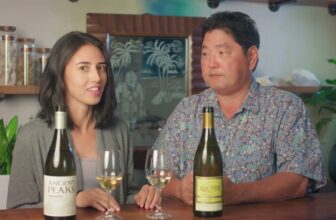
In this Wine of the Week episode from Chuck Furuya Uncorked, Ariana Suchia and Chuck taste Marisa Cuomo Costa d’Amalfi Ravello Bianco, a dramatic white wine from the Amalfi Coast of Italy.
The wine comes from Ravello, one of the famous villages along the Amalfi Coast. The vineyards are steep, terraced, close to the sea, and rooted in white dolomitic limestone.
The result is a white wine that feels salty, stony, layered, and coastal.
It is not a simple fruit-driven white.
It is a wine that tastes like cliffs, limestone, sea foam, wind, and old vines hanging above the ocean.
What Is Marisa Cuomo Ravello Bianco?
Marisa Cuomo Ravello Bianco is a white wine from the Costa d’Amalfi area of Campania in southern Italy.
Chuck identifies the wine as a blend of two white grapes:
- Falanghina
- Biancolella
Falanghina is more familiar to many Italian wine drinkers. Biancolella is less common and is strongly connected to coastal southern Italian white wines.
Chuck notes that these grape varieties have ancient roots and were believed to have been brought to Italy by the Greeks before the Christian era.
That makes the wine feel tied to a very old Mediterranean wine tradition.
Ariana’s First Impression
Ariana begins by blind tasting the wine.
The wine shows a light golden tone in the glass, but it is not deeply yellow or overly concentrated in appearance. It looks clean, with no obvious gas or sediment.
On the nose, the first thing Ariana notices is minerality.
This is not a tropical-fruit white wine.
It is more soil-driven and earth-driven, but not in a muddy or forest-floor way. It feels stony, calcareous, and limestone-like.
She also finds:
- sea foam;
- salinity;
- a slightly leesy quality;
- sourdough-like notes;
- tart fruit;
- and a clean, mineral core.
The wine does not show obvious oak or warm baking spice.
It is salty, mineral, and slightly leesy rather than rich, buttery, or oak-driven.
What Does “Leesy” Mean?
Ariana explains lees character in a simple way.
Lees are connected to yeast contact during winemaking. In the glass, that can sometimes show as aromas or textures that remind people of:
- sourdough bread;
- stale beer;
- yeast;
- bread dough;
- or a slightly savory texture.
In this wine, the leesy note is subtle. It adds depth without making the wine heavy.
That small layer helps the wine feel more complex than a simple crisp white.
Taste and Texture
On the palate, Ariana immediately notices the long finish.
The wine has medium-plus acidity, medium alcohol, and a little more than medium body. It is lifted, but it also has a base note running through it.
That balance is important.
The wine is not lean and angular.
It is also not oaky and round.
It sits in between.
It has structure, freshness, and depth at the same time.
Ariana tastes:
- sea foam;
- tart fruit;
- minerality;
- salinity;
- and layered texture.
Nothing sticks out awkwardly. The acidity is present, but it does not jab at the palate. The wine flows smoothly from beginning to end.
Chuck’s Read on the Wine
Chuck sees the wine as more serious and more complex than a simple easy-drinking white.
He says the wine has more mojo, more grip, more grit, and more pedigree.
By “grit,” he does not mean dirty or unpleasant. He compares it to the texture of French press coffee — a kind of fine, tactile presence that gives the wine personality.
For Chuck, the wine has:
- rocky minerality;
- stony character;
- sea foam;
- layered depth;
- even flow;
- heart;
- and soil.
He sees it as a wine that can spark conversation.
This is not just a Tuesday-night simple white. It is a bottle that can make people stop and think about what they are drinking.
Why the Amalfi Coast Matters
The origin is central to the wine.
Ravello is on the Amalfi Coast, where the landscape is steep, dramatic, and close to the sea. The hillsides are so steep that vineyards need to be terraced.
Chuck compares the steepness to something like Koko Head, with vineyards climbing sharply above the coastline.
The soils are described as white dolomitic limestone.
The combination of slope, limestone, terraces, sea air, and old vines gives the wine its identity.
This is why the wine tastes so mineral and salty.
It comes from a place where land and ocean are constantly interacting.
Terraced Vineyards and Old Vines
Chuck explains that the vines are trained in a very distinctive way.
They come out horizontally from walls, about eight feet off the ground, and the grapes hang down below the canopy. Some of the vines are 60 to 100 years old.
This creates a shaded structure, and vegetables can sometimes be grown underneath because the canopy creates a cool environment.
That canopy also helps capture cold air from the ocean.
This extends the growing season and allows the grapes to develop more physiological maturity.
That detail helps explain the wine’s complexity.
The grapes are not just ripening quickly in hot sun. They are slowly developing flavor in a dramatic coastal environment.
Sea Wind in the Glass
Ariana says she can smell something like gusty sea-driven wind.
That is not just imagination.
Chuck explains that the vineyards face continuous coastal influence. The ocean wind moves through the vines, and the wine reflects that environment.
The salinity and sea-foam character make sense because the vines grow so close to the water.
This is a wine where the setting feels present in the glass.
Why This Wine Feels Expensive
Chuck says the wine tastes expensive.
That does not mean it is flashy or heavy. It means the wine has pedigree and complexity beyond simple fruit.
Expensive-feeling wines often have more than one dimension.
This one has:
- acidity;
- minerality;
- salinity;
- texture;
- length;
- soil character;
- coastal freshness;
- and layered flow.
At around $27.99, Chuck sees it as a fantastic value for what is happening in the glass.
Food Pairing: Paella
Chuck immediately thinks of paella.
That makes sense because paella can combine many different flavors:
- seafood;
- chicken;
- sausage;
- saffron;
- rice;
- olive oil;
- shellfish;
- and sometimes smoky or savory depth.
A simple light white might disappear next to that kind of dish.
A heavy oaky white might feel clumsy.
Marisa Cuomo Ravello Bianco has enough grip and lemony edge to stand up to the complexity while keeping the palate fresh.
Its coastal character also naturally works with seafood.
Food Pairing: Bouillabaisse
Chuck also mentions bouillabaisse, the Provençal seafood stew.
This is another excellent pairing idea.
Bouillabaisse can include rich seafood broth, fish, shellfish, saffron, herbs, olive oil, and often toasted bread with garlicky aioli.
The wine’s lemony edge can cut through richness.
Its salinity connects with the seafood.
Its mineral structure keeps the pairing lively.
Its body gives it enough strength for the stew and aioli.
This is exactly the kind of wine that can handle a serious coastal seafood dish.
Food Pairing: Swordfish and Oily Fish
Chuck also suggests heavier fish such as swordfish and opah.
These are meatier, juicier, oilier fish compared with lighter, drier fish.
That distinction matters.
A delicate white might work with light white fish but struggle with swordfish. A wine like Ravello Bianco has more structure and texture, so it can stand up to richer seafood.
Good pairing ideas include:
- grilled swordfish;
- opah;
- rich white fish;
- seafood stew;
- grilled prawns;
- shellfish rice dishes;
- paella;
- bouillabaisse;
- fish with garlic aioli;
- and Mediterranean seafood with olive oil.
This wine wants food with substance.
Why Lemon-Edge Acidity Matters
Chuck talks about the wine’s lemony edge.
That is one of the keys to the pairing.
With seafood, lemon-like acidity works the way a squeeze of fresh lemon works over fish. It cuts oiliness, lifts flavor, and refreshes the palate between bites.
The wine does not need to taste literally like lemon juice.
It only needs that bright, cleansing edge.
In this wine, that acidity is balanced by body, salinity, and minerality.
That is why it can feel both fresh and serious.
A Wine for Conversation
Ariana makes a useful distinction.
Some wines are easy-drinking bottles for a random Tuesday night. They are simple, pleasant, and do not demand much attention.
This wine is different.
It is a wine you pour when you want people to think a little more, talk a little more, and notice what is in the glass.
That does not make it difficult.
It makes it interesting.
The wine has enough layers to start a conversation:
- What is that salty note?
- Why does it feel like sea foam?
- Why is it mineral but not harsh?
- Why does it feel coastal?
- Why does it have body without oak?
- Why does it pair so well with seafood?
Those are the kinds of questions that make wine enjoyable.
Final Takeaway
Marisa Cuomo Costa d’Amalfi Ravello Bianco is a distinctive white wine from one of Italy’s most dramatic coastal landscapes.
Made from Falanghina and Biancolella, it shows mineral depth, sea-foam salinity, tart fruit, subtle leesy texture, a lemony edge, long finish, and a seamless flow across the palate.
The wine is rooted in place.
Its steep terraced vineyards, white dolomitic limestone, old vines, coastal winds, and ocean influence all show up in the glass.
This is not a simple fruit-driven white.
It is a coastal Mediterranean white with grip, grit, freshness, and character.
At around $27.99, Chuck sees it as a very strong value for the quality and complexity.
Serve it with paella, bouillabaisse, swordfish, opah, rich seafood, garlic aioli, shellfish, or Mediterranean coastal dishes.
It is the kind of wine that reminds you why place matters.
FAQ
What wine is featured in this episode?
The featured wine is Marisa Cuomo Costa d’Amalfi Ravello Bianco.
Where is Ravello Bianco from?
It comes from Ravello on the Amalfi Coast in Campania, southern Italy.
What grapes are in Marisa Cuomo Ravello Bianco?
Chuck identifies the grapes as Falanghina and Biancolella.
What does the wine taste like?
It tastes mineral, salty, stony, slightly leesy, tart-fruited, lemon-edged, and coastal, with a long finish.
Is this a fruit-driven wine?
No. Ariana describes it as more mineral and soil-driven than fruit-driven.
Does the wine taste oaky?
No. Ariana does not find obvious oak, spice, or warm baking-spice notes.
What does leesy mean in wine?
Leesy notes can smell or taste like yeast, sourdough bread, stale beer, or bread dough from contact with lees during winemaking.
Why does the wine feel salty?
The wine comes from steep coastal vineyards near the Amalfi Coast, where sea air and limestone soils help create a salty, sea-foam character.
What foods pair with Ravello Bianco?
It pairs well with paella, bouillabaisse, swordfish, opah, rich seafood, shellfish, garlic aioli, and Mediterranean coastal dishes.
Why does it work with seafood?
Its lemony acidity cuts oiliness, its salinity matches seafood, and its body stands up to richer fish and stews.
How much did Chuck say the wine cost?
Chuck says he paid around $27.99 for the bottle.
What is the biggest lesson from this episode?
The biggest lesson is that some white wines are not about fruit or oak. They are about place, soil, sea air, minerality, and food-friendly structure.





I'm curious about the tasting notes. How pronounced is the minerality in comparison to the acidity? Does one dominate the flavor more than the other?
Good question! I'm also interested in this—my experience with other wines suggests that sometimes minerality can overshadow acidity or vice versa.
In Marisa Cuomo Ravello Bianco, the minerality is quite pronounced but balanced with medium acidity. Both elements create a complex flavor profile without one overshadowing the other.
I recently tried Marisa Cuomo Ravello Bianco with seafood paella, and it was a perfect match! The wine's mineral texture complemented the dish's complexity beautifully. I could taste the subtle salinity that made the seafood pop. Has anyone else paired it with something unexpected?
I tried it with grilled swordfish, and it worked really well too! The structure of the wine held up against the richness of the fish.
Those are great pairings! The wine's acidity and minerality truly enhance seafood dishes, whether they are light or rich.
How does this wine compare to other Italian whites like Verdicchio or Pinot Grigio? Is it more complex or distinct in flavor?
Great point! While Verdicchio and Pinot Grigio can be refreshing, Ravello Bianco's unique coastal influence and complexity set it apart.
I've had Verdicchio before and loved its crispness. I'd say Ravello Bianco might offer more depth due to its mineral and salinity notes.
What exactly does 'leesy' mean? Is it a good thing in wine?
Exactly! A subtle leesy note can enhance a wine's character without making it heavy.
Leesy refers to flavors from yeast contact during fermentation. It can add depth and complexity, so it's generally a good thing!
I appreciate wines with a story. The history of these grapes being brought by the Greeks is fascinating!
It's amazing how much history can be found in a bottle of wine! It makes drinking it feel special.