
Wine pairing does not have to begin with steak, French sauces, or fine dining.
It can begin with squid luau, kalua pig, poi, lomi salmon, pipikaula, butterfish, chili pepper water, onions, shoyu, and a plate of food from one of Hawaii’s most beloved local restaurants.
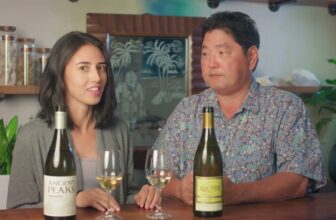
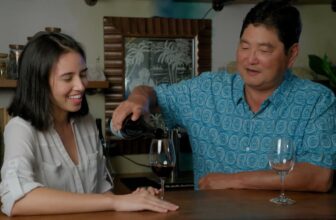
In this episode of Chuck Furuya Uncorked, the team continues its Fine Wines and Local Grinds series with a food and wine pairing built around Helena’s Hawaiian Food in Kalihi.
The guest is Ola Raposa, founder of Fitted, a Hawaii streetwear brand built around local culture, storytelling, design, and community.
Ola chooses Helena’s because it is personal to him. He went there with his father, remembers the old King Street location, and sees it as Hawaii’s version of soul food. The episode becomes more than a pairing exercise. It becomes a conversation about local restaurants, small producers, storytelling, culture, flavor, and why wine should not be separated from everyday food.
The wines are not trophy bottles. They are chosen because they can work with real Hawaiian food:
- a medium-dry aromatic Malvasia;
- a light, slightly fizzy Italian-style rosé;
- a light savory German Pinot Noir;
- and a slightly sweet German Riesling.
The lesson is simple: Hawaiian food can work beautifully with wine, but the wines need to respect the food.
Why Helena’s Hawaiian Food Matters
Helena’s Hawaiian Food is treated in this episode as more than a restaurant.
For Ola, it is tied to family memory. He remembers going there with his father, seeing the bowls, booths, kitchen, and flavors, and later realizing that what he had grown up eating was not just “Hawaiian food” in a generic sense. It was exceptional Hawaiian food.
Chuck also points out that Helena’s has received national recognition, including a James Beard Award. But the bigger point is not awards. The bigger point is that places like Helena’s need a voice.
Small local restaurants can easily get pushed aside by rent, chains, tourism shifts, and the scale of mainland brands. Chuck frames this episode as part of a larger mission: support the small places that carry culture, memory, and flavor.
The same idea applies to wine.
Small restaurants need a voice.
Small wineries need a voice.
Food and wine can tell those stories together.
Food First, Wine Second
One of the strongest ideas in the episode is that the pairing starts with the food.
Chuck does not begin by presenting the wine as the star. Instead, the table starts with Helena’s dishes and asks what each dish needs.
That matters because Hawaiian food has many different textures and flavors:
- sweetness;
- saltiness;
- smoke;
- fishiness;
- oiliness;
- starch;
- chili heat;
- shoyu;
- onions;
- bitterness;
- tang;
- and deep savory flavors.
A big Cabernet or oaky Chardonnay would not automatically work here. The wine needs to be flexible, refreshing, and sensitive to the food.
That is why the wines chosen are lighter, brighter, lower in alcohol, aromatic, slightly sweet, fizzy, or savory.
Pairing Principle One: Sweetness Matters
Chuck explains one of the most useful food and wine pairing principles through a simple example.
Coca-Cola tastes sweet on its own. But if you eat a Snickers bar first and then drink Coke, the Coke can seem dry, bitter, and rough.
The lesson is that the drink should usually be at least slightly sweeter than the food if the food has sweetness.
That matters with Helena’s because some dishes have a gentle sweetness. The squid luau, for example, has sweet-savory character. If the wine is too dry, hard, or bitter, the pairing can clash.
This is why a slightly sweet or aromatic wine can work better than a dry, hard-edged white.
Wine One: Malvasia with Squid Luau
The first wine is a Malvasia from Monterey, California.
Chuck describes Malvasia as an aromatic grape that can smell like lychee. It is often made sweet, but this version is closer to medium-dry or dry, with vivid aromatics and a lemon-lime edge.
That makes it useful with squid luau.
The wine does two things:
- its aromatic side lifts the food, almost like fresh basil, cilantro, Chinese parsley, or herbs;
- its lemon-lime acidity works like a squeeze of lemon, cutting through fishiness, oiliness, and heaviness.
Ola and Kalei both find that the pairing works. The wine keeps the palate fresh and alive between bites.
This is a strong example of a wine that does not overpower local food. It refreshes it.
Why Malvasia Works with Luau
Squid luau has sweetness, ocean flavor, richness, and a slightly earthy green quality.
A plain dry white might feel too hard. A heavy Chardonnay might feel too round and dull. A big red would likely clash.
Malvasia works because it has lift.
The pairing works through:
- aromatics — lychee-like perfume brightens the dish;
- freshness — lemon-lime acidity cleans the palate;
- gentle sweetness — enough softness to avoid clashing with luau’s sweetness;
- lightness — it does not cover the food;
- contrast — the wine resets the mouth after each bite.
This is not a “fancy” pairing. It is a functional one.
That is why it is useful.
Wine Two: Light Fizzy Rosé
The second wine is a very light, slightly fizzy rosé.
Chuck emphasizes that not all rosé is the same. Rosé can be sweet, dry, dark, pale, heavy, light, fruity, mineral, still, or fizzy depending on how it is made.
This specific rosé is chosen because it is:
- light;
- minerally;
- not syrupy;
- not heavy with cherry or strawberry fruit;
- slightly fizzy;
- and easy to drink.
Chuck compares it to a country-style wine you might drink in a café or bistro somewhere in the Italian countryside. It is not meant to be swirled and analyzed forever. It is meant to be drunk with food.
Ola likes the way the bubbles play with the food, especially after the ocean-like flavor of luau.
Why Fizzy Rosé Works with Hawaiian Food
The rosé works because of texture as much as flavor.
The bubbles help move food across the palate. They lift oil, starch, salt, and richness. They also make the wine feel easy and gulpable.
That matters with Hawaiian food because the plate can contain many different things at once. You may not want a wine that pairs perfectly with one bite and fails with the next. You want a wine that keeps the whole meal moving.
The rosé is especially useful because it can work with both lighter and heavier dishes.
By the end of the episode, the group sees it as one of the most flexible choices for the whole Helena’s spread.
Wine Three: German Pinot Noir
The third wine is a light red: Pinot Noir from Germany.
Chuck chooses it because Hawaiian food does not need a big, heavy, oaky, alcoholic red. A full-bodied red would likely make chili pepper water, fish, smoke, salt, and starch feel heavier or more bitter.
The German Pinot Noir is different.
It is light in color, savory, and gentle. It has enough red-wine character to work with smoky and savory dishes, but it does not overwhelm the food.
Ola immediately notices more layers with this wine. The wine and food move together through different tones.
Chuck explains the key: the wine brings savoriness and lightness.
Why German Pinot Noir Works
German Pinot Noir works here because it offers red-wine flavor without red-wine heaviness.
It is useful with Hawaiian food because it has:
- lighter body;
- lower alcohol feel;
- savory character;
- gentle fruit;
- no heavy oak;
- enough acidity to refresh;
- and enough structure for smoky or salty meats.
This is not California Pinot Noir in a big, lush style. It is cooler, lighter, and more restrained.
For dishes like kalua pig, the Pinot Noir can echo smoke and savoriness while still keeping the meal lifted.
Sugar, Acid, and Physiological Maturity
One of the most educational moments in the episode comes when Ola asks about climate and grape flavor.
Chuck explains that wine grapes are not only about sugar.
There are two important ideas:
- Sugar ripeness — how much sugar has built up in the grape.
- Physiological maturity — how fully the grape, skins, seeds, and vine have developed flavor and character.
If sugar ripeness happens too quickly, grapes may not hang on the vine long enough to develop full physiological maturity.
Cooler regions can allow longer hang time. Grapes ripen more slowly, preserving acidity while developing flavor.
Chuck compares this to fruit in Hawaii: some of the best lychee or pineapple comes from cooler areas where fruit takes longer to ripen. More time can create more complexity, even if sugar levels are similar.
That idea helps explain why German Pinot Noir can be light in color and alcohol but still flavorful and interesting.
Climate Change and Wine
The conversation also moves into climate change.
Chuck explains that Germany was once lucky to fully ripen grapes only a few vintages out of ten. Now, in modern conditions, ripeness is much more consistent.
That changes wine.
The same is true in places like Barolo and Bordeaux. Warmer conditions can make wines bigger, richer, more alcoholic, and less like older versions of themselves.
The episode uses this not as a political lecture, but as a wine reality.
Vineyards have to adapt.
Regions have to rethink grapes, farming, exposures, harvest timing, and tradition.
Wine is alive because agriculture is alive.
Small Producers vs Sameness
Ola’s world of design and storytelling leads into a larger discussion about sameness.
Chuck compares modern wine production to fast food. Many industries now chase consistency: same recipe, same process, same result, wherever you are.
That can be useful, but it can also reduce diversity.
In wine, sameness can come from:
- the same grape clones;
- the same yeast strains;
- the same harvest targets;
- the same fermentation temperatures;
- the same stainless steel methods;
- the same oak programs;
- and the same retail pressure to sell what scans quickly.
Ola connects with the opposite idea: nuance, quirkiness, story, and individuality.
That is where small restaurants and small wineries overlap.
They may not always be perfectly consistent, but they carry identity.
Storytelling Through Food, Wine, and Design
Ola talks about Fitted and how storytelling appears in design details.
One hat, for example, is inspired by ko‘i, a basalt stone tool. The typeface and sharp edges connect to that cultural reference.
That same storytelling principle applies to wine.
A wine is not only red, white, or pink. It can carry a place, a climate, a family, a vineyard, and a farming philosophy.
A dish from Helena’s is not just food. It carries memory, local culture, family, and repetition across generations.
This episode works because it treats food, wine, and design as part of the same conversation.
They all tell stories.
Butterfish and Chili Pepper Water
The next major pairing is butterfish with a homemade-style dipping sauce.
Ola describes the sauce as built around:
- chili pepper water;
- sweet onions;
- a dash of shoyu;
- Hawaiian salt;
- and time.
As the sauce sits, it changes. It gets sweeter, more complex, and more integrated. When butterfish or ribs are dipped into it, the char, oil, salt, sweetness, and spice all mingle.
Butterfish brings several layers:
- fat;
- sweetness;
- oiliness;
- crispness;
- crunch;
- fish flavor;
- char;
- and sauce complexity.
The first aromatic white feels almost too perfumed with it. The red becomes too strong and bitter when chili heat is involved. The Riesling, however, shines.
Why Riesling Works with Spice
The Riesling has a little sweetness, but it is not dessert-sweet.
Chuck compares it to biting into a cold apple or pineapple. It cools and soothes the palate when food is spicy, salty, or sweet.
That makes it powerful with chili pepper water and butterfish.
Ariana also likes having a small coat of sweetness before going into spice. It rounds everything out and lets her taste more of the sauce’s complexity rather than only heat.
This is one of the most useful lessons in the article:
Slightly sweet Riesling is not just for dessert.
It can be one of the best wines for spicy, salty, rich, and oily foods.
Poi and Wine
The poi pairing is one of the most interesting parts of the episode.
Poi is subtle, starchy, tangy, and textural. Some people say it has no flavor, but the group talks about its gentle rootiness and tone.
Two wines stand out:
- Riesling works better from a flavor-profile perspective.
- Fizzy rosé works better from a texture and mouthfeel perspective.
The bubbles and starch interaction becomes a major discovery. The poi softens the bubbles and makes the rosé feel less sharp, while the bubbles give the starch lift.
This is the kind of pairing most people would never think to try.
But it works because wine pairing is not only about flavor. It is also about texture.
Bubbles and Starch
A recurring idea in the episode is that bubbles and starch can work together.
This comes up with poi and rosé. It also connects to local comfort-food logic: sparkling drinks, starches, salty foods, and rich foods often work naturally together.
The bubbles help refresh.
The starch softens the bubbles.
The result can be more interesting than either element alone.
This is why a light fizzy rosé can be so useful with Hawaiian food. It does not need to dominate. It just needs to keep the meal alive.
Kalua Pig Pairings
When Ariana joins the table, the group moves into kalua pig.
The dish is described as:
- salty;
- fatty;
- smoky;
- savory;
- and rich.
The aromatic white does not work well here. It feels sour and disconnected because the floral and herbal notes do not match the smoke, salt, and fat.
The rosé works better because it has more body and texture.
The German Pinot Noir also works because it brings back and enhances the smoky character of the pig. Ariana compares the logic to cranberry at Thanksgiving: with salty, rich, savory foods, you often need something brighter to lift the meal.
The Pinot Noir matches the smoke and savory depth, while still staying light enough to keep eating.
Lomi Salmon Pairings
Lomi salmon brings a different set of challenges.
It has:
- saltiness from cured salmon;
- crisp onion;
- green onion;
- tomato acidity;
- freshness;
- and a cold, refreshing texture.
This is where the rosé becomes especially useful again. Its cold temperature, slight fizz, and light body fit the dish’s refreshing character.
The Riesling can also work because it balances salt and acidity with a little sweetness.
The German Pinot Noir is not necessarily terrible, but lighter whites and rosé are more naturally aligned with the dish’s freshness and salt.
Pipikaula and Richer Meat
Pipikaula, or Hawaiian-style dried beef, pushes the meal toward deeper meat flavor, salt, and chew.
This is where the German Pinot Noir has more purpose. A red wine can connect with meat, smoke, and savory depth, but it still needs to stay light.
A heavy red would likely be too much.
The German Pinot Noir gives red-wine savoriness without crushing the food.
The rosé remains useful if the meal is mixed and casual. The Riesling can work where salt, spice, or sweetness becomes more important.
Again, there is no one perfect answer.
The best pairing depends on the bite.
The Best Overall Wine for Helena’s Hawaiian Food
By the end, the group leans toward the light fizzy rosé as the best all-around bottle for the whole Helena’s spread.
The reason is simple: it ties the meal together.
It works with lighter proteins and heavier proteins. It refreshes. It is easy to drink. It can be served cold. It can handle mixed plates. It does not demand too much attention.
The Riesling is excellent with butterfish, spice, and certain rich-salty bites.
The German Pinot Noir is surprisingly useful for smoky meat and savory dishes.
The Malvasia works especially well with squid luau and aromatic lifting.
But if choosing one bottle for a full Hawaiian food spread, the rosé is the move.
Serve it cold.
Pour full cups.
Enjoy the food.
Practical Hawaiian Food and Wine Pairing Guide
For a mixed Hawaiian food table, the episode suggests this kind of approach:
- Squid luau — aromatic Malvasia or a lightly sweet white with lemon-lime acidity.
- Butterfish with chili pepper water — slightly sweet Riesling.
- Poi — fizzy rosé for texture, Riesling for flavor.
- Kalua pig — light fizzy rosé or light German Pinot Noir.
- Lomi salmon — cold rosé, Riesling, or a crisp light white.
- Pipikaula — light savory red, especially German Pinot Noir.
- Mixed plate — light fizzy rosé as the safest all-around choice.
The bigger principle is to avoid wines that are too heavy, oaky, hot, bitter, or tannic.
Hawaiian food has too much nuance for that.
Why Heavy Reds Can Fail
A big Cabernet, heavy Merlot, or high-alcohol red can be difficult with this food.
Chili pepper water can make alcohol feel hotter.
Salt can make bitterness more aggressive.
Fish and oil can clash with oak.
Sweetness in the food can make dry wines seem harsher.
That is why the selected wines are more delicate and flexible.
The goal is not to dominate the food.
The goal is to keep the meal moving.
The Bigger Lesson: Wine Should Be Relatable
One of the best parts of the episode is how relatable the conversation feels.
Ola openly says that wine stores can feel intimidating. A wall of bottles can be confusing. People often buy based on labels because they do not know what else to do.
That is exactly why this kind of episode matters.
Wine becomes easier when it is connected to food you already understand.
If you can pair wine with Helena’s, poi, kalua pig, and chili pepper water, then wine no longer belongs only in formal dining rooms.
It belongs at the local table.
Final Takeaway
This episode is one of the clearest examples of what Fine Wines and Local Grinds can be.
It gives Helena’s Hawaiian Food a voice.
It gives small wineries a voice.
It lets a non-wine guest ask honest questions.
It connects wine to storytelling, local culture, design, climate, agriculture, and family-owned businesses.
Most importantly, it proves that Hawaiian food can work with wine when the wines are chosen thoughtfully.
The best pairings are not always the most expensive.
They are often the wines that refresh, lift, soothe, and respect the food:
- Malvasia for aromatic lift and lemon-lime freshness.
- Fizzy rosé for texture, gulpability, and all-around flexibility.
- German Pinot Noir for light savory red-wine character.
- Riesling for spice, salt, sweetness, and richness.
The biggest lesson is not that one bottle is “correct.”
The biggest lesson is that food and wine pairing should be explored.
Taste the food.
Taste the wine.
Notice what changes.
Trust your palate.
And do not be afraid to drink good wine with local food.
FAQ
What is this episode about?
This episode pairs wines with Helena’s Hawaiian Food as part of the Fine Wines and Local Grinds series.
Who is the guest in this episode?
The guest is Ola Raposa, founder of the Hawaii streetwear brand Fitted.
Why does Ola choose Helena’s Hawaiian Food?
Helena’s is personal to him. He grew up going there, remembers the old location, and sees it as Hawaii’s version of soul food.
What foods are paired in the episode?
The pairings include squid luau, butterfish, poi, kalua pig, lomi salmon, pipikaula, chili pepper water, onions, and other Helena’s dishes.
What wines are used for the pairings?
The main wines include Malvasia, a light fizzy rosé, German Pinot Noir, and slightly sweet German Riesling.
What wine works with squid luau?
Malvasia works well because it has aromatic lift, gentle sweetness, and lemon-lime acidity.
Why does Riesling work with butterfish and chili pepper water?
Riesling works because slight sweetness cools and soothes spice, salt, and richness.
What wine works best with poi?
The rosé is especially interesting texturally because bubbles and starch work together. Riesling also works well from a flavor perspective.
What wine works with kalua pig?
Light fizzy rosé and German Pinot Noir both work. The Pinot Noir connects with smoke and savoriness, while the rosé keeps the dish lifted.
What is the best all-around wine for Helena’s Hawaiian Food?
The group leans toward the light fizzy rosé because it works across both lighter and heavier dishes and keeps the meal refreshing.
Why avoid heavy reds with Hawaiian food?
Heavy reds can become too alcoholic, bitter, tannic, or oaky with chili pepper water, fish, salt, sweetness, and rich local dishes.
What is the biggest lesson from this episode?
The biggest lesson is that Hawaiian food can pair beautifully with wine when the wine is light, refreshing, flexible, and chosen around the food rather than around wine rules.




What specific dishes from Helena's do you recommend pairing with the Malvasia? It sounds interesting, but I want to know what would really enhance the experience!
I had the squid luau paired with Malvasia and it was amazing! The sweetness of the dish really complemented the wine's citrus notes.
Great to hear! The Malvasia pairs particularly well with seafood dishes like squid luau because its acidity balances the richness.
I recently tried the light fizzy rosé with kalua pig, and it worked surprisingly well! The bubbles really refreshed the palate.
Fantastic choice! The effervescence of the rosé can cut through the richness of kalua pig nicely, making it a great match.
How does the German Pinot Noir stack up against a more traditional California style? I'm curious about the flavor differences.
That's correct! The German style tends to be more nuanced and less fruit-forward than California Pinots, making it ideal for flavorful Hawaiian dishes.
I find the German Pinot Noir much lighter and less oaky. It feels more refreshing with dishes that have strong flavors.
Can you explain why sweetness in the wine is important when pairing it with Hawaiian food?
Absolutely! If a dish has sweetness, the wine should typically be sweeter to avoid clashing, which enhances the overall flavor experience.
I love how this article highlights supporting local businesses! Helena's food sounds incredible.
I don’t think lighter wines are the best choice for every Hawaiian dish. Some meals could benefit from a fuller-bodied wine.
Both sides have merits! While some dishes may stand up to bolder wines, many Hawaiian dishes are delicate and benefit from lighter pairings.
I see your point, but I think the lighter wines allow the food to shine more, especially with complex flavors!