
Some people understand beverage from only one angle.
They sell it.
They cook with it.
They drink it.
They market it.
They distribute it.
They create it.
But a few people have lived through many sides at once.
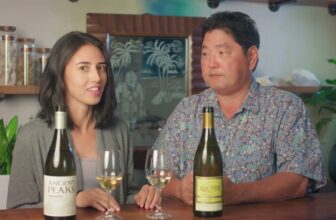
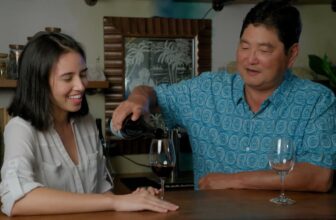
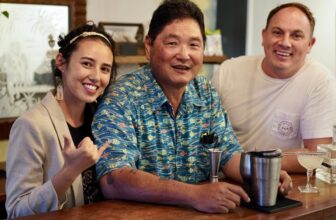
In this episode of Chuck Furuya Uncorked, Chuck and Kali sit down with Kaylee Ehin, a Hawaii beverage professional with a culinary background, distribution experience, brand-building experience, and current work across spirits, champagne, tequila, and local products.
Kaylee has worked in kitchens, helped build restaurant menus, worked in wine and spirits distribution, represented brands, developed cocktails, and now works with projects such as Pao Vodka, Devon Champagne, and Three Trace Tequila.
The episode moves through several worlds:
- Zia’s and local Italian comfort food;
- culinary school and private chef work;
- wine and spirits distribution;
- champagne branding and packaging;
- Pao Vodka and Maui Gold pineapple;
- tequila, Jalisco, and Palomas;
- wine as part of food and life;
- Picpoul and quaffable white wines;
- CF Pinot Noir and lighter red wine;
- Au Bon Climat and Jim Clendenen’s legacy;
- wine heat damage in Hawaii;
- and gratitude for the people who gave Kaylee his start.
The biggest lesson is simple:
A beverage brand needs more than a bottle.
It needs quality, story, purpose, culture, and people behind it.
Who Is Kaylee Ehin?
Kaylee is introduced as someone with his hand in many projects.
He is connected to Pao Vodka, Three Trace Tequila, and Devon Champagne. He has a long history in Hawaii beverage distribution. He also has a culinary background and deep local restaurant connections.
Kali has known him since childhood, partly through Fine Wine Imports and family connections. They also box together several times a week, and Kaylee is part of the same lunch-and-talk-story crew that includes Bubba and Uncle Kimo from another episode.
That makes this episode feel personal.
Kaylee is not just a guest being interviewed from the outside.
He is part of the extended community around the podcast.
Zia’s and the Culinary Foundation
Before distribution and spirits, Kaylee came through food.
Chuck brings up Zia’s, one of his favorite Kaneohe eateries, and Kaylee explains that Zia’s was the first kitchen he ever managed.
He helped create the menu there in the early days, when it was connected to Don Diamond, Tressa Owens, and Robin. For Kaylee, Zia’s is nostalgic because it was his first real restaurant to run.
It was never meant to be precious or elite.
It was hearty, wholesome, local Italian-style comfort food:
- lasagna;
- chicken parm;
- neighborhood pasta dishes;
- family dinner food;
- date-night food;
- and approachable restaurant food for regular people.
Zia’s also represents something bigger. It is the kind of restaurant where people have first dates, first industry jobs, early food memories, and community experiences.
That kind of place matters.
From Culinary School to Private Chef Work
Kaylee also talks about going to culinary school with Kali’s uncle Christian, part of the Schneider family connected to Buzz’s Steakhouse.
He eventually left school because private chef work started opening up. That work took him in another direction, but the cooking foundation stayed with him.
That background matters because it shapes the way he talks about beverage.
He does not see wine, tequila, vodka, or champagne only as products. He sees them in relation to food, guests, menus, restaurants, and experience.
A person with a culinary background asks different questions:
- What does this drink do with food?
- Does it make the meal better?
- Does it fit the room?
- Does it make sense for the guest?
- Does it have a purpose on the table?
That is different from looking only at scores, labels, or margins.
Devon Champagne and the Power of Packaging
Kaylee then talks about Devon Champagne, a champagne brand he owns with his partner Mark Becker.
The champagne is produced by Charles Ellner, a house Chuck remembers from his time managing La Mer, where guests received a complimentary glass of champagne to start the meal.
For Kaylee, Devon Champagne is about finding a place in the market between classic champagne tradition and a newer kind of consumer.
The goal is not to sell cheap champagne in a pretty bottle.
The goal is to combine:
- quality champagne;
- approachable pricing;
- strong packaging;
- shelf appeal;
- and a brand that a newer consumer might actually notice.
That distinction matters.
Good packaging can bring someone to the bottle once.
Quality is what makes them buy it again.
The Glow Label Story
One of the funniest branding lessons in the episode comes from the glow-label champagne.
Kaylee admits that, as a wine person, he felt some pain about selling a blinking or glowing champagne label. To him, that kind of packaging could feel gimmicky.
Then he did a tasting at Fujioka’s with Kevin Toyama and caviar.
At the end, they dimmed the lights and showed the glow label.
People loved it.
Not just young club people. Older customers and serious tasting guests loved it too. The glow-label bottles were the ones that sold out.
That taught a practical lesson:
Sometimes the market tells you what it wants.
The key is to make sure the wine inside the bottle is still good.
Curb appeal can get attention, but repeat buying depends on quality.
Pao Vodka and Maui Gold Pineapple
Kaylee’s work with Pao Vodka is one of the central stories of the episode.
He explains that when he was with Young’s Market / RNDC, he was involved in distribution and had lived close to the distillery on Maui. Over time, he became connected with the people behind the brand and eventually joined as a brand ambassador.
But the Pao Vodka story is not only about vodka.
It is also about Maui Gold pineapple.
Kaylee explains that around 2019, Maui Gold was in danger. The LeVecke family purchased the business before it went into bankruptcy. Part of the reason was supply chain: if Maui Gold disappeared, Pao would no longer have the same pineapple source, and the vodka would no longer be a true Maui product in the same way.
But there was also a community reason.
Buying Maui Gold helped protect jobs and keep the agricultural side alive.
That turns the vodka into more than a distilled spirit.
It becomes part of a local agricultural and community story.
Why Maui Gold Matters
Chuck connects the Maui Gold story to his own experience working in pineapple fields.
He explains that elevation and hang time matter.
Pineapples grown at higher elevation can ripen more slowly. That longer hang time gives more physiological maturity, similar to what grape growers talk about in wine.
That is a useful comparison.
In grapes, sugar ripeness and physiological maturity are not always the same thing. A grape can get sweet before it has full flavor development. Something similar can happen with fruit like pineapple.
Maui Gold’s lower acidity and longer development help make it suitable for fermentation and distillation.
That is why the raw material matters.
A vodka story can still be an agricultural story.
Why Pao Is Different from Generic Vodka
Vodka can be a difficult category because it is often neutral by design.
Many vodkas compete through packaging, lifestyle, price, or image.
Kaylee says that if you are going to sell vodka, you need a reason.
Pao’s reason is Maui:
- Maui Gold pineapple;
- Maui agriculture;
- local jobs;
- a distillery near the processing area;
- value-added use of fruit;
- community stewardship;
- and a real connection to place.
That gives the brand a purpose.
It is not just another bottle on a shelf.
It has a story.
The Paloma: Simple, Bright, and Social
Kaylee makes two drinks for the episode, including a Paloma, which he says is his favorite drink.
He likes it because it is simple.
A Paloma does not need to be overbuilt. At its core, it can be tequila, lime, grapefruit soda or grapefruit element, and refreshment.
For Kaylee, tequila is celebratory. Some people think tequila makes people edgy or aggressive, but he feels the opposite. He finds it upbeat, social, and energizing.
That fits the Paloma perfectly.
It is a drink for people gathering at home, talking story, and keeping the mood lively.
It does not need twenty ingredients.
It just needs balance.
Tequila, Jalisco, and Place
Kaylee also talks about visiting Jalisco and the town of Tequila.
That experience left a strong impression because tequila, unlike many spirits categories, is deeply connected to a place and an agricultural product.
You see the agave fields.
You see the ovens.
You see the people and the history.
You taste something made by families and producers with generations behind them.
Chuck connects with this because it is similar to the way he thinks about wine: to understand a product, he wants to understand the people, the place, and the culture.
Whether it is wine, tequila, vodka, or food, the deeper story matters.
Jack Daniel’s and American Whiskey Memory
Kaylee also talks about visiting Jack Daniel’s and feeling like a kid at the mecca of American whiskey.
He has a personal history with Jack Daniel’s too. At his wedding, he gave out small Jack Daniel’s bottles as favors. The first drink his wife ordered when they sat together at a bar was Jack Daniel’s, straight in the glass.
That story is funny, but it also shows how beverage memories become personal.
People do not always connect with drinks because of technical details.
Sometimes they connect because of a person, a night, a place, or a moment.
Wine Travel vs Distributor Travel
The conversation then moves into wine travel.
Kaylee has traveled for spirits and distribution, but he points out that distributor travel is often practical. It may be a meeting with a supplier in a hotel, a brand presentation, or a business trip.
That is different from Chuck’s kind of wine travel, where he often visits small one-person wineries, walks vineyards, talks to growers, and looks for the artistry behind the wine.
Kaylee understands both sides.
The distributor has to ask:
Will this sell?
The sommelier or wine hunter may ask:
Is this meaningful?
Is this delicious?
Does it show place?
Does it have soul?
Both worlds matter, but they are not the same.
Fine Wine vs Commodity Wine
Kaylee credits his time with Fine Wine Imports for giving him a foundation in what fine wine actually is.
Working with Kali’s mother and grandmother helped him understand the difference between a wine that is simply a product and a wine with real character.
At the same time, he does not dismiss commercial wine completely.
He and Chuck both make room for different levels.
There is room for fast food and Helena’s.
There is room for commodity wine and tiny grower wine.
There is room for accessible sweet wine and serious wine.
The important thing is not to pretend all bottles are equal.
There are good and bad wines at every price point.
A cheap wine can be delicious and well made.
An expensive wine can be disappointing.
Part of the professional’s job is helping people sort through that.
How Kaylee Got Into Wine
Kaylee’s own wine path began while cooking on the Big Island.
He was working at Kukio Golf and Beach Club when Kit Nagelman came in looking for a wine salesperson for the Big Island. Someone recommended Kaylee from the kitchen.
That opened the door to Fine Wine Imports.
At first, Kaylee says he knew almost nothing about wine. He would go to Kona Wine Market, taste with Fern, learn what he could, then take that information out into the market.
He was learning in real time.
That is important because many wine professionals begin that way.
You do not start knowing everything.
You start with exposure, repetition, humility, and the need to communicate.
Two Wine Aha Moments
Kaylee mentions two wines that opened his mind.
The first was a Sancerre that helped him understand what that style was supposed to taste like.
The second was a Patz & Hall Pinot Noir that changed his idea of what Pinot Noir could be. He remembers it as velvety, rich, delicious, structured, and not too heavy.
That bottle helped push him deeper into fine wine.
Aha moments are not always predictable.
Sometimes one bottle makes a whole category suddenly make sense.
Teaching One Useful Thing
Kaylee says something very important about wine education.
When he did tastings, he wanted people to leave with one more thing than they knew before.
Not ten things.
Not a lecture.
One thing.
That is a powerful way to teach wine.
Most people do not need to be buried under information. They need one useful idea they can remember and apply later.
Chuck does this well too. He gives people the level of information they can actually digest.
That is why the podcast works.
It does not try to intimidate people with expertise.
It tries to make them enjoy more and ask better questions.
What Kaylee Drinks Now
Kaylee says he does not usually drink at home on a normal night. When he does drink, it is often beer or tequila neat.
When he goes out, he does not force wine into every situation.
If he is at a steakhouse, he will drink wine.
If he is eating certain Italian food, wine makes sense.
But with Thai food, he may prefer an ice-cold beer.
That is a practical view.
Wine can pair with many foods, including Chinese, Thai, Korean, and local foods. But that does not mean wine has to be the answer every time.
The best drink is the one that fits the moment.
The Return to Light Whites
Kaylee says many seasoned wine people eventually loop back toward old-world whites: light-bodied, fresh, quaffable, low-alcohol, and delicious.
His home-pour type of wine is Picpoul de Pinet.
He likes it because it is affordable, fresh, and always enjoyable. It is the kind of wine that can make beer drinkers and rosé drinkers try something different without feeling pressured.
That is a classic wine-professional move.
After tasting big, expensive, famous, heavy bottles, many people eventually return to wines that are simply refreshing and useful.
Picpoul, Albariño, Grüner, and Easy Discovery
Kaylee talks about bringing different white wines to friends who usually drink only rosé, Pinot Noir, or familiar bottles.
He introduces wines such as:
- Picpoul;
- Albariño;
- Grüner Veltliner;
- other fresh whites;
- and light, gulpable styles.
The goal is not to force people to become wine geeks.
The goal is to make wine discovery fun.
Try a bottle.
See if you like it.
Move on.
Come back to the ones that work.
That is how people build real taste.
Pinot Noir as Kaylee’s Jam
Later in the episode, the conversation shifts to Pinot Noir.
Kaylee says he loves lighter reds, and Kali says Pinot is Kaylee’s jam.
They had tasted 32 wines the night before with serious industry people, including Chris Ramelb and Shawn Sono. After that kind of tasting, the palate can get destroyed, especially when wines are high acid or numerous.
That leads into the two Pinot Noirs selected for the episode:
- CF Pinot Noir 2018
- Au Bon Climat Pinot Noir 2016 Larmes de Grappe
Both show different ideas about what Pinot Noir can be.
What Pinot Noir Should Be
Chuck gives his personal view of Pinot Noir.
For him, Pinot Noir should be:
- elusive;
- alluring;
- light in color;
- feminine;
- pretty;
- finesse-driven;
- and seductive rather than showy.
He contrasts that with many popular modern Pinot Noirs that are dark, ripe, heavy, oaky, and high in alcohol.
Those wines can be valid, but they are not his preferred version of Pinot Noir.
He is looking for something lighter, more delicious, more gulpable, and more natural with food.
CF Pinot Noir 2018
The first wine is CF Pinot Noir 2018.
Chuck explains that the CF wines were created because he could not consistently find wines at the quality, price point, and availability he needed for restaurants.
So he created them.
Each CF wine had a specific intention, a selected winemaker, and a clear purpose.
For the Pinot Noir, Chuck chose a particular grower and site for several reasons:
- family-owned vineyard;
- Martini heritage vine selection;
- sandy soils;
- Santa Maria Valley;
- coastal wind;
- old vines planted around 1989, 1990, and 1991;
- own-rooted vines;
- old oak rather than new oak;
- and a naturally savory style.
This wine was not designed to impress collectors.
It was designed to work at the table.
Martini Clone and Reticent Pinot Noir
The Martini selection matters because it is not flashy.
Chuck says it is more reticent, feminine, transparent, delicate, and finesse-driven.
That is exactly what he wants.
Showy Pinot Noir can be exciting for a few sips, but with food, he wants completeness, balance, and flow.
The CF Pinot Noir is light in color, silky in texture, pretty in aroma, and savory in the finish.
It is not trying to be black, powerful, or high scoring.
It is trying to be delicious.
Sand, Wind, and Santa Maria Valley
The vineyard source also matters.
The vineyard sits on a mesa in Santa Maria Valley, where wind pounds the vines and the climate is far cooler than hotter California regions.
Chuck notes that in June, Santa Maria can be around 68 degrees while Napa may be over 100 degrees.
The sandy soil gives transparency and fragility rather than heaviness.
The coastal influence and wind add freshness.
The old vines add depth.
Together, those factors explain why the CF Pinot Noir can be light yet not simple.
Savoriness in Pinot Noir
One of the most important ideas in this section is savoriness.
Chuck explains that the CF Pinot Noir is not only about cherries and berries.
It has umami.
It has a savory quality that makes it more useful with food.
The winemaker also adds lees from reserve wine to give more umami and depth.
Savoriness is hard to define, but easy to feel.
It is the difference between a wine that tastes only fruity and a wine that feels like it belongs with a meal.
It makes the wine more complete.
Why CF Pinot Noir Works with Food
The CF Pinot Noir was made for restaurant food.
That means it had to work across many dishes and cooking styles, not just one pairing.
It needed to be:
- light enough for Hawaii’s climate;
- fresh enough to keep people drinking;
- savory enough for food;
- low enough in oak and alcohol;
- affordable enough for regular use;
- and consistent enough for restaurants.
That is a very specific job.
The wine is not meant to be the center of attention.
It is meant to make the meal better.
Au Bon Climat Pinot Noir 2016 Larmes de Grappe
The second Pinot Noir is Au Bon Climat Pinot Noir 2016 Larmes de Grappe.
Chuck and Kaylee discuss it in the context of Jim Clendenen, who had recently passed away at the time of the episode.
Au Bon Climat is a legendary name in California wine, especially for Pinot Noir and Chardonnay. Jim Clendenen helped shape a more restrained, Burgundy-influenced vision of California wine.
The Larmes de Grappe bottling is described as a special wine that Clendenen made from time to time.
Compared with CF Pinot Noir, the Au Bon Climat has more bottle age, more texture, and a different kind of completeness.
Two Pinot Noirs, Two Lessons
The two Pinot Noirs are not presented as a simple winner-loser comparison.
They show two different expressions.
CF Pinot Noir is:
- lighter;
- more savory;
- transparent;
- gulpable;
- delicate;
- sandy-soil driven;
- and made for everyday food compatibility.
Au Bon Climat Larmes de Grappe is:
- more mature;
- more layered;
- more resolved;
- more polished;
- more tactile;
- and tied to the legacy of a great California winemaker.
Both wines show that Pinot Noir does not have to be huge to be serious.
The best Pinot can be light, seductive, complex, and deeply satisfying.
Bottle Age and Texture
The Au Bon Climat has the advantage of bottle age.
Chuck often talks about the difference between wines that can age and wines that actually get better with age.
This wine shows what age can do when the material is right.
It can soften edges.
It can melt the wine into a more seamless texture.
It can make the wine feel more resolved and tactile.
That is different from simple fruit.
It becomes about harmony.
Why Light Pinot Noir Can Be More Current Than Ever
Kaylee and Chuck talk about how the CF wines may be more current now than when they were first created.
For years, wine fashion often rewarded bigger, darker, higher-alcohol reds.
But many drinkers are now looking for wines that are:
- lighter;
- lower in alcohol;
- fresher;
- more food-friendly;
- less oaky;
- less tiring;
- and more drinkable.
That makes the CF Pinot Noir feel ahead of its time.
It was not chasing fashion.
It was built around food.
And food-friendly wines never really go out of style.
The Hawaii Context
Hawaii is important in this discussion.
Warm climate, local food, Asian-inspired flavors, seafood, pork, smoke, salt, sweetness, and spice all change what wines make sense.
A heavy, high-alcohol red can feel exhausting.
A lighter Pinot Noir can stay alive.
It can work with a wider range of local and restaurant dishes because it does not dominate the table.
That is why Chuck has spent so much time advocating for lighter reds, Riesling, and high-acid whites.
They fit Hawaii better.
Heat Damage and Wine Storage
Near the end, Chuck tells a story about heat damage.
He remembers receiving a difficult-to-get Merlot from northeast Italy. When the wine first arrived, it was bright purple and alive. After shipping complications, the wine came back a few days later looking brown.
That image stayed with him.
It showed how quickly wine can deteriorate from heat and poor handling.
This matters especially in Hawaii, where heat and shipping conditions can be brutal.
Wine is fragile.
Temperature control is not snobbery.
It protects the bottle.
Why Transport Matters
Kaylee and Chuck talk about how careful Kali is with wine pickups because he knows Chuck will worry if wines sit in heat too long.
That is not paranoia.
Wine can change fast when exposed to heat, sunlight, or poor storage.
A wine can lose freshness, color, aroma, and life in days.
That is one reason Chuck buys from people he trusts and cares so much about how bottles are moved and stored.
Good wine is not only made in the vineyard and cellar.
It has to survive the journey to the glass.
The Greek Winemaker Who Would Not Ship
Chuck also tells a story about a Greek producer who refused to ship his wines because he believed they could deteriorate even over a short distance.
The producer had given a bottle to a friend who lived only minutes away. When the bottle was opened later, it no longer tasted right. That experience convinced him not to ship.
Whether someone agrees with that extreme view or not, the lesson is clear:
Some wines are deeply sensitive.
For producers who care that much, the bottle is not just a commodity.
It is a living thing.
Gratitude and Full Circle
The episode closes on a personal note.
Kaylee says being on the podcast is special because his career path traces back to Kali’s mother and grandmother.
He remembers meeting Kali when Kali was young and working around Fine Wine events. More importantly, he credits Fine Wine Imports and Kali’s grandmother with giving him a foundation in the wine business.
They gave him trust.
They gave him a chance.
They taught him how to think about business, wine, and responsibility.
Kaylee says his later work in wine, spirits, distribution, vodka, tequila, champagne, and brand building all connects back to that starting point.
That is the heart of the episode.
Careers are built by people who give someone a chance.
Final Takeaway
This episode with Kaylee Ehin is about much more than one wine or one spirit.
It is about how beverage careers are built.
Kaylee’s path moves through kitchens, private chef work, Zia’s, Fine Wine Imports, distribution, spirits, champagne, vodka, tequila, and brand development.
The Pao Vodka story shows why a brand needs purpose. Maui Gold pineapple, local agriculture, jobs, community stewardship, and Maui identity make the vodka more than another neutral spirit.
The Devon Champagne story shows why packaging and quality both matter. A glow label can attract attention, but the champagne inside has to be good enough for people to come back.
The Paloma shows why simple drinks can be powerful when they are refreshing, social, and built around real enjoyment.
The CF Pinot Noir 2018 shows Chuck’s vision of food-friendly Pinot Noir: light, savory, delicate, sandy, windy, old-vine, and made to work with restaurant food.
The Au Bon Climat Pinot Noir 2016 Larmes de Grappe honors Jim Clendenen’s legacy and shows how California Pinot Noir can age into something seamless, tactile, and deeply expressive.
The biggest lesson is simple:
Good beverage is never just liquid.
It is people, place, agriculture, story, logistics, temperature, trust, and the chance someone gave you when you were just starting.
That is what makes the glass matter.
FAQ
Who is Kaylee Ehin?
Kaylee Ehin is a Hawaii beverage professional with a culinary background, wine and spirits distribution experience, and current work with brands such as Pao Vodka, Devon Champagne, and Three Trace Tequila.
What is Kaylee’s connection to Zia’s?
Zia’s was the first kitchen Kaylee managed, and he helped create the menu in its early days.
What is Devon Champagne?
Devon Champagne is a champagne brand Kaylee owns with Mark Becker, produced by Charles Ellner and built around quality champagne with modern packaging appeal.
What is the glow-label champagne story?
At a tasting, Kaylee expected serious wine customers to ignore the glowing label, but those bottles sold out because people loved the packaging after tasting the champagne.
What is Pao Vodka made from?
Pao Vodka is connected to Maui Gold pineapple and the effort to make a vodka that represents Maui rather than being a generic neutral spirit.
Why does Maui Gold pineapple matter to Pao Vodka?
Maui Gold gives the vodka a local agricultural story, helps preserve jobs and supply chain, and connects the brand to Maui.
Why is pineapple useful for vodka production?
Pineapple already contains sugar, so it avoids some of the starch-to-sugar conversion steps required for grain-based spirits.
What drink does Kaylee make in the episode?
Kaylee makes a Paloma, a simple tequila-based drink he loves for its refreshing and celebratory character.
What wine does Kaylee mention as a go-to white?
Kaylee mentions Picpoul de Pinet as a fresh, quaffable, affordable white wine he enjoys.
What Pinot Noirs are tasted in the episode?
The episode features CF Pinot Noir 2018 and Au Bon Climat Pinot Noir 2016 Larmes de Grappe.
What is special about CF Pinot Noir?
CF Pinot Noir is light, savory, food-friendly, made from Santa Maria Valley fruit, and designed to work with restaurant food.
Why does Chuck like Martini clone Pinot Noir?
Chuck likes Martini because it is more delicate, transparent, reticent, and finesse-driven rather than flashy or showy.
What is special about Au Bon Climat Larmes de Grappe?
It is a special Pinot Noir bottling associated with Jim Clendenen and shows a more mature, layered, resolved side of California Pinot Noir.
Why does wine temperature matter in Hawaii?
Heat can damage wine quickly, making it lose color, freshness, and life. Temperature-controlled storage and transport are especially important in warm climates.
What is the biggest lesson from this episode?
The biggest lesson is that great beverage brands and great wines depend on story, purpose, people, place, quality, and care from production all the way to the glass.



I've heard a lot about Pao Vodka but never tried it. How does the Maui Gold pineapple impact the flavor compared to other vodkas?
Great question! The Maui Gold pineapple adds a unique sweetness and fruity note that really sets it apart. It's definitely not your typical vodka taste.
The Maui Gold pineapple contributes a distinct flavor profile due to its low acidity and longer ripening process, making it excellent for distillation.
I actually tried Devon Champagne recently at a restaurant in Hawaii. The packaging did catch my eye, and I was pleasantly surprised by the taste. It had a good balance of acidity and fruit. I think the story behind it really adds to its appeal. It feels like you’re drinking something with purpose.
I agree! The combination of good branding and a quality product is so important. I loved how Kaylee shared that it’s not just about the looks but the taste too.