
Wine does not need to start with expensive bottles, famous regions, or complicated tasting language.
Sometimes it starts with one simple question:
What should I drink next?
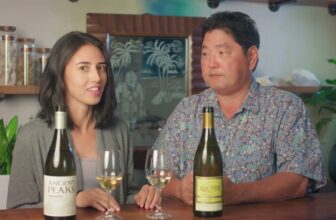
In this episode of Chuck Furuya Uncorked, Chuck and Kali are joined by Bubba / Kobe and his father Kimo for a conversation about wine, family, boxing, discipline, local food, and pure enjoyment.
Bubba is Kali’s boxing coach and an amateur fighter. He trains hard, wakes up early, and brings the same focus to life that he brings to martial arts. Kimo, his father, spent years as an ironworker, later built a security business connected to surfing events, and now enjoys watching his children grow and live their own lives.
This episode works because it is not about wine experts talking to other wine experts.
It is about real people beginning their wine journey.
The wines include:
- Moscato d’Asti
- a sparkling wine from Bugey in eastern France
- German Riesling
- and local-style food with sardines, onions, tomatoes, shoyu, poi, and paʻi ʻai.
The lesson is simple:
Start with enjoyment.
Then ask questions.
Then keep going.
Father and Son at the Table
The episode begins with a clear theme: father and son.
Chuck and Kali are father and son. Bubba and Kimo are father and son. That gives the whole conversation a different kind of energy.
There is joking, teasing, respect, and a lot of real affection underneath everything.
Kimo talks about changing his life after years in physically demanding work. He had been an ironworker for 14 years, saw how short and hard that life could be for many people, and eventually started his own security company. His work connected him to the surfing world, including major surf events and companies coming to Hawaii.
But underneath the work stories, the bigger message is about family.
Kimo talks about enjoying life with his wife and kids because nothing is promised.
That same feeling runs through the whole episode.
Wine becomes part of family time, not something separate from it.
Bubba’s Discipline
Bubba’s story brings martial arts into the wine conversation.
He has trained since he was young. He gets up early, trains multiple times a day, and treats preparation seriously.
Kali points out that there is a similarity between martial arts and wine study.
Both require:
- repetition;
- discipline;
- humility;
- practice;
- patience;
- guidance;
- and the willingness to start from the beginning.
That comparison is one of the best parts of the episode.
Wine can look casual when someone experienced talks about it. But behind that ease is years of repetition. Martial arts is the same. A good fighter makes movement look natural because of hours of work no one sees.
Wine Without Shaming
Chuck makes it clear that this episode is not about shaming anyone for where they start.
Bubba started with sweet, fruity wines. He liked wines that were easy, fizzy, and familiar. He describes one Moscato as reminding him of Sprite.
That is not a problem.
That is a starting point.
Chuck says many people begin with wines that are lower in alcohol, slightly sweet, refreshing, and easy to drink. Those wines make the transition into wine less harsh because they avoid the immediate bitterness, alcohol heat, or dryness that can turn new drinkers away.
There is no shame in that.
The goal is not to pretend to like something serious.
The goal is to enjoy what is in the glass and slowly understand why.
Why Moscato d’Asti Is a Great Entry Wine
The first wine is Moscato d’Asti.
This makes sense for Bubba’s palate because Moscato d’Asti is typically:
- lightly sparkling;
- low in alcohol;
- sweet but refreshing;
- aromatic;
- fruity;
- easy to drink;
- and not bitter or heavy.
Chuck explains that its lower alcohol level matters. Because fermentation is stopped before all the sugar becomes alcohol, some natural sweetness remains. That sweetness covers the sharper edges and makes the wine feel delicious.
For a new wine drinker, that matters.
It can taste like:
- cold lychee;
- chilled fruit;
- a light spritz;
- a refreshing soda-like wine;
- or a cold apple on a hot day.
That is why Moscato d’Asti is often an entry point.
Moscato Is Still a Real Wine
Chuck also separates this kind of wine from simple wine-cooler-style drinks.
There is a difference between making wine taste like a cocktail and making a traditional wine from a grape grown in a specific place.
Moscato d’Asti comes from the Moscato grape around Asti in Piemonte, Italy. Chuck compares it to the idea of Kula onions: the place matters. The same crop can behave differently depending on where it is grown.
That is a key idea.
Even a sweet, fun, entry-level wine can still have real place behind it.
It can be enjoyable and meaningful at the same time.
Learning to Ask in a Wine Store
One of Bubba’s stories is very relatable.
He goes into a wine store looking for a bottle he does not know how to pronounce. Instead of pretending, he shows the person what he is looking for and ends up buying several bottles.
That is exactly how many people begin.
Wine shops can be intimidating when you do not know the words, the labels, the regions, or the pronunciation.
Chuck and Kali’s advice is simple: build a relationship with a good specialty wine shop.
Instead of guessing alone, ask:
- I liked this wine. What else should I try?
- I want something sweet but not too heavy. What do you recommend?
- I want something for spicy food. What should I buy?
- I want to spend around $15. What is good?
- I want something refreshing for a hot day. What works?
That is how people learn.
Not by pretending.
By asking.
The Second Wine: Sparkling Bugey
After Moscato d’Asti, Chuck brings out another sparkling wine from Bugey, an area in eastern France near the foothills of the French Alps.
This wine is also fizzy and refreshing, but it is different from Moscato.
Bubba notices the bubbles first.
That is important because bubbles change how wine feels in the mouth. They give texture, lift, and movement. They can make the wine feel playful, cool, and refreshing.
Kimo notices more fruit.
Chuck explains that this wine is more fruit-forward, while the Moscato has more mineral character.
That difference becomes a simple lesson in terroir.
Why Bubbles Matter
For a new wine drinker, bubbles can be a bridge.
They make wine feel more familiar because many people already like soda, sparkling water, beer, seltzer, or other carbonated drinks.
A wine with bubbles can feel:
- more refreshing;
- more playful;
- less heavy;
- more cooling;
- and more active on the palate.
That is why the Bugey wine makes sense in this episode.
It keeps the conversation fun while still moving Bubba and Kimo into a new category.
Sweetness Progression
Chuck introduces one of the most useful pairing ideas in the episode:
What you drink second should usually be at least as sweet as what you drank first.
He gives a simple example.
Coca-Cola tastes sweet on its own. But if you eat a Snickers bar first, the Coca-Cola can suddenly taste dry or bitter.
The same idea applies to wine.
If you drink a sweeter wine first, the next wine may taste sharper, drier, or more bitter than it normally would.
That is why tasting order matters.
It also explains why sweet foods can make dry wines taste worse.
Soil and Wine
Chuck then uses the Moscato and Bugey comparison to talk about soil.
He believes soil affects wine deeply.
He explains that sand and calcareous white soils are meager soils. They do not hold nutrients and water the same way richer soils do. That changes how vines grow and how the wine feels.
For him, the Moscato shows more uplift and minerality because of where it is grown, while the Bugey wine feels more fruit-forward because of its darker rock, clay, and different soil conditions.
The scientific debate around whether vines literally transmit soil minerals into grapes is not the main point here.
The practical point is this:
Wines from different places taste and feel different.
And once you notice that, wine gets more interesting.
Local Grinds: Sardines, Onions, Tomatoes, Shoyu, and Poi
The food section is one of the strongest parts of the episode.
Kimo brings a simple local-style dish made from sardines, onions, tomatoes, shoyu, and seasonings. It is the kind of food he grew up eating at home.
It is simple, direct, and local.
He explains that when they were growing up, you did not always just go to the store for poke. You had to know someone who fished or dove. So foods like canned sardines, onions, tomatoes, salt, shoyu, poi, and simple pantry ingredients were part of real home eating.
This is exactly the kind of food the podcast is built to explore.
Not fancy food.
Real food.
Paʻi ʻAi and Poi
They also bring poi and paʻi ʻai.
Bubba explains the difference in simple terms. Paʻi ʻai is thicker and less diluted, while poi becomes smoother and thinner as more water is added.
He also talks about how poi changes with time.
Fresh poi is different from older poi. As it sits, it becomes more sour. Some people prefer that sourness. It becomes part of the flavor.
That discussion matters because wine pairing is not only about the main ingredient.
Texture and fermentation matter too.
Poi has texture, sourness, earthiness, and cultural meaning.
That changes the pairing.
Why Moscato and Bugey Are Too Sweet for the Food
Once the sardines, onions, tomatoes, shoyu, and poi come out, Chuck changes the wine.
The Moscato and Bugey are too sweet for this food.
That does not make them bad wines.
It means they belong in a different setting.
With salty, savory, fishy, shoyu-driven food, too much sweetness can feel wrong. The wine can become disconnected from the dish.
So Chuck reaches for German Riesling.
Why German Riesling Works
The Riesling works because it has the right balance.
It is lower in alcohol, around 10.5%, and it has enough fruit and freshness to handle salty, spicy, and savory local flavors.
Chuck explains that foods with shoyu, chili pepper water, salt, sweetness, and spice can clash with wines that have too much:
- oak;
- alcohol;
- bitterness;
- or tannin.
German Riesling avoids much of that problem.
It can refresh the palate without becoming harsh.
It also has enough fruit to keep the pairing pleasurable.
Riesling with Sardines and Shoyu
The sardine dish has several strong components:
- fishiness;
- oil;
- tomato;
- onion;
- shoyu;
- salt;
- savory depth;
- and local comfort-food character.
A high-alcohol, oaky wine would likely fight that.
A heavy red would probably become bitter and metallic.
A simple sweet wine might feel too sugary.
Riesling sits in the middle.
It refreshes the palate, handles the salt, and keeps the food tasting good.
This is the practical lesson:
The best wine for local food is not always the wine people expect.
Riesling with Poi
Riesling also works with poi because it does not overwhelm it.
Poi can be subtle, sour, earthy, and textural. A big wine would crush it. A very dry, high-acid white might feel too sharp. A sweet wine might feel clumsy.
A balanced, low-alcohol Riesling can move with the food instead of fighting it.
That makes the pairing feel natural.
Salty, Sweet, Spicy: What to Avoid
Chuck gives a simple rule for many local and Asian-inspired foods.
When food is salty, sweet, spicy, or shoyu-driven, be careful with wines that are:
- high in alcohol;
- heavily oaked;
- bitter;
- very tannic;
- or too dry for the dish.
Those elements can become exaggerated.
The wine can taste hotter, harsher, more bitter, or more alcoholic than it would on its own.
That is why lower-alcohol, slightly fruity, refreshing wines often work better.
Wine as a Way of Life
Chuck also connects wine to the way people drink in parts of Europe.
In southern France and other regions, wine is not always treated as a luxury object. It is a way of washing down food, staying refreshed, and making the meal more enjoyable.
That is the spirit he wants to bring to local food.
Wine does not need to replace beer, soda, iced tea, or fruit punch for everyone.
But it can sit at the table in the same casual way.
It can be part of everyday enjoyment.
Temperature-Controlled Wine Matters
The episode also touches on why wine can taste different depending on how it is shipped and stored.
Chuck explains that getting a real wine to Hawaii for around $13.99 is not as simple as it looks. There is the bottle, label, cork, box, shipping, taxes, grape growing, winemaking, and temperature-controlled transport.
Temperature control matters because shipping containers can get extremely hot. If wine is exposed to heat for weeks, it can taste cooked, flat, or damaged.
That is another reason Chuck recommends buying from stores that take wine seriously.
Good wine is not only about the producer.
It is also about how the bottle gets to you.
Wine Is Not Just for Status
Kimo makes one of the most important cultural points in the episode.
For many people, wine can feel like something connected to status, money, or a certain kind of lifestyle. It may not feel like it belongs to people from Waianae, Kalihi, or everyday local families.
That is exactly the barrier the podcast is trying to break down.
Wine should not be only for people who already know the vocabulary.
It should be open to anyone who wants to enjoy it.
A $13.99 bottle can be a real wine experience.
You do not need to spend $100 to begin.
Starting from the Bottom
The conversation later moves into work, discipline, and paying dues.
Chuck talks about washing dishes and polishing glasses. Kimo talks about surf contest work, security, and doing whatever job needs to be done. Bubba talks about starting young and learning responsibility.
The message is clear:
Nothing is beneath you if you want to get good.
That applies to restaurants, surfing, security, fighting, wine, and life.
Start at the bottom.
Do the job well.
Build credibility.
That is how respect is earned.
Wine and Martial Arts
Wine and martial arts may seem unrelated, but this episode connects them beautifully.
Both require humility.
Both require repetition.
Both reward people who pay attention.
Both can be intimidating from the outside.
Both have teachers, students, technique, memory, and feel.
In fighting, you learn through the body. In wine, you also learn through the body: taste, smell, texture, acidity, sweetness, bubbles, alcohol, and food.
The more you practice, the more you notice.
The Best Way to Learn Wine
The best way to learn wine from this episode is simple:
- Start with something you already enjoy.
- Do not be ashamed of sweet or fizzy wines.
- Ask questions at a good wine shop.
- Taste with food.
- Notice what works and what does not.
- Try one new bottle at a time.
- Pay attention to alcohol, sweetness, bubbles, and texture.
- Keep it fun.
You do not need to memorize everything first.
You learn by drinking, eating, asking, and comparing.
Final Takeaway
This episode with Bubba and Kimo is one of the clearest examples of what Chuck Furuya Uncorked is trying to do.
It brings wine out of the world of status and puts it back at the table with family, food, questions, jokes, and real life.
Bubba starts with Moscato d’Asti because it is sweet, fizzy, low in alcohol, and refreshing. That is a valid starting point.
The Bugey sparkling wine adds another kind of fizz and fruit, showing how bubbles can make wine fun and cooling.
The German Riesling shows how lower-alcohol, refreshing wine can work with local foods like sardines, onions, tomatoes, shoyu, poi, and chili pepper water.
The bigger lesson is not about one bottle.
It is about permission.
You are allowed to start where you are.
You are allowed to like sweet wine.
You are allowed to ask questions.
You are allowed to drink wine with local food.
You are allowed to learn slowly.
And when wine becomes part of family, food, discipline, and pure enjoyment, it stops being intimidating.
That is the whole point.
FAQ
Who are the guests in this episode?
The guests are Bubba / Kobe and his father Kimo, joining Chuck and Kali for a father-and-son wine conversation.
What is this episode about?
The episode is about starting a wine journey, enjoying Moscato d’Asti, trying Bugey bubbles, pairing German Riesling with local food, and making wine feel approachable.
Why does Bubba like Moscato d’Asti?
He likes it because it is sweet, fizzy, refreshing, and reminds him of Sprite or cold fruit.
Is Moscato d’Asti a good beginner wine?
Yes. Moscato d’Asti can be a great entry wine because it is lower in alcohol, lightly sparkling, sweet, aromatic, and easy to drink.
Does Chuck shame people for liking sweet wine?
No. Chuck makes it clear that there is no shame in starting with sweet or fizzy wine. Enjoyment comes first.
What is the second sparkling wine in the episode?
Chuck brings out a sparkling wine from Bugey in eastern France, near the foothills of the French Alps.
Why does Bubba like the Bugey wine?
He likes the fizz and the way the bubbles play on his palate.
Why does tasting order matter?
If you drink or eat something very sweet first, the next wine can taste drier, sharper, or more bitter than it really is.
What food does Kimo bring?
Kimo brings a local-style dish with sardines, onions, tomatoes, shoyu, and seasonings, served with poi and paʻi ʻai.
Why does Riesling work with that food?
Riesling works because it is lower in alcohol, refreshing, slightly fruity, and able to handle salty, spicy, savory, shoyu-driven flavors.
Why are Moscato and Bugey not ideal with the sardine dish?
They can be too sweet for the savory, salty, fishy food, while Riesling gives a better balance.
What wines work best with salty or spicy local foods?
Lower-alcohol, refreshing wines with some fruit often work well. Heavy oak, high alcohol, strong bitterness, and aggressive tannins can clash.
What is the biggest lesson from this episode?
The biggest lesson is that wine should not be intimidating. Start with what you enjoy, ask questions, taste with food, and let wine become part of family, conversation, and pure enjoyment.





What are some good food pairings with Moscato d’Asti? I'm new to wine and want to know what to serve with it.
I think it goes really well with spicy Asian dishes! The sweetness balances the heat nicely.
Great point! Moscato d’Asti pairs well with spicy foods, and it also complements desserts like fruit tarts or light cakes.
I started my wine journey with Moscato too! It was so approachable and delicious. Now I’m exploring more varieties.
That's awesome! Moscato really is a great starting point. What are you trying next?
Does the sweetness of a wine really affect how you perceive the next wine you drink? I didn't know that!
Exactly! The order in which you taste wines can drastically change your perception of them.
Yes, it does! If you have a sweet wine first, the next one might taste more bitter if it’s dry. It's all about balance.
How does the Bugey sparkling wine compare to Prosecco? I'm trying to decide if I should buy one or the other.
That's a good comparison! Bugey sparkling wine tends to be more fruit-forward, while Prosecco can have more of a floral character.
Bugey is often fruitier than Prosecco, which can have a more floral note. Both are great, but it depends on your taste preference.
Love this episode! It's so refreshing to see a casual conversation about wine instead of just experts talking.
Absolutely, it makes wine feel more accessible to everyone.
I disagree that Moscato is a good starting point. I think it can be too sweet for some newbies. Dry whites can be more complex and interesting!
That's a fair point! Dry whites definitely have their appeal, but I think Moscato helps ease people into the wine world.
Both sides have merit! It really comes down to personal preference and what flavors someone enjoys.