
Wine can be studied through books, maps, exams, and tasting grids.
But it can also be understood through family kitchens, old recipes, restaurant meals, Chinese food, Hawaiian food, and the way a bottle becomes part of a story.
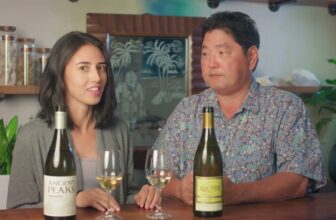
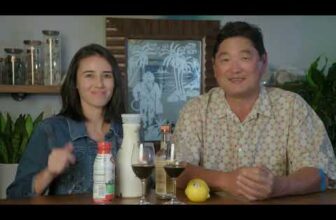
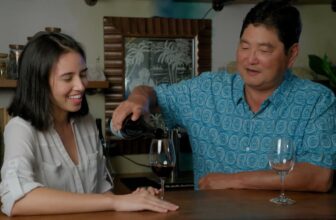
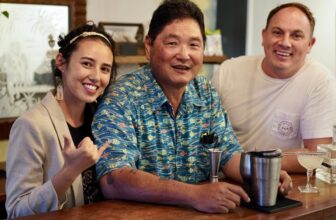
In this episode of Chuck Furuya Uncorked, Chuck sits down with David Yoshida, a local Hawaii-born Master Sommelier, along with Ariana Suchia, for a conversation about wine, storytelling, learning, food pairing, blind tasting, and the pure enjoyment of wine.
David grew up in Mililani, went to Iolani, spent 18 years on the mainland, passed the Master Sommelier exam in 2017, and returned home to Hawaii. He is also involved with the Court of Master Sommeliers through ethics and education work.
The episode moves through several big themes:
- why wine is a storytelling medium;
- how family food memories shape wine understanding;
- why great wine pairing can happen with Chinese food and Hawaiian food;
- how to build a small tasting group;
- how blind tasting helps people develop language;
- why Torbreck Cuvée Juveniles works with grilled meat;
- why Rías Baixas Albariño can be exotic and precise;
- and how acidity, climate, ripeness, and physiological maturity affect wine.
The main lesson is not that wine needs to be complicated.
The lesson is that wine becomes more meaningful when you connect it to food, place, memory, and method.
David Yoshida’s First Wine Aha Moment
David did not grow up with wine as a serious part of daily life.
He jokes that his beverage of choice was milk. Later, in college and early adulthood, he still did not have much wine context. To him, wine was just wine.
Then came one memorable restaurant experience.
He brought wine to a Thanksgiving gathering and was told it was not very good. That planted the idea that “good wine” existed as a category. Later, at a restaurant with a great wine list but poor sommelier service, he was guided toward a wine that opened his mind.
It was an Oregon Pinot Noir, served from a half bottle, and it cost far more than he expected.
The service was awkward, but the wine itself changed something for him.
For the first time, wine smelled like something he wanted to chase.
That became an aha moment.
Wine as Storytelling
David explains that wine tells incredible stories.
A wine can tell stories about:
- history;
- chemistry;
- geology;
- family;
- migration;
- climate;
- farming;
- place;
- culture;
- and human intention.
That is what made wine so rich for him. Even before opening the bottle, a label can point toward a place, a tradition, a grape, or a historical path.
Chuck connects this to Hawaii’s own food culture.
He talks about family-owned restaurants, recipes passed down through generations, small hole-in-the-wall places, and the difference between a recipe as written and a dish made with lived intent.
The same is true in wine.
A technical recipe can never capture the whole meaning.
The hands matter.
The place matters.
The intent matters.
Food Memories and Wine
David compares wine stories to the way family food stories come out in the kitchen.
During mochitsuki or family cooking, someone might start cutting or preparing an ingredient and suddenly begin telling a story about:
- how their mother made the dish;
- where they used to buy a special ingredient;
- what changed when a store closed;
- what food was like during hard times;
- or how a recipe survived through generations.
For David, wine can work the same way.
A bottle can carry the story of a family, a vineyard, a village, or a technique. You can taste the result, but you can also ask why it came to be that way.
That is where wine becomes more than a drink.
It becomes a cultural object.
Kalin Semillon and Chinese Food
One of David’s most important wine-and-food memories involves Kalin Cellars Semillon with Chinese food.
He describes tasting aged Semillon with dishes like tea-smoked duck and black bean sauce crab. The pairing changed how he thought about wine.
The key idea was that the wine became like sauce for the food.
David explains that the wine should be in your mouth at the same time as the food, not treated as a separate thing. He compares it to eating loco moco: you do not eat the egg first, then the gravy, then the patty. You eat the elements together.
That is how wine can work.
It becomes part of the bite.
With aged Semillon, the dominant character is not just fruit or acid. It can develop umami, texture, savory depth, and flavors that connect naturally with soy, black bean, roasted flavors, and Chinese cuisine.
That is a very different way to think about white wine.
Wine Pairing Beyond Acid
David also challenges the idea that wine pairing always has to be built around acidity.
Chinese food, for example, can be complex and flavorful without always relying on acid as the central element.
He talks about lower-acid wines that can still work because of texture, freshness, and flavor balance. Examples include:
- Grenache Blanc;
- Mencía;
- Semillon;
- textured Spanish whites;
- and wines shaped through amphora or oxidative techniques.
The point is that texture can matter as much as acidity.
A wine can work with food because it adds grip, contrast, roundness, softness, or savory depth.
Chenin Blanc and French Onion Soup
David gives another useful example: Chenin Blanc with French onion soup.
He does not choose Chenin only because of dryness or acidity. He likes the way the gritty texture of Chenin contrasts with the slippery, rich textures of French onion soup.
That is a smart pairing idea.
The soup has:
- soft onions;
- melted cheese;
- broth;
- bread;
- savory depth;
- and slippery richness.
Chenin adds something the dish does not have.
That contrast helps keep the meal from becoming tiring.
Wine pairing is not just flavor matching.
It can also be texture balancing.
Hawaiian Food and Volcanic Reds
Chuck asks David what he would pair with Hawaiian food such as lomi salmon, squid luau, or slow-cooked local dishes.
David thinks about Sicily, especially volcanic reds such as Nerello Mascalese or even Nero d’Avola in certain styles.
Why?
Because Hawaiian food often has earthy, smoky, slow-cooked, and herbaceous layers. A volcanic red can bring earthiness, softness, savory complexity, and aromatic depth.
David talks about descriptors like:
- mushroom tea;
- compost;
- smoke;
- earthy vegetables;
- slow-cooked meats;
- and savory depth.
These might sound strange in isolation, but they can make sense with foods cooked underground, smoked, wrapped, or slow-cooked.
That is the key.
The wine should speak the same language as the food.
Finding These Wines in Hawaii
A recurring theme in the episode is availability.
It is one thing for a sommelier to suggest Etna reds, Chenin Blanc, Muscadet, or Albariño. It is another thing for viewers to actually find them.
David and Chuck point out that wines like these can be found in Hawaii, but people may have walked past them many times without noticing.
The issue is partly familiarity.
Most people recognize Chardonnay, Cabernet Sauvignon, Pinot Noir, Sauvignon Blanc, or Champagne. Fewer people immediately recognize Muscadet, Etna Rosso, Savennières, or Rías Baixas.
But if people start asking for these wines, stores have more reason to carry them.
That is one goal of the podcast: make people curious enough to seek out more interesting bottles.
How to Build a Wine Study Group
Chuck suggests a practical way for regular wine drinkers to learn.
Create a small group of six to eight people. Everyone chips in a reasonable amount. Then the group chooses a theme, such as the Loire Valley.
Instead of randomly drinking six unrelated bottles, the group selects wines that show a region in context.
For a Loire Valley tasting, Chuck suggests a possible lineup:
- Cabernet Franc from Bourgueil or Chinon;
- Muscadet;
- Savennières;
- Pouilly-Fumé or Sancerre;
- dry Chenin Blanc;
- and an off-dry Vouvray such as Champalou.
Each person can research one appellation and give a short presentation.
In one hour, the group can walk away with a real foundation.
That is very different from simply saying, “I liked this wine” or “I didn’t like that wine.”
The goal is to understand why.
Why Blind Tasting Matters
The episode then shifts into blind tasting.
Chuck is clear that he is not trying to make David and Ariana guess the grape, vintage, producer, soil, or region like an exam.
The point is methodology.
A consistent tasting method helps people understand wine better.
Instead of guessing randomly, you learn how to observe:
- appearance;
- color;
- concentration;
- age signs;
- aroma;
- fruit condition;
- oak;
- alcohol;
- tannin;
- acidity;
- body;
- texture;
- finish;
- and food-pairing potential.
That method gives wine drinkers language.
And once people have language, they can communicate better in a store or restaurant.
The Red Wine: Torbreck Cuvée Juveniles 2016
The red wine is later revealed as Torbreck Cuvée Juveniles 2016 from the Barossa Valley in Australia.
Chuck identifies the blend as Grenache-led, with Mataro and Shiraz also included.
The wine shows warmth, sun, ripe fruit, and savory structure, but it is not simply a heavy fruit bomb.
David and Ariana pick up:
- red fruit;
- black fruit;
- dried fruit;
- plum;
- prune;
- fig;
- coffee;
- cocoa nib;
- graphite;
- stony notes;
- ripe tannin;
- old oak;
- savory herbs;
- sage;
- bay leaf;
- and a warm-climate character.
The wine has tannins, but they are ripe rather than harsh.
That matters because it gives the wine food-pairing power without making it unpleasant.
Why Torbreck Works with Grilled Food
The Torbreck works naturally with grilled and charred food.
Chuck explains that the tannins in red wine help with meat, especially meat with protein and marbling. The wine does not have to be paired only with ribeye, but it clearly wants something with enough substance.
David adds that dry-heat cooking methods are a strong fit because char marks and bitterness from grilling can connect with the wine’s darker, savory notes.
Good pairings include:
- grilled steak;
- New York strip;
- charred chicken;
- yakitori;
- smoked meats;
- barbecue;
- grilled lamb;
- smoky pork;
- burgers;
- and grilled vegetables with char.
The wine’s savory edge matters as much as its fruit.
It is not just ripe red wine. It has herbs, smoke, bitter chocolate, and a warm-climate backbone.
Savory Wine Is Food-Friendly Wine
Chuck emphasizes that savory character makes a wine more useful.
Many wines are fruit-driven. They taste like cherries, blackberries, plums, or other fruit. That can be delicious, but savory wines often have a wider food range.
The Torbreck brings fruit, but it also brings something beyond fruit.
That is why it can work with grilled meats and smoky foods.
Its savory notes echo the food rather than simply sitting beside it.
The White Wine: Rías Baixas Albariño
The white wine is revealed as an Albariño from Rías Baixas in Spain.
David is excited because Rías Baixas has become a mature wine region with several levels of quality. You can find simple, affordable, fresh Albariño, but you can also find more serious examples where producers are exploring texture, oak, aging, and complexity.
This wine shows that more ambitious side.
It is bright in color, but not simple. It has fruit, lees, salinity, texture, and old-oak influence.
Ariana and David describe it with notes of:
- ripe tropical fruit;
- banana;
- soursop;
- banana cream pie;
- sourdough;
- lees;
- sour cream;
- salinity;
- wet river rock;
- lime;
- lemon;
- minerality;
- and a fresh but complete acidity.
It is exotic and precise at the same time.
Why Albariño Is Special
David describes Albariño as both exotic and precise.
That is a great summary.
Some white wines are aromatic but loose. Others are precise but not especially fun. Albariño can bring both sides together.
It can be:
- fragrant;
- mineral;
- salty;
- fresh;
- serious;
- bright;
- textural;
- and pleasurable.
That makes it useful for people who want a white wine that is interesting but still easy to enjoy.
This is not only a wine for experts. It has enough personality to engage casual drinkers too.
Salinity and Seafood
The Albariño’s salinity immediately points toward seafood.
Chuck says the wine has a lime-lemon edge that works like a squeeze of citrus. That acidity can cut through fishiness, oiliness, and richness, while the salinity naturally aligns with shellfish and ocean flavors.
Good pairings include:
- white fish;
- meaty fish;
- mahi mahi;
- shellfish;
- shrimp;
- crab;
- fish with capers;
- fish with fennel;
- seafood with olive oil;
- snap peas;
- sugar snap peas;
- and lighter seafood dishes with herbs.
The wine has enough texture to avoid feeling thin, but enough freshness to stay lively.
Complete Acidity vs Sharp Acidity
One of the most educational parts of the blind tasting is the discussion of acidity.
Chuck and David talk about the difference between acidity that feels natural and complete versus acidity that feels sharp, pointed, or manipulated.
Chuck explains that grapes contain different acids and sugars as they ripen. If grapes are harvested earlier, malic acidity can feel more green-apple-like and sharper. With more time on the vine, the wine may show more complete, rounder, longer-lasting acidity.
David adds a practical tasting idea:
If the acidity feels concentrated in one sharp point on the tongue, it may feel adjusted or less integrated. If the acidity spreads across the palate, it feels more complete.
In the Albariño, the acidity feels real and integrated.
That is part of what makes the wine successful.
Physiological Maturity
The episode also returns to physiological maturity.
Chuck explains that ripeness is not only sugar.
A grape can reach sugar ripeness before it reaches full physiological maturity. If that happens, the wine may have alcohol but less complete flavor, texture, or acid development.
Longer hang time can help grapes develop more complete character.
This matters because climate change is affecting harvest timing. In some regions, grapes are ripening earlier than before, which can reduce the amount of time they spend developing on the vine.
That can change the style of wine.
It can make wines bigger, faster-ripening, and less physiologically complete if growers are not careful.
Climate Change and Albariño’s Future
The conversation also notes that Albariño is increasingly being discussed as a grape with a future in a warming world.
Chuck and David mention that Bordeaux has begun looking beyond its traditional grapes as climate changes.
The broader point is simple:
Wine regions are adapting.
Grape varieties that once seemed regional or niche may become more important because they can hold freshness, salinity, and balance in changing conditions.
Albariño has that kind of potential.
Learning Wine Without Intimidation
One of the best parts of the episode is how much it emphasizes learning without fear.
David is a Master Sommelier, but the conversation is not about showing off.
It is about helping viewers build their own method.
You do not need to identify every wine blind.
You can start by asking basic questions:
- Is it red, white, rosé, or sparkling?
- Is it dry or sweet?
- Is it light, medium, or full-bodied?
- Is the acidity low, medium, or high?
- Is there oak?
- Is the fruit fresh, ripe, dried, or cooked?
- Does it feel savory?
- Does it feel mineral?
- What food would I want with this?
That is enough to start.
How to Talk to a Wine Store or Sommelier
Chuck points out that tasting language helps customers get better recommendations.
Instead of saying only “I want a good wine,” you can say:
- I want white, red, rosé, or sparkling.
- I want dry or slightly sweet.
- I want light-bodied, medium-bodied, or full-bodied.
- I want something with bright acidity or something smoother.
- I want something under a specific price.
- I want something for grilled meat, seafood, spicy food, or casual drinking.
That makes it much easier for a wine professional to help.
The goal is not to sound fancy.
The goal is to communicate.
Final Takeaway
This episode with David Yoshida is really about how to build a relationship with wine.
David’s path begins with a single Oregon Pinot Noir that made him realize wine could smell and feel different. From there, he followed wine into stories, food, service, travel, study, and eventually the Master Sommelier world.
The episode shows that wine can be understood through:
- family food traditions;
- local restaurants;
- Chinese food;
- Hawaiian food;
- tasting groups;
- blind tasting;
- texture;
- acidity;
- farming;
- climate;
- and honest curiosity.
The two blind wines make the lesson practical.
Torbreck Cuvée Juveniles 2016 shows warm-climate red fruit, dried fruit, savory herbs, coffee, cocoa, ripe tannins, and a natural link to grilled and smoky foods.
Rías Baixas Albariño shows tropical fruit, lees, salinity, lime-lemon acidity, minerality, texture, and a natural link to seafood.
The biggest lesson is simple:
Wine does not have to be intimidating.
Build a method.
Taste with food.
Ask better questions.
Start small.
Stay curious.
And let wine become part of the story.
FAQ
Who is David Yoshida?
David Yoshida is a Hawaii-born Master Sommelier who grew up in Mililani, studied and worked on the mainland, passed the Master Sommelier exam in 2017, and later returned to Hawaii.
What is this episode about?
The episode covers wine storytelling, food pairing, blind tasting methodology, wine education, Torbreck Cuvée Juveniles, Rías Baixas Albariño, and the pure enjoyment of wine.
What was David Yoshida’s wine aha moment?
One of his early aha moments came from tasting an Oregon Pinot Noir that showed him wine could smell and feel completely different from what he expected.
Why does David compare wine to family food stories?
He says wine can carry stories the same way family recipes and kitchen memories carry stories about people, place, hardship, tradition, and intent.
What wine pairing changed how David thought about food and wine?
Aged Kalin Cellars Semillon with Chinese food changed how he thought about wine as sauce for food.
What does “wine as sauce” mean?
It means wine should be tasted together with food in the same bite, not treated as a separate thing before or after the food.
What red wine is tasted blind in the episode?
The red wine is revealed as Torbreck Cuvée Juveniles 2016 from Barossa Valley.
What grapes are in Torbreck Cuvée Juveniles 2016?
Chuck identifies the wine as a Grenache-led blend with Mataro and Shiraz.
What foods pair with the Torbreck red?
It works well with grilled meat, barbecue, yakitori, smoky foods, charred chicken, steak, burgers, lamb, and other dry-heat preparations.
What white wine is tasted blind in the episode?
The white wine is revealed as Albariño from Rías Baixas in Spain.
What does the Albariño taste like?
It shows tropical fruit, banana, soursop, lees, salinity, wet rock, lime-lemon acidity, minerality, and texture.
What foods pair with the Albariño?
It pairs well with seafood, shellfish, mahi mahi, fish with capers, fennel, olive oil, snap peas, and fresh coastal dishes.
What is the biggest lesson from this episode?
The biggest lesson is that wine becomes easier and more enjoyable when you build a tasting method, connect wine to food, and stay curious instead of intimidated.


I'm curious about how to start incorporating wine into family meals. Any tips on approaching wine pairing for everyday dinners?
Good question! I found that starting with the main ingredient of the dish helps. For instance, if you're having roasted chicken, a nice Chardonnay often works well.
Pairing wine with family meals can be fun! Try matching the wine with the flavor profiles of the dish, like using a robust red with hearty meals or a light white with salads.
I had a similar 'aha' moment with a good Zinfandel paired with BBQ ribs. The combination brought out flavors I didn’t expect and made the meal unforgettable. It's true that the right wine can elevate the whole experience.
That's so true! I usually go for beer with BBQ, but now I'm tempted to give wine another shot.
Can someone explain why acidity is important in wine pairing? I often hear it mentioned but don’t fully understand.
Exactly! Acidity acts like a counterpoint to richness, which is why it’s often emphasized in pairings.
Acidity helps balance flavors in food, especially rich or fatty dishes. It can refresh your palate, making the meal more enjoyable.
I don't get why people complicate wine and food pairing. Isn’t it enough to just drink what you enjoy?
I see your point, but I think pairing can enhance the experience. It’s about finding what works for you!
I’ve been experimenting with lower-cost wines. Have you noticed if they can hold their own against more expensive bottles?
Yes! I’ve had some amazing budget wines that surprised me. It’s all about finding good value and not just price.
I love the idea of wine as a storytelling medium. It really adds depth to the drinking experience.