
A good sommelier does more than recommend expensive bottles.
At the best restaurants, a sommelier helps shape the dining experience. They listen to the guest, understand the food, read the room, and choose wines that add something to the meal without taking over. Sometimes that means a famous bottle. Sometimes it means a humble country wine. Sometimes it means a twenty-dollar bottle that simply makes the food taste better.
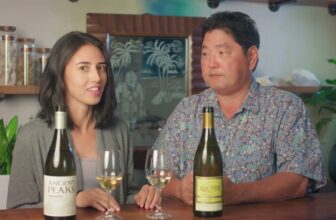
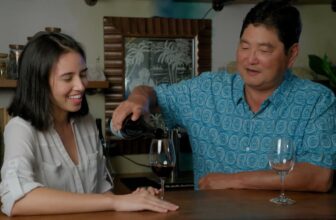
In this episode of Chuck Furuya Uncorked, Chuck and Kale are joined by Shawn Sono, a Hawaii-based sommelier with experience at the Halekulani Hotel and other restaurant projects. His perspective is useful because he works across different dining styles: luxury French cuisine, Mediterranean-inspired food, Japanese kaiseki-style menus, and modern chef-driven tasting menus.
The conversation is about wine, but it is also about hospitality, timing, food, value, and the kind of bottles that make everyday drinking more enjoyable.
What This Episode Is About
Chuck introduces Shawn as one of the sommeliers at the world-class Halekulani Hotel. Shawn also works with consulting projects and restaurant wine pairings, including places with very different food styles.
That matters because pairing wine is not one fixed skill.
A wine that works in a French fine-dining room may not be the right wine for an open-air Mediterranean restaurant by the ocean. A wine for a Japanese kaiseki-style menu may need a completely different kind of flexibility. A wine for a home dinner should also make sense in price, mood, and ease of drinking.
This episode explores all of those situations.
It begins with Shawn’s path into wine, then moves into restaurant service, Japan’s wine culture, Mediterranean and French pairings, Chenin Blanc from the Loire Valley, Santa Barbara Pinot Noir, and the practical role of a sommelier.
Ridge and the First Wine Seed
Shawn’s early interest in wine began while he was attending Santa Clara University in California.
His mother mentioned that Ridge Vineyards was nearby and suggested that when he was old enough, he could buy wine and bring it home. That planted an early seed.
Ridge is an important name in California wine, especially known for wines like Monte Bello. Chuck explains that Ridge has been one of California’s great producers since the 1960s and was part of the famous 1976 Paris tasting era. For Shawn, having that kind of winery nearby helped open the door to wine.
That is often how wine begins.
Not with full knowledge.
Not with a professional plan.
Just with a place, a bottle, a recommendation, or a small moment that makes someone curious.
The French Laundry Aha Moment
One of Shawn’s biggest wine turning points happened at The French Laundry in 2003.
He and a friend were in Napa and decided to try getting a reservation. They were lucky enough to get in after a cancellation. At the time, Shawn was still more of a spirits and cocktail person, so when he sat down, he asked for a Bombay Sapphire martini.
The response was gentle but memorable: the restaurant only served wine.
That moment became part of the experience. Instead of ordering a cocktail, he let the sommelier guide the meal with half bottles and pairings. The dinner showed him how powerful wine could be in a world-class dining setting.
It was not just about drinking.
It was about how wine could become part of a complete restaurant experience: food, service, timing, atmosphere, and memory.
That helped point him toward wine as a profession.
Restaurants Teach Humility and Hard Work
Before becoming a sommelier, Shawn worked in restaurants as a server and tried to get into bartending.
He describes restaurant work as a place where you learn humility, hard work, and the feeling of being a host. Every night is different. Every guest is different. The tools you have may change, but the goal is the same: create the best possible experience.
That is an important foundation for wine service.
A sommelier is not only a person with wine knowledge. A sommelier works inside a restaurant. That means understanding timing, guests, service rhythm, kitchen flow, table mood, and hospitality.
Wine knowledge without restaurant instincts is incomplete.
Japan and the Old World Wine Scene
After college, Shawn moved to Japan through the JET Program and spent several years in Fukuoka.
His experience there gave him another view of wine. Japan’s wine scene surprised him because of how much serious wine was available. While California wine had a smaller footprint there, Japan had deep access to Old World benchmarks: Burgundy, Champagne, Bordeaux, Italy, Oregon, and other quality-driven regions.
Chuck and Shawn discuss how, when Japan gets into something, it often goes deep. That applies to wine too.
For Shawn, Japan became a place where he learned more about Old World wine, pronunciation, food culture, and service culture. It also broadened the way he thought about hospitality.
Halekulani and Service Excellence
After returning to Hawaii, Shawn eventually became a sommelier at the Halekulani Hotel, working with restaurants such as La Mer and Orchids.
Chuck emphasizes that Halekulani is known for attention to detail and service excellence. That environment matters because wine service there is not casual guessing. It is part of a broader hospitality culture.
Shawn works across different dining styles.
Orchids has a Mediterranean influence and an open-air setting near the ocean.
La Mer is more formal, French, elegant, and fine-dining oriented.
Those two rooms require different wine thinking.
Mediterranean Food Needs Refreshment
When discussing Orchids, Shawn points out that the setting itself influences the wine.
The restaurant is open-air, right by the ocean, with the sound and feeling of the water nearby. In that environment, the wines need to feel refreshing, drinkable, and suited to alfresco dining.
Chuck uses one of his favorite words here: gulpable.
That does not mean simple or cheap. It means a wine you actually want to drink with food, outside, in a warm climate, without getting tired of it.
Mediterranean-style food often wants freshness, acidity, brightness, and energy. Heavy, high-alcohol wines can feel wrong in that setting. Lighter, cooler, more refreshing wines make more sense.
Temperature also matters. In an open-air environment, wines may need to be served a little cooler so they stay refreshing as they warm in the glass.
French Fine Dining Is a Different Stage
La Mer is a different kind of restaurant.
The cuisine is French, elegant, refined, and more formal. It can support more serious wines, including trophy bottles, because the setting and food structure allow for that kind of experience.
But even here, the wine still has to serve the meal.
Some guests come to drink a great bottle regardless of the exact pairing. Others want the wine to fit the food more closely. A sommelier has to understand both kinds of guests.
This is one of the important practical lessons in the episode:
There is no single “right” wine program.
The right wine program depends on the restaurant, the room, the food, the guest, and the moment.
Wine Should Accentuate the Food
When Shawn talks about pairing wine with food, he gives a simple but important idea:
Wine should accentuate the cuisine.
Pairing is not a battle where wine tries to beat the food. It is not about proving that the wine is more important. The goal is for the wine to make the food better and the food to make the wine more enjoyable.
He also points out that lower-scoring, more humble wines often work better with food than highly rated trophy bottles.
That is a recurring theme across the series.
A wine can be impressive by itself and still be difficult at the table.
A quieter, more modest, country-style wine may be far more useful with real food.
What Grows Together Goes Together
Shawn also mentions the classic pairing idea:
What grows together goes together.
This is especially useful with Mediterranean food. Local wines often evolved alongside local cuisine. The wines were not made for abstract scoring systems. They were made to drink with the foods people ate in that region.
That does not mean regional pairing always works automatically, but it is a good starting point.
Italian food often works with Italian-style wines.
Mediterranean seafood often works with bright, fresh, coastal wines.
Japanese and Hawaiian-influenced foods may need more flexible wines that can handle umami, salt, sweetness, texture, and delicacy.
Champalou Chenin Blanc: The Go-To White
One of Shawn’s key wine choices in the episode is Champalou Vouvray from the Loire Valley, made from Chenin Blanc.
He describes it as one of his go-to wines for seafood and versatile food pairing. Chuck strongly agrees and calls it one of the most interesting and finest white wines in the world, especially considering its affordability.
The wine has honeyed tones without finishing sweet. It hints at richness, but it remains fresh, transparent, minerally, and gentle. It can work with fried foods, calamari, tempura, light fish, crab, scallops, lobster, and dishes with freshness or subtle umami.
That makes it very useful for both restaurant and home settings.
Why Chenin Blanc Works
Chenin Blanc from the Loire can be tricky because it often has strong acidity and structure. Chuck explains that both Chenin Blanc and Sauvignon Blanc can have hard edges, depending on the wine.
But Champalou is different.
It is more gentle, transparent, ethereal, and mineral-driven. It is not about power or bravado. It is about elegance and versatility.
This is why Shawn uses it in different settings, including Japanese-inspired cuisine.
It has enough structure to handle food, but not so much aggression that it dominates delicate dishes.
Pairing With Japanese Kaiseki-Style Food
Shawn also works with Nanzan GiroGiro, a restaurant concept originally from Kyoto that takes inspiration from traditional kaiseki cuisine.
Kaiseki menus often involve many small dishes, seasonal ingredients, soup, fish, delicate textures, and modern interpretations of traditional ideas. That makes pairing more complex.
You need wines that can move across multiple flavors without clashing.
Champalou works in many of these situations because it is versatile and does not have too many sharp “branches.” But Shawn notes that even a versatile wine has limits. With oily or very fishy hamachi, it can sometimes accentuate fishiness, so another wine may be better.
That is a very useful point.
No wine goes with everything.
Even a great food wine has boundaries.
Pairing for Chef-Driven Menus
Shawn also talks about helping with wine pairings for chef-driven restaurants such as Senia and Miro Kaimuki.
These kinds of restaurants are different because the food may change frequently, sometimes daily. In that environment, the sommelier or wine team has to think quickly.
A wine might need to be changed when the dish changes. If something comes across the pass differently than expected, the pairing may need adjustment.
Chuck compares this to his own “branches” idea. If the food has too many sharp edges — too much sweetness, bitterness, spice, salt, acidity, or richness — the wine needs to avoid clashing with those branches.
At very high levels of cooking, the food is the focus. The wine has to support the chef’s work.
Sometimes the best wine pairing is the one that gets out of the way.
Costa de Oro Pinot Noir
The second major wine in the episode is Costa de Oro Pinot Noir from Santa Barbara County.
Shawn chooses it because it is unpretentious, affordable, and joyful to drink. Pinot Noir under around twenty to twenty-five dollars can be difficult, but this wine delivers a lighter, pretty, aromatic style.
Chuck explains more about the wine’s background. It comes from Santa Maria Valley in Santa Barbara, from a producer connected to the Gold Coast Vineyard. The vineyard is influenced by coastal winds and sandy marine soils, which help create a lighter, more transparent wine.
The wine uses heritage Martini clone Pinot Noir, which Chuck describes as less showy, less black-fruited, less flamboyant, and more about transparency, delicacy, and finesse.
That is exactly why he likes it.
Pinot Noir for Real Food and Real Life
This Pinot Noir is not a big trophy wine.
It is not designed to impress collectors with darkness, weight, power, or high scores.
It is light, pretty, savory, aromatic, balanced, affordable, and easy to drink.
Shawn says it could work at a Sunday family meal where many dishes are on the table. Chuck agrees that the serving temperature matters. A wine like this should be slightly cool so it keeps its refreshing quality.
It could work with roast chicken, simple meats, casual home cooking, and a wide range of foods that do not need a massive red.
This is the kind of Pinot Noir that makes sense for everyday enjoyment.
Why Light Pinot Noir Matters
Chuck emphasizes that this wine probably will not get huge scores because it is the opposite of big, showy Pinot Noir.
But that is the point.
Some wines are not made for impact. They are made for drinkability, food, and pleasure.
The wine does not hit you with alcohol fumes. It invites you in with perfume and savory aromatics. It makes you want to return to the glass.
That is a major part of wine enjoyment.
A good wine is not only impressive on the first sip. It makes the second and third sip more interesting.
The Role of a Sommelier
Later in the episode, Chuck asks Shawn what being a sommelier means to him.
Shawn says the answer has changed over time, but in general, the purpose of a sommelier is to add value:
to the restaurant,
to the dining experience,
to the guest,
and to the chef’s vision.
That is a clear and grounded definition.
A sommelier is not there to make the guest feel small. A sommelier is not there to show off knowledge. A sommelier is there to support the experience.
That support may come through a perfect pairing, a comfortable recommendation, a better-value bottle, or simply helping someone feel more confident ordering wine.
Ask What the Guest Already Likes
Shawn says one of his favorite questions to ask guests is:
What wine do you usually enjoy at home?
That question tells a sommelier a lot.
It can suggest the guest’s price range, preferred color, sweetness level, body, style, region, and comfort zone. From there, the sommelier can recommend something familiar, or gently guide the guest toward something new.
This is one of the best beginner lessons in the episode.
You do not need to know technical wine language to talk to a sommelier.
You can start by naming a wine you already like.
A good sommelier can build from there.
How to Discover Better Wine
Near the end, Shawn admits that even professionals can feel daunted walking into a wine store with shelves full of labels, animals, regions, and unfamiliar names.
There is no simple magic answer.
His advice is practical: do a little homework, learn what you like, and find stores with knowledgeable staff.
Chuck adds another useful method: ask passionate wine people where they buy wine.
Different stores have different strengths. One shop may carry Champalou. Another may have better Italian wines. Another may specialize in southern France, California, or artisan producers.
Wine discovery is partly about asking the right people.
Affordable Wines Can Still Open New Horizons
One of the best parts of this episode is that both featured wines are practical.
They are not rare, unaffordable trophy bottles. They are around the twenty-to-twenty-five-dollar range and can work in restaurants, at home, or with casual meals.
That fits the purpose of the series.
The goal is not only to talk about famous bottles that most people will never buy. The goal is to show wines that can open new horizons without requiring a huge budget.
Champalou Chenin Blanc can show people what Loire Chenin can be.
Costa de Oro Pinot Noir can show people a lighter, more transparent side of California Pinot Noir.
Both wines are approachable, but neither is boring.
Final Takeaway
This episode is useful because Shawn brings a working sommelier’s perspective without making wine feel distant or elitist.
He talks about world-class restaurants, French Laundry, Japan, Halekulani, La Mer, Orchids, kaiseki-style menus, and chef-driven pairings. But the wines he chooses are still practical, affordable, and easy to enjoy at home.
That is the heart of the episode.
Wine can be serious and still be drinkable.
Wine can be professional and still be joyful.
A sommelier can work with trophy wines but still love a humble, gulpable bottle.
The biggest lesson is that good wine service is about adding value. Good wine should make the food better, the table happier, and the moment more memorable.
That can happen in a world-class dining room.
It can also happen at home with fried seafood, roast chicken, family dinner, and a bottle that simply makes everyone want another sip.
FAQ
Who is Shawn Sono?
Shawn Sono is a Hawaii-based sommelier who works with Halekulani and other restaurant wine programs. In the episode, he shares his perspective on wine, food pairing, Japan, hospitality, and everyday enjoyment.
What is the main idea of this episode?
The episode is about how a sommelier thinks about wine enjoyment, restaurant pairing, Mediterranean food, French fine dining, Japanese-inspired menus, and affordable wines that work at home.
What was Shawn’s wine aha moment?
One major aha moment happened at The French Laundry, where he experienced how wine could become part of a complete world-class dining experience.
What is Champalou Vouvray?
Champalou Vouvray is a Chenin Blanc from the Loire Valley in France. In the episode, Shawn and Chuck describe it as versatile, mineral, gentle, refreshing, and excellent with seafood and fried foods.
What foods pair well with Champalou Chenin Blanc?
It can work with fried calamari, tempura, crab, scallops, lobster, light fish, cured elements, and some Japanese-inspired dishes.
What is Costa de Oro Pinot Noir?
Costa de Oro Pinot Noir is a Santa Barbara County Pinot Noir. In the episode, it is presented as light, pretty, savory, aromatic, affordable, and very drinkable.
What foods pair with light Pinot Noir?
Light Pinot Noir can work with roast chicken, casual family meals, simple meats, savory dishes, and a range of home cooking where a heavy red would be too much.
What does a sommelier do?
A sommelier adds value to the restaurant, the guest, the chef’s food, and the dining experience. The job is not just wine knowledge; it is hospitality and guidance.
What should you tell a sommelier?
Tell them what wine you normally drink at home. That gives useful clues about your style preferences, price range, body, sweetness, and comfort zone.
Are expensive wines always better with food?
No. The episode explains that humble, country-style wines often work better with food than highly rated trophy wines.
What is the biggest lesson from this episode?
The biggest lesson is that wine should support the experience. Whether in a fine-dining restaurant or at home, the right wine should make the food and the moment more enjoyable.




What are some specific wines that pair well with Mediterranean food? I'm planning a dinner party and want to impress my guests!
Good question! I’ve had success with a light, crisp Sauvignon Blanc or a nice Vermentino. They really complement the freshness of Mediterranean dishes.
Great suggestions! Additionally, consider trying a Rosé or a Pinot Grigio, as they also work well with a variety of Mediterranean flavors.
I've always enjoyed the wine pairing experience at fine-dining restaurants. One memorable dinner was at a local French restaurant where the sommelier recommended a beautiful Chablis with my seafood dish. It was amazing how the wine elevated the flavors! Does anyone else have a memorable pairing experience?
Absolutely! I had a fantastic experience with a Sauternes at a chef's tasting menu. It was paired with a foie gras and really brought out the richness. Totally unforgettable!
Can anyone explain the concept of 'What grows together goes together'? I’ve heard it before but would love more context.
'What grows together goes together' refers to the idea that food and wine from the same region typically complement each other well. For instance, regional wines pair wonderfully with local cuisine, enhancing the overall dining experience.
I don't agree that lower-scoring wines can often be better with food. Sometimes, a well-rated wine offers depth and complexity that humble wines just can't match.
I can see your point, but I think it depends on the food. Sometimes simpler wines make for a more enjoyable meal.
How do I choose a good wine for a casual dinner? I always feel overwhelmed by the options!
Start by considering the main dish. A medium-bodied red like a Pinot Noir or a light white like a Chardonnay usually works well for various meals. Don't hesitate to ask for recommendations at the store!
I really appreciate how wine can enhance the dining experience. It’s not just about the drink; it’s about the entire atmosphere!