
Wine can be about taste.
It can also be about ancestors, family, land, tradition, conversation, and the way people gather around a table.
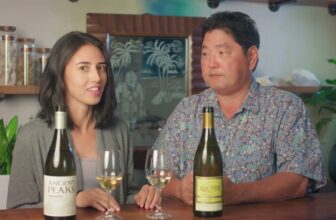
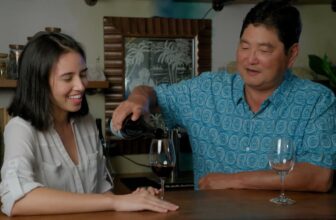
In this episode of Chuck Furuya Uncorked, Chuck and Kali are joined by Makua Rothman, a North Shore surfer, musician, entertainer, father, and big-wave rider.
The episode moves between wine, surfing, family, local values, and food. It begins with a funny water-bucket story, moves into Jaws and big-wave surfing, then turns toward Paso Robles, family-owned wineries, Cabernet Sauvignon, ribeye steak, wine temperature, clean glasses, and the importance of spending time with family while you still can.
The wines at the center of the episode are:
- Ancient Peaks Cabernet Sauvignon from Paso Robles;
- an Argentine Cabernet Sauvignon from the foothills of the Andes;
- and a ribeye steak from Buzz’s Steakhouse.
The bigger message is simple:
Wine is not just a luxury drink.
It can be a way to talk story, honor tradition, enjoy food, and connect with people.
Calling in the Ancestors
Makua opens the episode by saying they need to call in the ancestors because wine comes from the ancients.
That sets the tone perfectly.
For Makua, wine is not only about what is fashionable now. It is connected to long human tradition. People have been gathering, eating, drinking, talking, and passing stories down for thousands of years.
That idea fits naturally with the rest of the conversation.
The episode is not technical first.
It is cultural first.
It asks what wine can mean when it is part of family, memory, community, and the land.
The Water-Bucket Story
Before the wine, there is a story.
Makua and Chuck first really connected through a complete accident at a child’s birthday party on the North Shore.
Makua was trying to dump a five-gallon bucket of water on surfer Sean Moody during a water-balloon fight. He ran with the bucket, tried to throw it over a railing, and the bucket caught on a fishing line.
The water missed the intended target.
It landed directly on Chuck.
Not a little splash.
The full bucket.
Chuck was sitting in the shade, enjoying a cigar, and got completely soaked.
At first, he was not happy. But the story became part of their relationship. Makua jokes that it was almost like a baptism. Without that accident, they might not have built the same bond.
That story matters because the whole episode is full of that same energy:
Accident, laughter, aloha, and connection.
Makua Rothman and Big Waves
Makua is introduced as a North Shore figure with a life built around surfing, music, family, and the ocean.
Chuck brings up Makua’s massive wave at Jaws / Peʻahi on Maui. Media reports called it a 100-foot wave, though Makua is careful about exact measurement. His point is not to argue over the number.
The wave was huge.
And Jaws has been a special place in his life for a long time.
He talks about earlier milestones there, including a 66-foot wave that helped put him on the map when he was still young.
For Makua, Jaws is not just a surf spot.
It is a place that shaped his identity.
Tow Surfing vs Paddle Surfing
The conversation moves into tow surfing.
Makua explains that tow surfing began because certain waves were too fast or too difficult to paddle into. If waves are going unridden, he does not see the point in wasting them.
Jaws is different from many big-wave spots because it allows high-performance surfing on huge waves. With tow surfing, riders can do more than simply survive the drop. They can turn, carve, and ride with speed and control.
Paddle surfing has its own honor and difficulty. Makua respects that. But he also believes tow surfing has its place, especially when the waves are too big or too fast for paddling.
The real issue is not ego.
It is experience.
Big-Wave Surfing Is Not Just One Photo
Makua talks about something important in modern big-wave culture.
Some people chase one dramatic wave, one photo, one moment of notoriety.
That is not how he sees it.
For him, big-wave surfing is a brotherhood and a way of life.
It means:
- learning the ocean from a young age;
- becoming a waterman;
- knowing how to rescue others;
- respecting the lineup;
- understanding risk;
- watching out for friends;
- and making sure people come home safely.
He also points out that modern safety gear can create a false sense of security. Inflatable vests and jet skis help, but they do not replace ocean knowledge.
The ocean still demands real experience.
The Learning Curve
When Chuck asks what it takes to ride waves like that, Makua’s answer is simple: it starts young.
There are rare people who can pick things up later, but most elite watermen begin early and learn from mentors. Makua mentions the importance of people like Laird Hamilton and Dave Kalama as examples of those who helped shape the big-wave world.
The larger lesson applies far beyond surfing.
To reach the top level of anything, you need:
- time;
- dedication;
- persistence;
- consistency;
- concentration;
- and real work.
That theme comes back later in the episode when Makua talks about family, business, and the difference between trying and doing.
Paso Robles and Aloha Spirit
The episode then shifts toward Paso Robles.
Makua had performed music in Paso Robles and remembered the region’s energy, people, and wine-country hospitality.
Chuck connects that to a wine event he helped build in Paso Robles / Atascadero. The event brought together winemakers, sommeliers, and wine people from many places to talk story, share ideas, and create community.
What stands out in Chuck’s story is how much the local community helped.
The city, the mayor, transportation people, and printing people all stepped in. Some would not even send bills. They simply wanted to support the event and the community.
Makua immediately understands that energy.
To him, that kind of community support feels like aloha.
Ancient Peaks Cabernet Sauvignon
The main wine in the episode is Ancient Peaks Cabernet Sauvignon from Paso Robles.
Chuck explains that Ancient Peaks comes from the southern part of Paso Robles, from a property up in the mountains at roughly 1,000 feet elevation.
The important part is ownership.
Ancient Peaks is owned by three ranching families, not a faceless corporation. The vineyard is part of a much larger ranching property. The families created the vineyard partly so the land could help pay for itself and stay in family hands for future generations.
Makua immediately connects with that idea.
Land, family, and legacy matter to him.
The wine is not just a bottle. It represents a family trying to keep land together.
Why Makua Likes Ancient Peaks
Makua reacts strongly to the Ancient Peaks Cabernet.
He likes that it is smooth and does not have a harsh bite. He says it is one of the best wines he has had for the price.
That matters because he has traveled and tasted wine in many places, including Western Australia, Napa, Portugal, France, Bordeaux, Argentina, and Italy. He is not saying Ancient Peaks is expensive trophy wine. He is saying that for the price, it stands out.
Chuck agrees.
For him, Ancient Peaks is valuable because it offers real quality, family ownership, and a land-based story at a price many people can actually afford.
That is exactly the kind of wine this podcast likes to highlight.
Family-Owned Wine and Local Values
Makua talks about wanting to build a foundation to help local kids start their own businesses.
Instead of only giving scholarships that help young people leave, he wants to help local youth build something where they are from: companies, brands, and opportunities that can stay local, hire local, and support local families.
That connects directly with Ancient Peaks.
The winery exists partly because families wanted to preserve land and create a sustainable way forward.
Chuck points out that both wines in the episode are family-owned.
That matters because family-owned wine often carries values beyond the bottle:
- respect for land;
- generational thinking;
- pride in farming;
- personal accountability;
- and a desire to keep something alive.
Those are values Makua understands deeply.
Why Makua Drinks Wine
Chuck asks Makua why he drinks wine.
Makua gives a very Makua answer.
He likes the buzz, but he also sees wine as ancient, traditional, and connected to ancestors. He talks about surfing culture being full of beer and modern drink trends, but he personally likes keeping older traditions alive.
Wine is good for talking story.
It belongs at the table.
It slows things down.
It encourages conversation.
It is not the same as taking a quick shot or drinking only for effect.
That is the heart of the episode.
Wine becomes a way to gather, not just a way to drink.
Wine for Parents and Real Life
Chuck brings up the idea that wine can fit into parenting life in a different way than stronger drinks.
When parents start drinking early in the evening, they may still want to be awake and functional later. Wine can be a more relaxed, moderate way to enjoy a drink while still being present.
Makua agrees and adds that wine can be good for moms after a long day.
The point is not that wine solves life.
It is that wine can create a calmer rhythm:
- kids go to sleep;
- parents talk story;
- people relax;
- the evening slows down;
- and the drink becomes part of connection.
Again, this is wine as life, not wine as status.
Cabernet Sauvignon: One Grape, Many Places
Chuck then uses the tasting to explain Cabernet Sauvignon.
Both wines are Cabernet Sauvignon, but they come from different places:
- one from Paso Robles, California;
- one from Argentina, near the foothills of the Andes.
That makes them useful for comparison.
Same grape.
Different country.
Different soil.
Different elevation.
Different style.
Makua notices the difference quickly. The Argentine Cabernet feels drier, leaner, more tannic, and more punchy. The Paso Robles Ancient Peaks feels smoother and easier to drink.
Neither is automatically better.
They simply show different expressions of Cabernet Sauvignon.
Cabernet Sauvignon with Steak
Chuck pairs the wines with ribeye steak from Buzz’s Steakhouse.
This is where the tasting becomes practical.
Cabernet Sauvignon is famous with steak because of tannin.
Tannins come from grape skins, seeds, stems, and oak barrels. They create that drying, puckering feeling in red wine.
With meat, especially fatty or well-marbled meat, tannins can work beautifully. They help cut through fat and interact with protein.
Chuck explains it simply:
The more tannin a wine has, the more marbling the meat should have.
A leaner cut may need a softer wine.
A richer cut like ribeye can handle more tannin.
Why Ribeye Changes the Wine
Makua notices something important after tasting the Argentine Cabernet with steak.
The steak takes away the hard edge of the wine.
That is exactly the point.
The tannin that felt punchy by itself becomes more balanced with fat and protein. The wine suddenly makes more sense.
That moment is one of the best practical lessons in the episode.
A wine that tastes too dry or tannic by itself may be perfect with the right food.
The food changes the wine.
The wine changes the food.
That is why pairing matters.
Ancient Peaks vs Argentine Cabernet with Steak
Both wines work with the steak, but the Ancient Peaks seems to be the easier and smoother match for Makua and Kali.
The Argentine Cabernet has more punch and tannin. It works better once the ribeye softens its edge.
The Ancient Peaks is smoother from the start and blends more seamlessly with the meat.
Kali says that with Ancient Peaks, it is hard to tell where the steak stops and the wine begins.
That is a strong pairing note.
It means the wine and food are moving together.
What Cabernet Brings to Steak
Cabernet Sauvignon brings several things to steak:
- tannin;
- dark fruit;
- structure;
- body;
- grip;
- and a sense of power.
With a ribeye, those qualities can be useful because the meat has fat, seasoning, char, and richness.
The wine does not disappear.
The food does not overwhelm it.
They meet in the middle.
This is why Cabernet and steak is a classic pairing.
But the episode also shows that not all Cabernet behaves the same way. The specific bottle matters.
Three Common Wine Mistakes
Makua asks a useful question: what are common mistakes people make with wine?
Chuck gives three practical points.
The first is storage temperature.
Wine should not sit in a hot room, a hot car, or a warm garage. Heat speeds up chemical changes and can damage the wine.
The second is serving temperature.
Room temperature in old European wine logic does not mean hot Hawaii room temperature. A red wine served too warm can smell overly alcoholic because alcohol evaporates more as the wine warms.
Chuck suggests chilling red wine slightly if needed.
The third is clean wine glasses.
A dirty glass, soap residue, minerals, chlorine, grease, or film can hurt the wine. Clean glassware matters the same way clean plates matter for food.
These are simple details, but they can make a big difference.
Serving Red Wine Slightly Cool
One of the most useful home tips is to serve red wine slightly cool.
In a warm climate, red wine can easily become too warm. When that happens, the alcohol can jump out of the glass and make the wine feel out of balance.
Chuck’s easy solution is simple:
Put the bottle in the refrigerator for a few minutes before opening.
You do not need to make the wine cold like white wine. You just want to bring it down enough so the fruit, structure, and alcohol feel balanced.
In Hawaii, this matters.
Warm red wine can taste harsh.
Slightly cool red wine can taste much better.
Clean Glasses Matter
Chuck goes deeper into glassware.
At his restaurant, they used separate dishwashing steps for wine glasses to remove soap, grease, minerals, chlorine, and residue.
At home, the idea is simpler:
- wash glasses well;
- rinse them thoroughly;
- use hot water;
- avoid leftover soap film;
- let them air dry upside down;
- and keep them clean.
A great wine can taste wrong in a bad glass.
This is not snobbery.
It is basic care.
Wine Legs Are Not the Point
Makua also asks about “legs,” the streaks that run down the inside of the glass after swirling.
Chuck explains that legs can relate to alcohol, glycerin, ripeness, and climate, but he does not want the average viewer to obsess over them.
For this podcast, the main focus is enjoyment.
Wine details can be interesting, but they should not become a barrier.
You do not need to master every technical term before drinking wine.
You can simply ask better questions, taste with food, and learn naturally.
Ancient Peaks and Hawaiian Airlines
Chuck also mentions that he works with Ancient Peaks for Hawaiian Airlines wine blends.
That adds another layer to why he respects the producer.
Ancient Peaks is not just a random bottle. It is a winery he knows through real professional work, and it represents a style he believes offers value and quality.
For Makua, there is also a personal connection because he had seen Chuck associated with Hawaiian Airlines wine during flights.
That kind of small-world connection runs throughout the episode.
North Shore, surfing, wine, family, airlines, restaurants, and friends all overlap.
Pizza and Wine
Makua tells a story about visiting a winery in Italy during a USO tour. They paired different wines with pizza, which surprised him.
Chuck is not surprised.
Pizza and wine can be a great pairing.
It does not have to be complicated. Tomato, cheese, herbs, crust, olive oil, meat, mushrooms, and char can all work well with many wines.
The key is not “correctness.”
It is preference and enjoyment.
In Italy, wine with pizza can feel natural. In Hawaii or the U.S., people may be more used to beer, soda, or cocktails. But wine can absolutely work.
Family, Marriage, and Gratitude
The episode eventually moves into deeper personal territory.
Makua talks about his wife, children, brothers, parents, and the importance of family. He is honest about mistakes, growth, and learning to appreciate what he has.
He says many people think the grass is greener somewhere else, especially in the age of Instagram. But eventually he came to a place of gratitude for his wife and children.
That connects to the family-owned wine theme.
Family is not always perfect.
Land is not easy to keep.
Marriage is not always smooth.
Business is not simple.
But when people stay committed and keep working, something meaningful can survive.
Breaking Generational Patterns
Makua also talks about breaking generational patterns.
He says people make mistakes, families carry pain, and not everything passed down is good. But if you recognize those patterns, you can choose to change them.
That is one of the strongest non-wine lessons in the episode.
You can take the best from your parents, the best from your family, and build a different path.
Wine is just the setting.
The real conversation is about legacy.
The Podcast as Father-and-Son Connection
Chuck explains that before the podcast, he and Kali might talk once every couple of months.
Now they talk every day.
That is one of the hidden gifts of the show.
It is not only a wine project. It is a father-and-son project.
Makua immediately understands the importance of that. He talks about people being distant, separated, distracted by social media, and then later regretting the time they did not spend with parents, grandparents, and family.
The message is direct:
Spend time with them now.
Do not wait.
Reach Out While You Can
Near the end, Makua speaks directly about family relationships.
He says people should enjoy their grandparents and reach out to parents or family members if there is distance. Even if the other person does not respond the way you hope, making the effort can remove pressure from your own heart.
It is not about pretending everything was perfect.
It is about choosing to move forward.
Makua’s view is that the younger generation can sometimes be the one to reach out first and change the dynamic.
That is a powerful message in a wine podcast.
And it fits because wine has always been about gathering, memory, forgiveness, and the table.
Don’t Try — Do
One of Makua’s final lessons is simple:
Do not just try.
Do.
He says trying can become halfway. Actually doing is different.
That applies to surfing, family, business, music, foundation work, wine, parenting, and life.
Do not try to call your family.
Call them.
Do not try to build something local.
Build it.
Do not try to learn wine.
Drink, ask, taste, and learn.
The episode ends with aloha, gratitude, and a sense that the conversation became about much more than Cabernet.
Final Takeaway
This episode with Makua Rothman is one of the clearest examples of wine as a doorway into bigger conversations.
It begins with ancestors and a five-gallon bucket of water.
It moves through Jaws, tow surfing, Paso Robles, Ancient Peaks Cabernet Sauvignon, Argentine Cabernet, steak, tannins, serving temperature, glassware, family-owned wineries, and local business dreams.
The Ancient Peaks Cabernet stands out because it is smooth, affordable, family-owned, and tied to land preservation in Paso Robles.
The Argentine Cabernet shows another side of the same grape: drier, leaner, more tannic, and stronger with steak than by itself.
The ribeye shows why Cabernet and steak are a classic pairing: tannin, fat, protein, and flavor work together.
But the deepest lesson is not about wine mechanics.
It is about values.
Family matters.
Land matters.
Ancestors matter.
Community matters.
Time with parents and grandparents matters.
And wine, when approached with pure enjoyment, can help create the space for those conversations.
That is the real pairing in this episode:
Cabernet, steak, aloha, and family.
FAQ
Who is the guest in this episode?
The guest is Makua Rothman, a North Shore surfer, musician, entertainer, father, and big-wave rider.
What is this episode about?
The episode covers Makua Rothman’s connection with Chuck, big-wave surfing, Jaws, Ancient Peaks Cabernet Sauvignon, Argentine Cabernet, steak pairing, wine enjoyment, and family values.
What is the funny water-bucket story?
Makua tried to dump a five-gallon bucket of water on Sean Moody during a birthday party, but the bucket caught on a fishing line and dumped all the water directly on Chuck instead.
What big-wave topic does Makua discuss?
Makua talks about Jaws / Peʻahi, tow surfing, paddle surfing, safety, mentorship, and the difference between chasing one photo and living as a true waterman.
What wine is featured from Paso Robles?
The featured Paso Robles wine is Ancient Peaks Cabernet Sauvignon.
Why does Chuck like Ancient Peaks?
Chuck likes Ancient Peaks because it is family-owned, tied to ranching families, connected to land preservation, and offers strong value for the quality.
What does Makua think of Ancient Peaks Cabernet?
Makua says it is smooth, has no harsh bite, and is one of the best wines he has had for the price.
What is the second Cabernet in the episode?
The second Cabernet is from Argentina, grown near the foothills of the Andes.
How does the Argentine Cabernet taste compared with Ancient Peaks?
The Argentine Cabernet feels drier, leaner, more tannic, and more punchy, while Ancient Peaks feels smoother and easier to drink.
Why does Cabernet Sauvignon pair well with steak?
Cabernet has tannins that work with the fat, marbling, and protein in steak, especially richer cuts like ribeye.
What happens when Makua tastes the Argentine Cabernet with steak?
He notices that the steak softens the wine’s edge and makes the pairing work much better.
What wine mistakes does Chuck mention?
Chuck mentions storing wine too warm, serving wine too warm, and using wine glasses that are not properly clean.
Why should red wine sometimes be served slightly cool?
If red wine is too warm, the alcohol can become too obvious. A slight chill can make the wine more balanced and enjoyable.
What does Makua say about family?
Makua talks about appreciating parents, grandparents, wife, children, and family while they are still here, and about breaking negative generational patterns.
What is the biggest lesson from this episode?
The biggest lesson is that wine can be about much more than taste. It can create space for food, family, ancestors, aloha, land, conversation, and pure enjoyment.




I’m interested in the Ancient Peaks Cabernet Sauvignon. What makes it stand out from other Cabernets?
Ancient Peaks is known for its rich flavors and balance, often praised for being a great value for the quality it offers. It’s grown in a unique location that contributes to its character.
From what I gathered, it’s smooth and doesn’t have that harsh bite typical of some Cabernets. Plus, it’s family-owned, which adds a nice touch to the story behind it.
I had the Ancient Peaks Cabernet with a ribeye from Buzz’s Steakhouse last weekend. The pairing was incredible! The wine complemented the richness of the steak perfectly. Can’t wait to try it again!
That sounds amazing! I’ve been looking for a good wine to pair with steak. Did you notice any specific flavors in the wine that stood out?
It’s often noted for its dark fruit flavors, like blackberry and plum, along with hints of spice. It’s a lovely match for the richness of a ribeye!
How does Ancient Peaks compare to other wines from Paso Robles? I’m curious about the differences in style and flavor profiles.
Exactly! Each winery in Paso Robles showcases its unique terroir, so experimenting with different wines can lead to great discoveries.
Paso Robles has a variety of microclimates, which can lead to different styles. Ancient Peaks tends to be smoother and fruit-forward, while some others might be more tannic or bold.
Can someone explain what 'Aloha spirit' means in relation to wine and community?
That’s a great point! It emphasizes the importance of community involvement and honoring relationships, much like wine brings people together.
The Aloha spirit is about connection, love, and support within the community. In wine, it reflects the values of family and tradition.
I appreciate how the episode connects wine culture to family and tradition. It makes the experience more meaningful!