
Some restaurants are more than places to eat.
They become part of the community.
They become landmarks, meeting places, charity hubs, family rooms, neighborhood anchors, and memory machines.
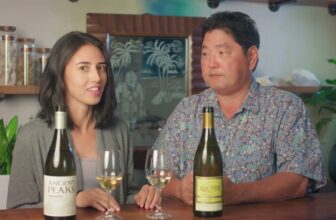
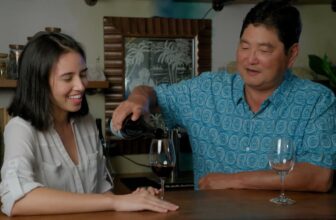
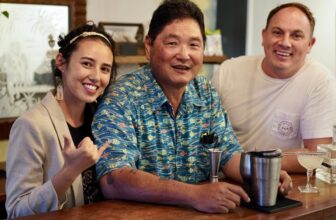
In this episode of Chuck Furuya Uncorked, Chuck sits down with Don Murphy of Murphy’s Bar & Grill, a downtown Honolulu institution located near Nuʻuanu and Merchant Street.
Murphy’s has been around for more than three decades. Don describes it simply as a downtown local saloon: family-oriented, full of regulars, friendly, comfortable, and built more around people than trends.
The episode is not only about food or wine.
It is about hospitality.
It is about old-school restaurant culture.
It is about supporting local places.
And because Don likes Chardonnay, the episode also includes a blind tasting of three different value-priced Chardonnays:
- Maison L’Envoyé Bourgogne Blanc Vieilles Vignes
- Olelo Chardonnay
- Ballard Lane Chardonnay
Together, the conversation becomes a reminder that good restaurants and good wines do not always need flash. They need sincerity, consistency, value, and heart.
What Is Murphy’s Bar & Grill?
Murphy’s Bar & Grill is a downtown Honolulu bar and restaurant with deep local roots.
Don describes it as a local saloon and family-style lunch and dinner place. It is not built around trend-driven food or high-concept fusion. In fact, Don jokes that the only fusion at Murphy’s is “confusion.”
That line says a lot about the place.
Murphy’s knows what it is.
It serves comfort food, drinks, burgers, Irish-style dishes, and local hospitality without trying to become something else.
That clarity is part of why it has lasted.
A Downtown Local Saloon
Murphy’s is not mainly a tourist restaurant.
It has long served downtown regulars, business people, locals, workers, friends, and families. Over time, tourists have found it too, but the core identity remains local.
Chuck praises the bar program and says Murphy’s bartenders have long been a benchmark for others in the industry.
Don gives the credit to the bartenders themselves. He says they have that culture in their DNA.
That humility is part of the larger story.
Murphy’s works because the people inside it care about what they are doing.
Hospitality You Can Feel
Chuck says Murphy’s does not just talk about hospitality. It lives hospitality.
Don and his wife Marion are central to that feeling.
One of the most telling details is that Murphy’s does not use a POS system in the usual modern way. Tickets are still handled by hand, and Marion looks through every ticket.
That is not the most efficient method.
But it reflects the way they pay attention.
They want to know who was there, what happened, and how the restaurant is moving day by day.
That kind of attention creates a restaurant where guests feel known.
A Handshake Still Means Something
Chuck describes Don as someone whose handshake means something.
If Don says something, you can trust it.
That old-school sense of honor runs through the restaurant.
The culture is not only in the food or the drinks. It is in the way people are treated. It is in the staff, the regulars, the charity work, the bartenders, and the sense that Murphy’s is not just a business.
It is a place with a code.
In a world of branding, social media, and constant reinvention, that kind of directness feels refreshing.
How Don Ended Up in Hawaii
Don did not originally plan to spend his life in the restaurant business.
He came from California and worked for an investment banker who owned properties. One day, that work led him to Hawaii and eventually to the building that became Murphy’s.
He thought he might do it for a couple of years and then move on.
Instead, he fell in love with the business.
He also fell in love with his wife, who was working there when he bought the place.
More than thirty years later, Murphy’s is still there.
That is not an accident.
It is a life.
The Building and the Feeling
Murphy’s is located in a historic downtown building dating back to the late nineteenth century.
Chuck notes that when you walk in, it feels like home.
That matters.
Some restaurants feel like concepts. Others feel like rooms where people have been gathering for years.
Murphy’s belongs to the second category.
The room, the staff, the regulars, the food, the drinks, and the old downtown energy all become part of the experience.
Murphy’s and the Community
One of the strongest themes in the episode is Don’s commitment to the community.
Chuck says you see Don at charity events, golf tournaments, University of Hawaii athletics fundraisers, and other community functions. He is often there cooking burgers or helping in a hands-on way.
Don does not just send support from a distance.
He shows up.
He cooks.
He works.
He gives his time.
That is part of why Murphy’s has such a strong local following.
People know what Don stands for.
Supporting Local Restaurants
Chuck uses the conversation to make a larger point about supporting local restaurants.
When people say “support local,” they often think about local produce, local fish, or local products. But local restaurants matter too.
Small independent restaurants are part of the community. They sponsor events, employ people, feed regulars, preserve recipes, support charities, and create local culture.
If those restaurants disappear, something important disappears with them.
Chuck asks a simple question:
Can some people choose the local mom-and-pop place instead of always choosing the big mainland chain?
Not everyone has to change every habit.
But even a small shift matters.
Ten more customers a day can help a local place survive.
The Pandemic and Restaurant Culture
The episode was recorded during a time when restaurants were still dealing with pandemic-related challenges.
Don talks about the stress, uncertainty, limited hours, staffing problems, and changing restrictions.
At the same time, he also talks about the way the pandemic brought some teams closer together. The core staff worked hard. Customers became generous. Regulars showed support.
That is one of the contradictions of hard times.
They create pressure, but they also reveal who really cares.
What Is Being Lost in Restaurants?
Don worries that the restaurant industry is becoming less personal.
Technology, POS systems, efficiency, social media, and modern management can all be useful. But they can also make restaurants feel less human.
He remembers an older restaurant culture where servers and kitchen staff had a different kind of connection. People knew each other. They helped each other. The restaurant felt like a team.
Some of that has faded.
Don and Chuck both see this as something worth protecting.
Restaurants should not become only about covers, square footage, and margins.
They should still be about people.
St. Patrick’s Day at Murphy’s
Murphy’s is famous for St. Patrick’s Day.
The celebration grew from inside the restaurant to a large downtown event that could take over surrounding space and draw thousands of people.
Don says they would start talking about the next St. Patrick’s Day just a couple of days after the previous one ended.
That gives you a sense of the scale.
The food included:
- corned beef and cabbage;
- Guinness-braised lamb shank;
- steak;
- steak sandwiches;
- fish and chips;
- burgers;
- oysters;
- and plenty of drinks.
The biggest number is the corned beef.
Don says they would prepare around 3,000 pounds of corned beef for the event.
That is not a normal restaurant special.
That is a production.
The Work Behind the Party
The corned beef process was serious.
They would start cooking days ahead, trim the meat, slice it, and prepare it for service. Don describes setting up burners and big pots in the alley behind the building and starting early in the morning.
That detail captures the old-school grind.
This is not just someone ordering a pre-made event package.
This is the owner and team doing the work.
That hands-on approach is part of the Murphy’s identity.
Murphy’s Food
Murphy’s food is comfort food.
It is not trying to be precious or reinvented.
Some of the dishes discussed include:
- corned beef and cabbage;
- shepherd’s pie;
- Blarney burger;
- Irish nachos;
- fish and chips;
- burgers;
- lamb shank;
- oysters;
- and steak sandwiches.
The Blarney burger uses Irish cheddar infused with Guinness.
The Irish nachos are potato skins topped with shredded corned beef and cheese.
The food fits the place.
It is hearty, recognizable, satisfying, and honest.
Find Your Niche and Beat It to Death
One of Don’s best pieces of advice is simple:
Find your niche and beat it to death.
He says you cannot be everything.
Murphy’s does not need to become a Mexican restaurant for Cinco de Mayo or chase every trend. It needs to do what it does well.
That does not mean never evolving.
It means knowing your core.
A restaurant that understands its own identity can build trust. Guests know why they are there. Staff know what they are delivering. The food and service stay coherent.
That is part of why Murphy’s has lasted.
Advice for Younger Hospitality Professionals
Chuck asks Don what advice he would give to Ariana’s generation.
Don’s answer is direct.
Treat people the way you want to be treated.
That includes everyone:
- the guest;
- the dishwasher;
- the bartender;
- the chef;
- the server;
- the owner;
- and the person working behind the scenes.
He also says the dishwasher can be just as important as the chef.
That is an old-school hospitality truth.
A restaurant only works when the whole team works.
The Importance of Legacy Restaurants
Don mentions the idea of legacy programs, like programs created to support old restaurants in places such as San Francisco.
The idea is that cities can lose important restaurants because rents rise, costs increase, and old independent places cannot compete with larger corporate groups.
He believes Hawaii needs to think about this too.
Small mom-and-pop restaurants are part of the cultural fabric. They are not just businesses. They are places where recipes, memories, and local identity survive.
Chuck agrees and connects it to his own advice when chefs travel: do not only eat at famous Michelin-starred restaurants. Eat at small ethnic places where recipes have passed through generations.
That is where intent lives.
Chardonnay Blind Tasting
Because Don likes Chardonnay, Chuck sets up a blind tasting of three Chardonnays.
The point is not to guess the producer or vintage.
The point is to see which wines people enjoy and why.
The three wines are different in style, but all are value-oriented and available in Hawaii stores.
The wines are:
- Maison L’Envoyé Bourgogne Blanc Vieilles Vignes
- Olelo Chardonnay
- Ballard Lane Chardonnay
The tasting shows that Chardonnay is not one thing.
It can be mineral and soil-driven, textured and slightly fuller, or smooth and crowd-pleasing.
Wine One: Maison L’Envoyé Bourgogne Blanc Vieilles Vignes
The first wine is Chuck’s favorite.
He describes it as soil-driven, uplifting, intricate, minerally, and refreshing.
It is not mainly about apple, pineapple, or pear fruit. It is more about what the soil brings.
That makes it interesting to Chuck, though he also says it may not be the easiest wine for the average casual drinker.
It has a little edge, a little lift, and more mineral complexity.
Don likes it, but says it is not a gulper. He would have a glass or two, but it has some harder edges.
Chuck bought it at Tamura’s in Kaimuki for around $15.99.
For a Burgundy-connected old-vine white at that price, Chuck sees it as very good value.
Wine Two: Olelo Chardonnay
The second wine is Olelo Chardonnay, connected to Michael Jordan the Master Sommelier, not the basketball player.
Chuck tells a story about Michael Jordan’s Hawaii connection and the name Olelo, which relates to the Hawaiian word for language or speech.
Ariana likes this wine for its heft and texture. It may have a little more alcohol, but it also feels fun and generous.
Chuck explains that the grapes come from Central Coast sources, and the wine has a different kind of profile than the Burgundy.
It is not as soil-focused as the first wine, but it has body and appeal.
Chuck bought it at Fujioka’s for around the mid-$15 range.
Wine Three: Ballard Lane Chardonnay
The third wine is Don’s favorite.
This is Ballard Lane Chardonnay from California’s Central Coast.
Don finds it smoother and more immediately enjoyable. He says it could go with almost anything they serve at Murphy’s.
That is an important point.
A restaurant like Murphy’s needs wines that work for many guests and many dishes. A wine does not always need to be the most intricate or intellectual. Sometimes it needs to be smooth, reliable, enjoyable, and versatile.
Chuck says Ballard Lane and Olelo come from similar vineyard sources, with Olelo buying grapes connected to the owners of Ballard Lane.
Chuck bought the Ballard Lane Chardonnay at Our Field Wine Company in Aina Haina. It was normally around $15.95, but he paid $13.99 on special.
Three Chardonnays, Three Different Uses
The tasting shows three different Chardonnay personalities.
Maison L’Envoyé is more:
- mineral;
- soil-driven;
- refreshing;
- intricate;
- and uplifting.
Olelo is more:
- textured;
- fuller;
- generous;
- slightly higher in alcohol;
- and fun for a warm day or casual drinking.
Ballard Lane is more:
- smooth;
- approachable;
- versatile;
- crowd-friendly;
- and suited to a restaurant like Murphy’s.
None of the wines needs to be expensive.
All three show that affordable Chardonnay can still be honest and enjoyable.
Good Wine Does Not Have to Break the Bank
Ariana points out that younger drinkers often understand cocktails or craft beer better than wine.
Many people will spend $15 on a cocktail without thinking much about it, but may not realize they can buy a whole bottle of enjoyable wine for a similar price.
Chuck adds the cost context.
A bottle, cork, label, case, shipping, taxes, farming, labor, and production all add up. Getting a decent bottle to Hawaii for around $13 to $16 is not easy.
That is why these wines matter.
They are not just cheap.
They are real wines at fair prices.
Small Wineries and Small Restaurants
Ariana connects the idea of small wineries to small restaurants.
Small producers often do not have massive marketing budgets. They may not dominate social media or supermarket shelves. But they can make honest, good, distinctive products.
The same is true for local restaurants.
They may not have large advertising budgets or corporate systems, but they carry culture, recipes, relationships, and community value.
That connection is one of the deepest points of the episode.
Supporting local restaurants and supporting smaller wine producers are similar acts.
Both help preserve diversity.
The Hawaii Winery Story
Chuck also brings up a Hawaii winery example.
He talks about the perseverance required to make wine connected to Hawaii, where grape growing can be extremely difficult because of climate, disease pressure, pests, birds, and lack of vine dormancy.
He points to a producer who kept going for decades and says that kind of perseverance deserves support.
The lesson is bigger than the specific bottle.
Not every local wine needs to be judged against Burgundy, Napa, or Champagne.
Sometimes the right question is:
Who had the passion and perseverance to make this happen, and why does that deserve respect?
Final Takeaway
This episode with Don Murphy is about much more than Chardonnay.
It is about what makes a restaurant matter.
Murphy’s Bar & Grill has lasted because it knows what it is: a downtown local saloon with comfort food, honest drinks, strong bartenders, community ties, charity work, and real hospitality.
Don Murphy’s lessons are simple and powerful:
- Treat people the way you want to be treated.
- Know your niche.
- Do what you do well.
- Support your staff.
- Support your community.
- Keep restaurants personal.
- Do not lose the human side of hospitality.
The Chardonnay tasting adds a practical wine lesson.
You do not need to spend big money to find good wine. Maison L’Envoyé, Olelo, and Ballard Lane each show a different side of Chardonnay at a fair price.
Chuck prefers the mineral and soil-driven complexity of Maison L’Envoyé.
Ariana enjoys the texture and generosity of Olelo.
Don prefers the smooth, versatile, restaurant-friendly Ballard Lane.
That is the beauty of wine.
Different people can like different bottles, and all of those preferences can be valid.
The biggest lesson is simple:
Good hospitality and good wine are not about flash.
They are about sincerity, value, connection, and making people feel welcome.
FAQ
Who is Don Murphy?
Don Murphy is the owner of Murphy’s Bar & Grill, a long-running downtown Honolulu restaurant and bar.
What is Murphy’s Bar & Grill?
Murphy’s Bar & Grill is a downtown local saloon known for comfort food, drinks, regulars, hospitality, and its St. Patrick’s Day celebration.
Where is Murphy’s Bar & Grill located?
It is located downtown near Nuʻuanu and Merchant Street in Honolulu.
How long has Murphy’s been open?
Don says Murphy’s has been open for more than three decades, approaching 34 years at the time of the episode.
What kind of food does Murphy’s serve?
Murphy’s serves comfort food, including corned beef and cabbage, shepherd’s pie, burgers, fish and chips, lamb shank, oysters, and Irish-style specials.
What is Murphy’s famous for on St. Patrick’s Day?
Murphy’s is famous for its large St. Patrick’s Day celebration, including thousands of pounds of corned beef and major downtown crowds.
What advice does Don give younger hospitality workers?
He says to treat people the way you want to be treated and remember that everyone on the team matters, including the dishwasher.
What wines are tasted in the episode?
The episode features three Chardonnays: Maison L’Envoyé Bourgogne Blanc Vieilles Vignes, Olelo Chardonnay, and Ballard Lane Chardonnay.
Which Chardonnay does Chuck prefer?
Chuck prefers the Maison L’Envoyé because it is soil-driven, mineral, intricate, and uplifting.
Which Chardonnay does Ariana prefer?
Ariana likes the Olelo Chardonnay for its texture, heft, and generous style.
Which Chardonnay does Don prefer?
Don prefers the Ballard Lane Chardonnay because it is smooth, versatile, and easy to enjoy with Murphy’s style of food.
Are the wines expensive?
No. The wines are discussed as value bottles in the roughly $13.99 to $15.99 range.
What is the biggest lesson from this episode?
The biggest lesson is that both restaurants and wines should be judged by sincerity, value, hospitality, and enjoyment — not only by trendiness, price, or image.



What makes Murphy's Bar & Grill stand out compared to other local restaurants? I’ve heard mixed reviews about places in the area.
Murphy’s focus on local hospitality and community involvement certainly sets it apart. It's about building relationships rather than just serving food.
I've been there a few times, and it really does feel like a community hub. The staff knows regulars by name, which adds a personal touch. I've never felt rushed there.
I visited Murphy's for St. Patrick's Day last year. The corned beef was amazing! The atmosphere was lively and welcoming.
I love that Murphy's isn’t trying to be fancy or trendy. It's refreshing compared to some other places that focus too much on presentation over taste. Does anyone know if they have vegetarian options?
They do have a few vegetarian dishes! The salads are fresh, and I think they might have a veggie burger too.
Yes, they offer a variety of dishes, including vegetarian options. It’s great to hear they focus on quality ingredients!
Did I understand correctly that they handle tickets by hand? That seems so old-fashioned for a restaurant. Why do they stick with that method?
Exactly! Don believes that this personal approach helps them maintain a level of detail and connection with their guests.
Yeah, it's interesting! I think it helps them stay connected with their customers. They really care about the dining experience.
I appreciate restaurants that support local causes. It's great to hear how involved Don is with the community.
I disagree with the idea that technology makes restaurants less personal. Many places use tech to improve efficiency without losing the personal touch.
I see your point, but I think there's something special about face-to-face interactions that tech can't replicate.
Both perspectives have merit. While technology can enhance efficiency, it's essential for restaurants to find a balance that maintains personal connections.