
Some wine conversations stay on the surface.
This one does not.
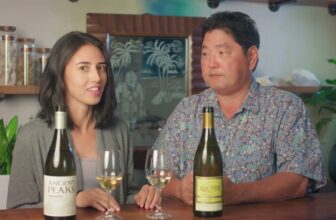
In this episode of Chuck Furuya Uncorked, Chuck and Ariana Suchia sit down with Richard Betts, one of the most curious and wide-ranging beverage minds in the modern wine world.
Betts has worked across wine, mezcal, tequila, books, and education. His background includes The Little Nell in Aspen, Betts & Scholl, My Essential wines, Scarpetta, Sombra Mezcal, Astral Tequila, Tequila Komos, and the well-known Scratch and Sniff wine book.
The episode moves through several major ideas:
- how a sommelier becomes a winemaker;
- why Grenache can behave like a warm-climate Pinot Noir;
- why sand matters in vineyards;
- how Susette Grenache came from a long search for perfume and texture;
- how an old Barossa vineyard became a new beginning;
- why Nichon Semillon is a serious white wine;
- how wine thinking influenced Tequila Komos;
- and why wine education should feel inclusive instead of intimidating.
This is not just a tasting.
It is a conversation about curiosity, place, farming, texture, and intention.
Who Is Richard Betts?
Richard Betts is introduced as a brilliant and active wine mind with a long list of projects behind him.
Chuck first knew of him from his work at The Little Nell in Aspen, Colorado. From there, Betts became involved in a wide range of beverage projects, including:
- Betts & Scholl;
- My Essential Rosé;
- My Essential Red;
- Scarpetta;
- Sombra Mezcal;
- Astral Tequila;
- Tequila Komos;
- and the Scratch and Sniff wine books.
What makes him interesting is not just the number of projects. It is the way he thinks.
He does not approach wine only as chemistry, branding, or luxury. He approaches it through love, curiosity, and the question:
How did this become what it is?
That question drives the whole episode.
Starting with What You Love
Betts explains that his approach to making wine began from the sommelier’s point of view.
Instead of starting with a formula, he started with a feeling.
He tasted something he loved, then asked why it became that way.
That is different from beginning with a technical winemaking recipe. Science matters, and Betts has a background in hydrogeology, but his creative process starts with curiosity.
He describes it almost like unknitting a sweater.
If you love a wine, you can begin pulling it apart:
- What grape is it?
- Where was it grown?
- What soil shaped it?
- What climate shaped it?
- What decisions were made in the vineyard?
- What decisions were made in the cellar?
- What made it feel seductive, aromatic, textured, or complete?
That mindset leads naturally into the episode’s central wine topic: Grenache.
Why Grenache?
Betts did not set out to make Pinot Noir.
He felt that Pinot Noir was already over-discussed, over-planted, and often treated like a princess. There are great Pinot Noirs, of course, but he did not feel he had something new to add there.
What interested him was a different question:
Could another grape show some of the same qualities people love in Pinot Noir?
He was drawn to wines that were:
- soft;
- floral;
- seductive;
- alluring;
- gentle;
- and aromatic.
Grenache, in the right place, can do that.
It does not always do that. Grenache can also become ripe, alcoholic, hollow, heavy, or simple. But in the right soil, with the right farming and the right intent, it can become something far more delicate and compelling.
The Château Rayas Question
The wine that haunted Betts was Château Rayas.
Rayas showed him that Grenache could look and feel almost Pinot-like while still being its own thing. It had perfume, softness, and mystery.
That raised the key question:
Why does this Grenache behave this way?
One answer was soil.
Rayas is famously connected to sand.
That sent Betts on a search for sandy places where Grenache could show high-toned aromatics, elegance, and texture rather than weight and darkness.
Why Sand Matters
Sand becomes one of the most important ideas in the episode.
Betts says sand both gives and takes.
What it takes is color.
That can make the wine harder to sell to people who judge red wine by darkness. But color does not equal quality. A dark wine is not automatically better. It may simply come from darker-skinned grapes or a style designed for extraction.
What sand gives is more important.
Sand can give:
- high-toned aromatics;
- floral lift;
- delicacy;
- perfume;
- seduction;
- and what Betts calls sex appeal.
He compares wine aromas to a musical register.
The bass notes are easy. Overripe, heavy, dark flavors can live there. The mezzo range is better, but still not everything. The real magic is in the alto and soprano registers — the high-toned aromatic lift that makes a wine feel alive and alluring.
For Betts, sand helps Grenache reach that higher register.
Chuck’s View: Sand Creates Civility
Chuck adds another layer.
He says limestone can often create severity, while sand can create civility.
That does not mean limestone is bad. It means the texture and personality can be different.
Sand can make wines feel:
- more gentle;
- more sheer;
- more approachable;
- more elegant;
- more sensible;
- and more pleasurable in youth.
Chuck connects this idea to other regions and grapes, including Sardinia, Santa Barbara, the Loire Valley, Pinot Noir, Chardonnay, Cabernet Franc, Chenin Blanc, and Carignan.
The broader lesson is that soil is not abstract.
It changes how wine feels.
The Search for Sand
Betts looked for the right Grenache site in several places.
He considered the south of France, Spain, Sardinia, and California. In California, a winemaker told him honestly that Grenache’s sweet spot had not yet been clearly found there at that time. Yields were inconsistent, and if Betts wanted to make a living from Grenache, it might be risky.
So the search continued.
Eventually, he found what he needed in Australia’s Barossa Valley.
But not in the obvious part.
Most of Barossa, in his view, can produce heavy, oversized, ponderous wines from red clay soils. That was not what he wanted.
The important place was Vine Vale, near the Barossa ranges, where a sandy alluvial fan held old Grenache vines.
That was the place.
Grenache and the GSM Problem
Betts also challenges the common idea of GSM blends.
GSM usually means Grenache, Syrah/Shiraz, and Mourvèdre. Many people describe it as a classic Rhône-inspired blend. Betts gives a sharper version of the story.
In his view, some Australian Grenache was misunderstood because growers and winemakers were focused on Shiraz. Grenache was sometimes picked too early just to get it out of the way before the Shiraz harvest.
That created thin or incomplete Grenache, which then had to be blended with other grapes to make it more saleable.
The problem was not Grenache itself.
The problem was how it was treated.
Betts wanted to take Grenache seriously as its own grape.
Not as filler.
Not as leftover fruit.
Not as something to hide behind Shiraz.
Susette Grenache
The first major wine discussed is Susette, the Grenache from An Approach to Relaxation.
Chuck describes it as one-of-a-kind Grenache.
It is light in color, but not light in personality. It is alluring, savory, gentle, flowing, and texturally special.
The wine is useful for Pinot Noir drinkers who want to try something different. Ariana says this kind of wine was a great tool on the restaurant floor because it could open people’s minds. A guest might say they drink Pinot Noir, but want something new. Susette could show them a whole world beyond Pinot and Cabernet.
Important details include:
- old, own-rooted Grenache vines;
- sandy soil;
- light color;
- savory character;
- delicate texture;
- whole-cluster use in moderation;
- old French oak;
- and a style that works well at the dinner table.
Chuck recommends serving it slightly chilled, especially in Hawaii’s climate.
Why Susette Works with Food
Susette is not only about aroma.
Chuck emphasizes its savoriness.
That matters because savoriness helps wine work with many foods. People often think only about body, acid, and tannin, but savory character can be just as important.
Susette can work with:
- barbecue;
- lighter meats;
- grilled foods;
- Hawaiian climate cooking;
- dishes that would normally call for Pinot Noir;
- and meals where a heavy red would be too much.
Its power is not in weight.
Its power is in texture, perfume, and savory flow.
The Rizza Vineyard Story
One of the best stories in the episode is how Betts and his wife Carla found and eventually bought a vineyard.
The story begins with a mistake.
They thought they were buying grapes from one grower, but later learned those grapes had actually come from someone else. When that truth surfaced, the grower who had supplied the fruit came to them with a problem.
The grapes they had loved came from another site.
The next year, there were more grapes available.
Betts and Carla went to see the vineyard.
It was only about a kilometer away from where they were already working, yet almost nobody around them seemed to know it existed.
The vineyard was hidden behind olive trees, bamboo, cactus, and old fruit trees. Then they saw it: old Grenache vines in pale sandy soil, looking like bonsai trees.
Betts blurted out something like:
Why don’t we just buy the vineyard?
He had no plan, no clear financing, and had not even discussed it with Carla first. But the site was too special to ignore.
Ancient Vines in White Sand
The vineyard had old, own-rooted Grenache vines planted in the nineteenth century, with original material traced back to around the 1860s.
The vines were in white sand, the kind of sand that reminded them of a beach.
This was not a normal business decision.
It was a discovery.
The site gave Betts and Carla something rare: a physical place that completed the search they had been on for years.
They were no longer only buying fruit.
They could now farm, control, observe, and nurture the vineyard themselves.
Chuck frames this as a 360-degree moment.
After searching for the right expression of Grenache and sand, they had found their own place.
From Susette to a New Chapter
Chuck notes that the Rizza block changes the wine.
Earlier Susette was very light, graceful, and Pinot-like. With the new vineyard, the wine gains a different dimension.
It becomes:
- darker;
- more masculine;
- more mysterious;
- more savory;
- more provocative;
- but still not heavy.
That is important.
The wine evolves, but it does not abandon the original idea.
It still has loveliness and allure. It just gains more depth.
Nichon Semillon
The second wine is Nichon, a Semillon-based white wine from the same broader project.
The wine is mostly Semillon with a smaller percentage of Sauvignon Blanc.
The vineyard material is also old and own-rooted, planted in sand. The Semillon vines are roughly 60 to 65 years old, while the Sauvignon Blanc component is younger.
The wine is barrel fermented, spends time on the lees, and is aged in old French white Burgundy barrels.
It does not go through malolactic fermentation.
That matters because the wine has texture and roundness from barrel and lees, but it avoids becoming heavy, creamy, or oaky.
Why Nichon Matters
Chuck sees Nichon as a serious example of what Semillon can be.
Semillon sometimes gets a reputation for being heavy, waxy, honeyed, or unctuous. But this wine has buoyancy.
The sand helps keep it civil and lifted.
The Sauvignon Blanc adds freshness, vitality, and energy.
The old oak adds frame, texture, length, and roundness without becoming the main flavor.
The result is a white wine that has the weight some Chardonnay drinkers may like, but with a very different aromatic and flavor profile.
Ariana’s Tasting Notes on Nichon
Ariana is surprised by the wine’s levity.
She expected Semillon to be honeyed and viscous, but this wine is not thick or unctuous.
She finds:
- honey;
- minerality;
- lift;
- herbaceousness;
- lean citrus;
- fruit stones;
- pits;
- and a delicate texture.
Chuck adds that the wine is not obvious in the way some Chardonnays or Sauvignon Blancs can be. It has unusual characteristics, but he does not recommend it only because it is esoteric. He recommends it because it is good.
That is the key.
The question is not whether a wine is rare or strange.
The question is whether it is good.
Semillon and Spicy Food
One of the most useful lessons in the episode is that Semillon can work with spicy food.
Betts says this was a lesson connected to Kalin Cellars and Terry Leighton. The idea surprised him at first, but then he experienced Semillon with spicy Chinese food and saw how well it worked.
Chardonnay with spicy food can often feel painful, heavy, or wrong.
Semillon can handle it differently.
It has enough body, texture, and calmness to stand with spice without becoming harsh.
Good pairing ideas for a wine like Nichon include:
- spicy Chinese dishes;
- Singaporean chicken rice;
- poached chicken with ginger and herbs;
- Vietnamese-style chicken and rice;
- lemongrass chicken;
- seafood with spice;
- and dishes where Chardonnay would feel too heavy.
You Cannot Copy a Recipe from One Place to Another
Betts also makes an important winemaking point:
You cannot simply take a recipe from one place and apply it somewhere else.
Just because a wine in one region uses a certain percentage of whole cluster or a certain blend ratio does not mean that same formula will work elsewhere.
He compares it to making a soufflé in Aspen at high altitude and then trying to make the exact same recipe in Honolulu. The conditions are different. The recipe has to change.
That is how he thinks about both Grenache and Semillon.
The idea matters, but the place decides the execution.
The Names: Susette, Nichon, and An Approach to Relaxation
The names are playful.
Betts says Susette has a suggestive meaning connected to lollipop or suckling, with dirtier interpretations available.
Nichon is tied to French wordplay around décolletage.
The label imagery connects to Anita Ekberg and a still from Federico Fellini’s world, especially the famous Trevi Fountain association.
The winery name, An Approach to Relaxation, came from an old magazine tagline. Betts originally wanted to name the winery The Waffles, because he loves waffles, but Carla vetoed that idea.
The final name fits the project.
These wines are serious in intent, but not stiff in personality.
Tequila Komos
The episode then moves from wine to tequila.
Betts introduces Tequila Komos, a project shaped by the same kind of curiosity that drives his wine work.
The starting question was simple:
Why does so much tequila get marketed the same way?
He and his partner Joe noticed that tequila often gets framed through the same familiar images: chips, guacamole, sombreros, mariachi, and predictable branding.
But that was not how they actually enjoyed tequila.
They thought of tequila in other settings:
- at the beach;
- by the pool;
- on a boat;
- in a club;
- at a friend’s home;
- in a beautiful room;
- during a good moment;
- when life feels elevated.
That led to the idea of connecting tequila to a Mediterranean-style lifestyle — or a Hawaii-like lifestyle — shaped by pleasure, place, elegance, and ease.
Applying Wine Thinking to Tequila
Betts says the goal was to let the occasion inform the production.
That is a wine-minded idea.
Instead of treating tequila as a category with fixed language, he applied lessons from wine:
- think about raw material;
- think about place;
- think about texture;
- think about vessel;
- think about aging;
- think about the occasion;
- and make what you actually want to drink.
Tequila has to be made in Tequila, just as Champagne has to come from Champagne. Betts respects that.
But within that framework, there are many choices.
How Tequila Komos Is Made
Betts discusses several production choices.
He talks about agave from different areas, including highlands and lowlands, coming together like an orchestra.
He also contrasts traditional and industrial methods.
Agave starch has to be converted into fermentable sugar. There are different ways to do that. Some are more industrial, such as pressure-cooking or diffuser methods. Betts is clearly more interested in traditional flavor development.
The approach he describes includes:
- roasting agave in volcanic stone ovens;
- letting the agave caramelize;
- fermenting the juice;
- using native yeast;
- distilling artisanally;
- and using copper pot stills.
The goal is not just to produce alcohol.
The goal is to build flavor.
Aging and Barrels
Betts also talks about barrel choices.
Many aged tequilas use used American whiskey or bourbon barrels because those barrels are widely available. He says he does not love American oak for this purpose.
His instinct is shaped by wine, so he thinks differently about oak, texture, and vessel.
That same wine thinking shows up throughout the episode:
- old French oak for Semillon;
- old barrels for texture rather than flavor domination;
- care with aging vessels;
- and the idea that oak should frame, not overwhelm.
This is where wine and tequila start to overlap.
The Porcelain Bottle
Tequila Komos also uses a distinctive porcelain bottle.
The bottle is not treated as throwaway packaging. It is meant to be beautiful enough to keep, reuse, or upcycle.
That fits the broader idea of lifestyle and intention.
The bottle is part of the experience, but not in a shallow way. It reflects the same design logic that appears in the wine labels: the object should carry meaning, feel good in the hand, and live beyond the first pour.
Scratch and Sniff Wine Education
Near the end, the conversation turns to Betts’s Scratch and Sniff books.
The best known is The Essential Scratch and Sniff Guide to Becoming a Wine Expert.
The idea behind the book matches the whole episode.
Wine is loved, but not always understood. Too often, it becomes intimidating. People feel that they need the right vocabulary before they are allowed to enjoy it.
Betts rejects that.
The goal of the book is to make wine more:
- accessible;
- inclusive;
- playful;
- practical;
- sensory;
- and less intimidating.
Ariana mentions that when she told friends she wanted to become a sommelier, one of the first books they bought her was the Scratch and Sniff guide.
That says a lot.
The book helps people enter wine without feeling shut out.
Your Vocabulary Is Fine
One of the strongest ideas in the episode is that wine language does not have to be perfect.
If you smell something and describe it in your own way, that is valid. Wine should not require people to perform expertise before they can participate.
Betts says the world of wine gets better when more people drink wine and enjoy it.
That does not mean every wine has to be dumbed down.
It means the doorway should be open.
A great wine mind can talk about sand, whole cluster, Semillon, native yeast, and copper pot stills — and still believe that wine should be fun.
That balance is the heart of the episode.
Chuck’s Final Read on Richard Betts
At the end, Chuck says the flight shows real intention and real attention to quality.
He sees purpose in every part:
- the Grenache;
- the Semillon;
- the tequila;
- the book;
- and the way Betts tells the stories behind them.
Chuck says he does not just go to wineries. He walks vineyards with people because that is how he understands how their minds work.
After listening to Betts talk through Grenache, Nichon, Tequila Komos, and Scratch and Sniff, the pattern becomes clear.
Betts does not sit still.
He keeps moving, questioning, evolving, and applying ideas from one category to another.
That is Richard Betts in a nutshell.
Final Takeaway
This episode is a deep look at how one beverage mind connects wine, tequila, farming, soil, design, education, and pleasure.
Richard Betts starts with love and curiosity.
He tastes something great and asks how it became that way.
That question leads him to Grenache in sand, to old vines in the Barossa Valley, to Semillon that works with spicy food, to tequila made with wine-like intention, and to a Scratch and Sniff book that helps people feel less intimidated by wine.
The big lessons are clear:
- Grenache can be delicate, floral, savory, and Pinot-like when grown and handled correctly.
- Sand can take color but give high-toned aromatics and texture.
- Semillon can be lifted, mineral, textured, and excellent with spicy food.
- Tequila can be approached with the same care as wine.
- Good beverage work is not only technical. It is emotional, sensory, agricultural, and human.
- Wine education should invite people in, not scare them away.
The best part is that the episode never separates seriousness from enjoyment.
The wines are serious.
The thinking is serious.
The pleasure is real.
That is the whole point.
FAQ
Who is Richard Betts?
Richard Betts is a sommelier, winemaker, beverage entrepreneur, author, and creator connected to projects such as Betts & Scholl, Scarpetta, Sombra Mezcal, Astral Tequila, Tequila Komos, and Scratch and Sniff wine books.
What is the main wine discussed in this episode?
The main red wine discussed is Susette Grenache from An Approach to Relaxation.
What is Susette?
Susette is a Grenache wine connected to Richard and Carla Betts’s search for sand-grown, aromatic, delicate Grenache.
Why is sand important for Grenache?
Sand can reduce color but increase perfume, high-toned aromatics, delicacy, and seductive texture.
Why does Richard Betts compare Grenache to Pinot Noir?
He sees the right kind of Grenache as capable of showing Pinot-like qualities: softness, perfume, seduction, and elegance.
What is the Rizza vineyard?
Rizza is the old Barossa Valley vineyard Richard and Carla Betts discovered and purchased. It contains very old own-rooted Grenache vines planted in sandy soil.
What is Nichon?
Nichon is a Semillon-based white wine from An Approach to Relaxation, made with a small amount of Sauvignon Blanc.
What does Nichon taste like?
It shows honey, minerality, lift, lean citrus, herbaceousness, fruit-stone character, texture, and freshness without feeling heavy or overly oaky.
Why is Semillon good with spicy food?
Semillon can have enough body and calm texture to handle spice without making the food feel harsher, unlike some Chardonnays.
What is Tequila Komos?
Tequila Komos is a tequila project shaped by Richard Betts’s wine-minded approach to raw material, production, aging, texture, and lifestyle.
What is special about the Tequila Komos bottle?
The bottle is made from porcelain and is designed as a beautiful object that can be kept or reused.
What is the Scratch and Sniff wine book?
It is Richard Betts’s accessible wine education book designed to make wine less intimidating and more inclusive.
What is the biggest lesson from this episode?
The biggest lesson is that great wine and spirits come from curiosity, intention, place, farming, and pleasure — not from intimidation or empty luxury.





I’m curious about the mention of sand in vineyards. How exactly does sandy soil change the flavor profile of Grenache compared to other soils?
Great question! I read that sandy soils allow for better drainage, which can lead to more delicate flavors in the grapes. Would love to know if that's true!
I had a Susette Grenache recently, and it was surprisingly different from the typical bold reds. The light color had me skeptical at first, but it paired beautifully with a savory dish. I think more people should be open to trying wines like this!
Totally agree! I also found it refreshing that it isn’t as heavy as most reds. It makes for a great summer wine!
Can someone clarify what Betts meant by Grenache being treated as 'filler'? That’s a new perspective for me.
Betts believes that Grenache has often been overshadowed by Shiraz in Australia, resulting in Grenache being harvested too early or blended without proper consideration. He advocates for treating it as a standalone variety.
Interesting how the right soil can really change the personality of wine. Sand sounds like it brings out some unique characteristics!
I usually prefer Pinot Noir, but the descriptions of Grenache here are tempting. How are the flavor profiles different in terms of spice and earthiness?
Pinot often has more earthy tones and a lighter body, while Grenache can be fruitier and more aromatic. It can definitely provide a different experience!
I find it hard to believe that Grenache can rival the complexity of Pinot Noir. Call me old-fashioned, but I think some grapes are simply better than others.
I get that perspective, but I think it really depends on the winemaker’s skill and the vineyard's conditions. There are some amazing Grenaches out there!