
Wine becomes more interesting when it is connected to people.
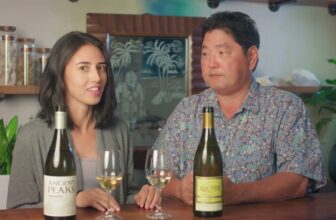
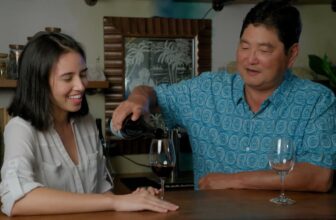
In this episode of Chuck Furuya Uncorked, Chuck is joined by Ariana Suchia and special guest Rick Lilly, known in Hawaii’s wine and beverage scene for his work at 12th Avenue Grill and his newer project, Bricks and Stones.
The conversation begins with a blind tasting of a white wine. The wine is later revealed as Cantina Terlan Pinot Bianco, a mineral, food-friendly white from northeast Italy near the Dolomites.
From there, the episode opens into a wider discussion about:
- value wines;
- farming;
- natural wine;
- restaurant wine programs;
- customer-first wine consulting;
- Bricks and Stones;
- private labels;
- old-world and new-world wine culture;
- Rick’s aha moment;
- and why wine should make people happy instead of intimidated.
The result is a thoughtful, funny, and grounded conversation about wine as part of a larger life: food, farming, hospitality, family, travel, taste, and trust.
The Opening Blind Tasting
As usual, Chuck does not ask the guests to guess the grape, vintage, producer, or soil.
The point of the blind tasting is not to prove expertise. The point is to show how different people break down wine in a useful way.
Ariana begins by noting that the wine is white, clear, clean, and lightly golden. It does not look overly concentrated. On the nose, it feels clean and pure rather than aggressively aromatic.
Rick also notices that the wine is visually clean, with no obvious haze or sediment. He finds no corky or cardboard-like smell, so the wine seems sound.
This is a practical beginning.
Before trying to name a wine, ask whether it is clean.
Before trying to sound impressive, notice what is actually in the glass.
A Clean, Pure, Food-Friendly White
Ariana describes the wine as not overly fruity and not tropical. It has some minerality and a pure, straightforward expression.
She also notices a little leesy or sourdough-like quality, which gives the wine more food flexibility.
Rick finds stone fruit, white peach, apricot, white flowers, yellow flowers, and strong minerality. He sees the wine as high quality, not necessarily expensive, but clearly well made.
The wine feels medium-light to medium in body and very food-friendly.
Possible pairings mentioned include:
- crab;
- scallops;
- white fish;
- seafood in general;
- and chicken with herbs.
That food range is important because the wine does not have an extreme personality. It is not heavily oaked, not high in alcohol, not too sweet, and not searingly acidic.
It leaves room for food.
Chuck’s Breakdown of the Wine
Chuck adds his own calibration.
He describes the wine as dry, medium-bodied, and built around stony minerality. He specifically talks about a base-note minerality, like wet river stones, rather than just bright limestone sharpness.
He also finds:
- wonderful intensity;
- good concentration;
- seamless flow from beginning to end;
- a lemony edge;
- acidity on the sides of the tongue;
- no sweetness;
- no harsh bitterness;
- and no excessive alcohol.
That makes the wine useful for seafood.
The lemony acidity can work like a squeeze of lemon over fish, scallops, crab, or shellfish.
Rick adds that he also finds a touch of salinity, like a tiny drop of saline in a cocktail. That salty edge makes the wine feel especially good for Hawaii.
The Reveal: Cantina Terlan Pinot Bianco
The wine is revealed as Cantina Terlan Pinot Bianco.
Chuck says the wine comes from northeast Italy, up among the Dolomites, near Austria and Switzerland. He points to the mountain on the label and explains that the soils are connected to glacial deposits, including porphyry rock and quartz.
This is not limestone, river stone, or slate.
It is a different mineral foundation.
That helps explain the wine’s stony, mountain-like character.
The producer is also important. Cantina Terlan is a co-op, not a single estate in the usual sense. It brings together different growers from the area, yet the wine still overdelivers for the price.
Why Cantina Terlan Overdelivers
Chuck says the wine was around $23.95 in retail, while Ariana and Rick estimated it closer to $25 to $30 based on quality.
That is the value point.
This is not a cheap wine in the sense of being basic. It is a high-quality white that still stays under $25 in the store.
Chuck sees it as a strong recommendation for people who like:
- Chardonnay;
- Sauvignon Blanc;
- mineral white wines;
- seafood wines;
- and dry, clean, food-friendly whites.
It has enough texture for Chardonnay drinkers, enough freshness for Sauvignon Blanc drinkers, and enough minerality for people who want something more distinctive.
Chuck’s First Cantina Terlan Memory
Chuck remembers first being seriously impressed by Cantina Terlan through a Chardonnay shown to him by Giancarlo Paterlini of Acquerello in San Francisco.
The wine was from the 1991 vintage and had already aged for more than ten years when Chuck tasted it. He was blown away by how well it showed.
That experience pushed him to research Cantina Terlan more deeply.
For Chuck, this Pinot Bianco has become one of his favorite wines from the producer because it consistently delivers value and quality.
That is the central theme of the wine section: not famous for fame’s sake, not expensive for prestige, but genuinely good for the money.
Rick Lilly and 12th Avenue Grill
The conversation then turns to Rick’s background.
Chuck remembers Rick as the wine buyer for 12th Avenue Grill in Kaimuki, where he built adventurous and interesting wine programs. The restaurant became known for thoughtful wine dinners, creative pairings, and wines that made sense with the food.
Ariana also mentions Rick’s private-label work with talented winemakers, including Tyler and Neyers.
Rick explains that the point of those wines was not ego. It was to find bottles that were accessible, could work by the glass, and overdelivered for the price.
That phrase comes up again and again:
overdeliver for the dollar.
That is a major part of Rick’s philosophy.
Bricks and Stones: What the Name Means
Rick’s newer project is Bricks and Stones, spelled Brix and Stones in concept.
The name has two layers.
Brix refers to sugar ripeness in grapes. It connects to wine, fermentation, and the technical side of beverage.
Stones connects to whiskey stones and temperature control, but also has a broader feel of grounding, material, and structure.
Rick explains that Bricks and Stones is about bringing people together under one roof. It is not only wine. It includes the wider beverage and lifestyle world.
The concept includes:
- wine;
- tequila;
- spirits;
- beer;
- beverage consulting;
- cigars;
- imported olive oil;
- risotto;
- porcini mushrooms;
- sauces;
- curated boxes;
- and things that help people create better experiences at home.
It is not just a shop.
It is a way of tailoring food, drink, and lifestyle around the person.
Food, Drink, and the Home Experience
One of Rick’s points is that people can still create good food and drink experiences at home.
He talks about making risotto or pasta quickly with the right products. The idea is not to make people spend wildly, but to help them use good ingredients intelligently.
If a prepared risotto mix or imported ingredient costs a little more but feeds several people and saves time, the actual cost per person may be small.
That is the Bricks and Stones logic:
Help people live better at home with products that actually make sense.
The focus is not on showing off.
The focus is on building a better daily experience.
Farming as the Root
When Chuck asks why Rick went down this road, Rick answers with one word: farming.
For him, everything comes from the soil.
That explains why Rick connected with Chuck’s way of talking about wine. Chuck often talks about place, exposure, hillside, sunlight, and soil. Rick understood that not only through grapes, but through his own childhood.
He grew up in Amador and raised animals as a kid. He also grew tomatoes, lettuce, cabbage, and other food.
That gave him a direct connection to the ground.
For Rick, wine is not only a beverage. It is agriculture.
The same applies to tequila, beer, food, olive oil, and anything else that begins with plants, fermentation, and farming.
Why Farming Choices Matter
Rick talks directly about chemicals and farming.
His view is that if chemicals are on the property, they become part of the product and part of the conversation. He connects this to the way people think about food.
Many people seek out better eggs, better produce, organic food, local food, or cleaner ingredients. Rick asks why that thinking should stop at food.
Why not extend it to:
- wine;
- tequila;
- beer;
- whiskey;
- vodka;
- and everything else people drink?
This is part of his natural wine philosophy, but it is broader than a trendy category. It is about paying attention to what goes into your body and what kind of farming you support.
Natural Wine and Importers
When Ariana asks what wines or winemakers ring true to Rick’s philosophy, he starts not with producers, but with importers.
That is telling.
Importers often act as filters. If you trust an importer’s taste, values, and sourcing, you can discover producers more confidently.
Rick mentions importers such as:
- Kermit Lynch;
- Louis/Dressner;
- Jenny & François;
- and Neal Rosenthal.
His larger point is not that everyone must drink one style. He says every wine, producer, tequila, whiskey, vodka, and beverage has a place at someone’s table.
The question is whether it belongs at your table.
That is a generous philosophy.
It leaves room for personal taste without pretending all bottles are equal for all people.
Everything Has a Place at the Table
Rick gives a simple food example.
If he wants shabu-shabu, he may reach for a very different wine than if he is eating ribeye. A wine that works beautifully with one dish may not make sense with another.
That is why he resists rigid rules.
The right wine depends on the person, the food, the mood, and the situation.
This is also why Bricks and Stones is built around conversation. Rick wants to understand what people cook, drink, collect, enjoy, and need.
The bottle should fit the life.
Not the other way around.
Chris Santini Natural Wine
Rick brings a wine of his own to the episode: a light, natural French wine in a one-liter bottle from Chris Santini.
He describes it as a Vin de France, outside a strict appellation category. The wine is light in color and made from Pinot Noir and Chardonnay, with grapes co-planted and fermented together.
The wine is described as very natural, with no added sulfur, though Rick notes that all wine contains sulfites naturally at some level.
The style is light, funky, fresh, crushable, chilled, and relaxed.
Ariana calls it funky fresh.
Rick says it is the kind of wine he would want on a Saturday afternoon at the beach, under an umbrella, with a book.
That image captures the wine perfectly.
It is not formal.
It is not heavy.
It is about pleasure.
Why One-Liter Bottles Matter
The Chris Santini wine comes in a one-liter bottle, which is larger than the standard 750 ml format.
That matters because it changes how people experience the bottle. A one-liter wine often feels more communal, more casual, more drinkable, and less precious.
Rick estimates it would be just under $40, which sounds high at first, but the larger format changes the value calculation.
This wine is also limited, allocated, and unusual.
Rick explains that Bricks and Stones does not price rare bottles with extreme allocation markups. Instead, they use a consistent margin across the board.
That means the person buying a less expensive bottle and the person buying a more expensive bottle are treated with the same philosophy.
That is another expression of fairness.
Ariana’s Rick Lilly Memory
Ariana shares a personal story from when she was preparing for her Certified Sommelier exam.
She was nervous, pacing, and trying to remember grape lists and wine facts. Rick came outside, found the nervous candidate, and simply told her:
Just do what you do.
That calmed her down.
She passed the service exam.
For Ariana, that became an iconic Rick Lilly moment. It connects to his broader wine philosophy: drink what you drink, like what you like, do what you do.
Wine should not be an anxiety machine.
It should be something you can enjoy, learn from, and share.
Rick’s Aha Moment
Rick’s own wine aha moment did not come from a famous grand cru or expensive bottle.
It came from a relatively inexpensive bottle he found on a lower shelf at Tamura’s.
He was studying wine and wanted something affordable. He bought a bottle from the south of France, around twelve dollars, and opened it at home.
When he smelled it, it reminded him of his old baseball mitt from childhood.
That one aroma opened a door.
It showed him that wine could carry memory, place, leather, herbs, earth, and nostalgia. It was not just fruit or alcohol. It could transport him.
Years later, when he visited the region, he smelled rosemary, fennel, sage, asparagus, and the surrounding landscape and realized that the wine had been echoing the place.
That is the power of wine.
A cheap bottle can still change how someone sees the world.
Place, Memory, and Aromas
Rick’s aha moment is important because it shows why wine does not have to be expensive to matter.
The wine mattered because it made him ask:
- What is that smell?
- Why does this remind me of something?
- What happened in the universe to make this glass taste this way?
- How does place become aroma?
Those questions shaped his path.
Wine became a way to explore farming, landscape, culture, travel, and memory.
That is far more meaningful than chasing labels.
Wine Maps, Contiguous Regions, and 3D Thinking
The conversation also touches on wine geography.
Rick talks about using wine maps and thinking about regions not just as flat shapes, but as three-dimensional places with altitude, exposure, slope, and orientation.
Chuck recalls Roberto Viernes using Google Maps to show Burgundy and the Santa Rita Hills from above, zooming in on vineyards, aspects, angles, and geography.
This matters because wine regions are not just names.
They are physical places.
Altitude, slope, exposure, valleys, wind, fog, marine layer, and soil all shape the wine.
A flat map can show boundaries.
A three-dimensional view can show why those boundaries matter.
Old World vs New World
Rick says he often gravitates toward the Old World because of history and tradition.
In places like France, wine culture has had centuries to develop. Weather, farming, inheritance, and hardship are part of the story.
He talks about frost and hail in the Loire Valley and how growers may lose a huge portion of their crop but still view it as part of life in France.
By contrast, in California, fires, earthquakes, and other disasters can have different financial and cultural implications. The New World simply has not had as much time to build the same long tradition.
Rick is careful not to rank one above the other absolutely. The Old World has more history because it has had more time. The New World is still building its own.
California, France, and Time
The conversation moves into California wine as well.
Rick notes that California has many compelling stories, from Santa Barbara’s marine layer and east-west valleys to old vines in places like Antioch and Evangelho Vineyard.
But the Old World has deeper historical layers.
This is not a criticism of California. It is simply a difference of time.
California can have remarkable vineyards, winemakers, and wines. France can have centuries of accumulated tradition.
Both matter.
They just speak in different ways.
The Challenge of Consolidation
Chuck and Rick also discuss how wineries are being bought up by larger companies.
This affects both the Old World and New World. Family estates can become difficult to pass on because of taxes, inheritance, land fragmentation, and economics.
Chuck points out that in Europe, land may be divided among children over generations, fragmenting holdings.
That can make continuity difficult.
Rick worries that some wineries may eventually be absorbed by large corporations because the next generation cannot afford to continue.
This ties back to the earlier theme:
Small producers need support.
If people care about individuality, place, and nuance, they have to seek it out.
Bricks and Stones as Customer-First Consulting
Near the end, the conversation returns to Bricks and Stones.
Rick says people can find many kinds of wines there, not just the wines he personally loves. If someone asks for Turnbull Cabernet, he will help with that. If someone wants something funky and natural, he can help with that too.
That is important.
He is not shopping for himself.
He is shopping for other people.
This is the key difference between ego-driven wine programs and customer-first hospitality.
Rick says he likes watching people be happy.
The question is not, “What does Rick think you should drink?”
The question is, “What makes you happy, and how can we build from there?”
Chuck’s Customer Question
Chuck connects this to one of his own favorite questions:
What wine do you normally drink?
That one answer tells a wine professional a lot:
- white, red, rosé, or sparkling;
- full-bodied or light-bodied;
- dry or sweet;
- California or Old World;
- oaky or unoaked;
- familiar or adventurous;
- and approximate price range.
From there, the wine professional can recommend something closer to what the guest likes, or something that also works better with the food.
The point is not to impose.
The point is to listen.
Overdelivering for the Dollar
Rick remembers seeing Chuck recommend a less expensive bottle to guests instead of pushing the highest-priced option.
Some servers might see that as losing money. Rick sees it differently.
If the guest has a better time, buys another bottle, trusts the recommendation, and comes back again, that is better hospitality.
Chuck frames it simply: treat people how you would want to be treated.
If a mechanic, dentist, or professional oversells you something you do not need, you will feel cheated. Wine should not be different.
A good wine recommendation should reward the guest.
It should overdeliver for the dollar.
What Bricks and Stones Offers
Bricks and Stones is described as appointment-based rather than a normal walk-in retail shop.
The website is intentionally a little vague because Rick wants people to come in and have a conversation.
He wants to know:
- Do you have a cellar?
- Do you cook at home?
- What wine do you like?
- Are you collecting?
- Are you drinking tonight?
- Do you have children?
- What kind of lifestyle are you building?
- What kind of experience do you want?
The goal is to tailor the experience.
It is not just selling inventory.
It is helping people build a better version of their own food and beverage life.
Final Takeaway
This episode begins with a glass of Cantina Terlan Pinot Bianco and becomes a much larger conversation about wine, place, farming, business, and hospitality.
The Pinot Bianco shows what Chuck loves in a value wine: dry, medium-bodied, mineral, stony, lemon-edged, food-friendly, and under $25.
Rick Lilly brings a wider philosophy: everything starts with farming, every bottle has a place at someone’s table, and the best wine work begins by listening to the person in front of you.
Bricks and Stones reflects that philosophy. It is about wine, spirits, cigars, food products, consulting, and curated experiences, but underneath all of that, it is about people.
What do they like?
What do they cook?
What do they want to learn?
What makes them happy?
That is the real lesson.
Wine is not about intimidation.
Wine is about connection, place, memory, pleasure, and helping people live a little better.
FAQ
Who is Rick Lilly?
Rick Lilly is a Hawaii wine and beverage professional associated with 12th Avenue Grill and the Bricks and Stones concept.
What wine is blind tasted in this episode?
The blind-tasted wine is revealed as Cantina Terlan Pinot Bianco.
Where is Cantina Terlan Pinot Bianco from?
It comes from northeast Italy near the Dolomites, close to Austria and Switzerland.
What does Cantina Terlan Pinot Bianco taste like?
The wine is dry, clean, mineral, stony, medium-bodied, lemon-edged, lightly floral, and food-friendly.
What foods pair with this Pinot Bianco?
It works well with crab, scallops, white fish, seafood, and chicken with herbs.
Why does Chuck like this wine?
Chuck likes it because it overdelivers for the price, offering quality, minerality, balance, and food compatibility under $25.
What is Bricks and Stones?
Bricks and Stones is Rick Lilly’s beverage and lifestyle concept focused on wine, spirits, cigars, food products, consulting, and curated home experiences.
What does “Brix” mean?
Brix refers to sugar ripeness, especially in grapes and fermentation.
What does Rick mean by everything starting with farming?
Rick believes food, wine, spirits, tequila, beer, and other products all begin with agriculture, so farming choices matter.
What kind of wines does Rick like?
Rick gravitates toward wines connected to farming, place, natural production, individuality, and honest table use, but he also believes every wine has a place for someone.
What was Rick’s wine aha moment?
Rick’s aha moment came from an inexpensive south-of-France wine that smelled like his childhood baseball mitt and showed him that wine could carry memory and place.
What is the biggest lesson from this episode?
The biggest lesson is that good wine service starts with listening. The right bottle is not the one that impresses the expert; it is the one that fits the person, the food, the moment, and the budget.




What makes Cantina Terlan Pinot Bianco stand out compared to other white wines?
I think its stony minerality and food-friendliness are key. It pairs well with a lot of dishes.
Great point! Its unique mineral foundation from the Dolomites definitely contributes to its distinct character.
I had the Cantina Terlan Pinot Bianco with shrimp scampi, and it was a match made in heaven! The minerality really complemented the dish.
That sounds delicious! I’ve found it pairs well with crabs too. Such a versatile wine!
What exactly does 'overdelivers for the price' mean in this context?
It means that the wine offers quality and flavor that exceed what you'd expect for its price point, making it a great value.
How does Cantina Terlan compare to a typical Chardonnay? I usually prefer oaked wines.
I find Cantina Terlan offers a nice balance—it's not overly oaked but still has great texture. It's worth a try!
Absolutely! While it's not oaked, it has enough structure and minerality to satisfy fans of richer whites.
I disagree that white wines are more versatile. I think reds, especially full-bodied ones, pair better with food.
I see your point, but I think it depends on the dish. Whites can be great with lighter foods.
Both sides have merit! It really depends on the specific pairing and personal preference.