
Great hospitality is built in the details.
It is built through polished glasses, correct wine temperature, patient mentorship, hard work in the trenches, and the humility to keep learning even after decades in the business.
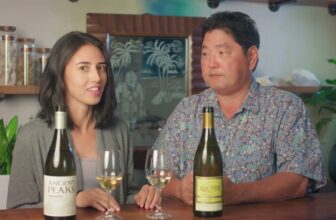
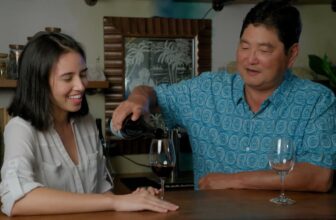
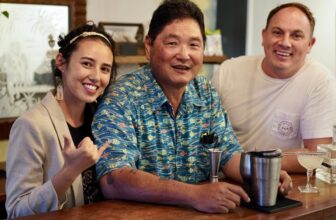
In this episode of Chuck Furuya Uncorked, Chuck is joined by Mike Weber, Director of Operations for Roy’s Restaurants in Hawaii. Mike has worked across the islands, from Lana‘i to Maui, the Big Island, Honolulu, and beyond, and his experience gives him a wide view of Hawaii’s restaurant and wine culture.
The episode begins with a blind tasting of a red wine, later revealed as Cannonau di Sardegna Riserva from Sella & Mosca. From there, the conversation moves through Mike’s career, Lanai, Cuisines of the Sun, hospitality standards, leadership, Roy’s Restaurants, California wine trips, Kermit Lynch, Bruce Neyers, Sage Canyon, Carignan, and the importance of finding wines that deliver honest pleasure.
This is a conversation about wine, but even more than that, it is about craft.
Who Is Mike Weber?
Mike Weber is introduced as the Director of Operations for Roy’s Restaurants in Hawaii.
Before Roy’s, he worked at the Lodge at Koele on Lana‘i, the Manele Bay Hotel, the Merriman’s restaurant group, and other hospitality settings across the islands.
Chuck presents Mike as someone who has been around many of Hawaii’s important wine and restaurant people for years. He has seen the scene from the dining room floor, from hotel fine dining, from restaurant operations, and from multi-unit leadership.
That range matters.
Mike is not only talking about wine from a collector’s point of view. He is speaking from service, operations, training, guests, standards, and real restaurant work.
Blind Tasting as a Practical Tool
The episode opens with a blind tasting.
Chuck makes the purpose clear. Mike is not being asked to guess the grape, vintage, soil, producer, or region. The point is to show viewers a practical method for tasting wine.
Can the wine be understood?
Is it delicious?
Does it have balance?
What food would it work with?
What price would make sense?
Would it be useful in a restaurant or at home?
That is a more valuable form of blind tasting for most people. It is less about being right and more about building a vocabulary.
When you can describe a wine clearly, you can make better buying decisions.
Mike’s First Impression of the Wine
Mike begins with the aroma and taste rather than focusing heavily on color.
He smells fruit, but also earth. He finds darker fruit, balance, concentration, and a long finish with a little bitterness. Most importantly, he finds the wine delicious.
That is a simple but important point.
A wine can be analyzed in detail, but the first question still matters:
Do you want to keep drinking it?
For Mike, the answer is yes.
He sees the wine as balanced between fruit and earth. It reminds him of either an Old World wine or a New World producer working in an Old World style.
That is a useful description because the wine is not simply about ripe fruit. It has enough savory and earthy character to feel more grounded.
Food Pairings: Chicken, Steak, Salmon, and More
When Chuck asks about food, Mike thinks broadly.
He imagines grilled chicken, New York steak, and even salmon. Kalei adds that the wine could work with leaner steak cuts like top sirloin or New York steak.
Chuck later expands the pairing range even further.
This kind of red can work with:
grilled chicken;
New York steak;
top sirloin;
salmon;
pizza;
meatloaf;
light red-sauce pastas;
grilled octopus;
Tuscan-style chicken;
and casual bistro-style food.
That versatility is part of the wine’s appeal.
It is not a heavy trophy wine. It is a food wine.
The Reveal: Cannonau di Sardegna Sella & Mosca Riserva
The wine is revealed as Cannonau di Sardegna Riserva from Sella & Mosca.
Cannonau is the Sardinian name for a grape often associated with Grenache, though Chuck notes that he does not find all Cannonau to taste exactly like Grenache. He also mentions the idea that Sardinia may be one of the historical homes of Grenache, though he does not treat that as a simple settled fact.
This wine is from Sardinia, the Mediterranean island off the coast of Italy.
The word Riserva indicates additional aging, and Chuck explains that this wine spends more time in large barrels. That aging gives the wine shape and maturity without turning it into something heavily oaked or polished.
Why This Cannonau Matters
The shock of the tasting is the price.
Mike thinks the wine tastes like a $40 bottle. Kalei guesses somewhere in the $30 range.
Chuck reveals that he bought it for around $14 to $15.
That makes it one of the most useful kinds of wine: a value bottle that tastes much better than expected.
Chuck explains that this is more of a country-style Cannonau than a trophy-style version. It is meant to be enjoyed at a café or bistro, not analyzed endlessly under a microscope.
That does not make it less valuable.
In some ways, it makes it more valuable.
It is delicious, affordable, food-friendly, and easy to share.
Country Wine vs Trophy Wine
One of the strongest ideas in the episode is the distinction between country wine and trophy wine.
Trophy wines may be rare, expensive, collectible, and prestigious. They can be profound, but they are not always what you want at dinner.
Country wines are different.
They are meant to be drunk with food.
They should be delicious, honest, refreshing, and compatible with the table.
Chuck says this Cannonau is not one of Sardinia’s most prestigious bottlings, and he does not care. It tastes good. It works with food. It delivers pleasure.
That is enough.
In fact, for many meals, that is exactly what you want.
Serve It Slightly Cool
Chuck gives one very practical tip: serve this wine slightly cool.
He suggests putting it in the refrigerator for about eight minutes before serving.
That small chill can make the wine more refreshing and delicious. It helps keep the alcohol and fruit in balance and makes the wine feel more food-friendly.
This is especially useful for lighter or medium-bodied Mediterranean reds.
Not every red wine should be served warm. Many reds become better when served just below room temperature, especially in warm climates or with casual meals.
Cannonau, Beaujolais, lighter Rhône reds, Frappato, and many country-style reds can all benefit from a slight chill.
Mike’s Early Wine Journey
After the tasting, the conversation turns to Mike’s history.
He remembers meeting Chuck in 1996 at the Lodge at Koele on Lana‘i. At the time, the hotel hosted guest chef programs that brought major culinary figures to the island.
Mike recalls chefs such as Thomas Keller, Charlie Trotter, Emeril Lagasse, and others. For him, it was a discovery period.
He was exposed to high-level food, wine, and hospitality in a setting where learning was happening constantly.
Those experiences helped shape how he thought about restaurants, wine, and service.
Lanai, Wine Tastings, and Perspective
Chuck and Mike remember after-dinner tastings on Lana‘i, where people would gather, smoke cigars, taste wine, and talk story.
At the time, many younger wine drinkers were focused on Napa Cabernet, Turley Zinfandel, and other powerful California wines. Chuck would bring bottles to open other horizons and show different possibilities.
Mike says that Chuck helped him think about wine differently. The world of wine was much bigger than he initially understood.
Another major influence was Kermit Lynch’s Adventures on the Wine Route, which helped deepen his interest in wine and old-world perspectives.
Those three elements — a first Pinot Noir aha moment, meeting Chuck, and reading Kermit Lynch — became foundational for Mike.
Pinot Noir as an Aha Moment
Mike’s first major wine memory came when his parents took him to a winemaker dinner for his 21st birthday.
The wine was from Sanford, and the winemaker was Bruno D’Alfonso.
That evening opened his eyes to wine and food pairing, grape variety, and how wine could be part of a larger dining experience. It also sparked his love of Pinot Noir.
He remembers the perfume of Pinot Noir and the way it connected with him.
That is how many wine journeys begin: not with a textbook, but with one meal that makes everything click.
Working in the Trenches
One of the most important parts of the episode is Mike’s view on working from the bottom up.
He started as a busser. He worked hard, sweated, moved through different roles, and sometimes had to start over at the bottom when moving to better restaurants.
That experience matters.
When you work in the trenches, you may want to get out. You may want to make decisions, manage people, or do the “fun” parts of the business. But later, those early jobs give you perspective.
They give you confidence.
They make your decisions more authentic.
They help you understand what you are asking from other people.
That is the value of doing the work.
Starting Over at a Better Place
Chuck adds an important point: when you move to a new restaurant, you may need to start over.
It does not matter if you were a manager somewhere else. At the new restaurant, you need to learn how that team does things.
A restaurant needs consistent service. If one server does things the Alan Wong’s way, another does them the Roy’s way, another does them the Halekulani way, and another does them the Vino way, guests receive different experiences depending on where they sit.
That is not the goal.
Starting at the bottom teaches the standards, rhythm, and philosophy of the new place.
It also builds credibility with the team.
Mastering the Small Jobs
Chuck emphasizes that if you are polishing glasses, be the best glass polisher.
If you are a busser, be the best busser.
If you are a host, be the best host.
Do not treat the job only as a stepping stone. Master it.
That mindset matters because if you ever open your own restaurant or lead a team, you will understand every position more deeply.
If you skip the fundamentals, your base is weak.
Mike agrees that younger people often do not want to hear “take your time.” They want to move fast. But the slow work matters.
One step at a time is not glamorous, but it builds strength.
Polishing Glasses and Service Standards
The conversation spends time on polishing glasses because it represents something bigger.
At Cuisines of the Sun, the team polished thousands of glasses. They also washed them carefully, rinsed them properly, wrapped bottles in cellophane to protect labels from ice, controlled wine temperatures, organized bottles by day, and made sure every detail was ready.
This was not just about being fussy.
It was about standards.
Chuck explains that Cuisines of the Sun hosted world-class chefs, and Hawaii’s wine and restaurant community wanted to do Hawaii proud.
The glassware, bottle temperature, labels, organization, and service all mattered because they represented the community.
The Meaning of Sommelier Standards
Chuck compares the idea of being a sommelier to the word vigneron or even samurai.
A samurai is not merely someone with a sword. It implies code, culture, and way of life.
For Chuck, the sommelier standard is similar.
It is not just about knowing wine facts or pouring bottles. It is a culture of detail, respect, preparation, and craft.
If he saw Mark Shishido or Mike Weber after many years, he would still trust their standards because the shared code is there.
That is what the glass polishing and bottle wrapping represented.
Not chores.
Culture.
Leadership Across Ten Restaurants
Mike now works in operations across multiple Roy’s restaurants.
Ariana asks how he manages different restaurant personalities, different teams, and different concepts while still keeping a consistent culture.
Mike explains that he has a lot of help, including Roy Yamaguchi, corporate chef Garrett Okagawa, and others. He also says that managing multiple units changed his leadership style.
When he was a general manager in one place every day, he could use a firmer style. But when overseeing many locations, that does not work. You cannot control everything from a distance.
You have to learn nuance.
You have to understand people.
You have to help them want to be part of the culture.
Good Leaders Need Followers
Mike shares a leadership lesson from Reiner Kumbroch, who hired him at Roy’s.
When asked what one thing a leader needs, the answer was not commitment, hard work, or attention to detail.
The answer was followers.
That stayed with Mike.
You cannot lead if people do not want to follow you. They need to trust you. They need to believe in the direction. They need to feel that they are part of something.
That kind of leadership is nuanced.
There is no single book or formula that solves every situation. You learn by doing, listening, adjusting, and staying engaged.
Hospitality After the Pandemic
Ariana asks about the future of Hawaii restaurant hospitality after the pandemic.
Mike’s answer is direct: stay focused on hospitality.
Different restaurants will have different niches. Some will pursue fine dining. Some will be more casual. But the root must be hospitality.
Hawaii is already good at looking out for people and working together. Mike’s hope is that the restaurant community continues to support one another, take care of guests, and put love back into the work.
There is no secret formula.
Do the work.
Support each other.
Take care of people.
That is the foundation.
Hawaii in California
The conversation then moves to a late-1990s event in Paso Robles.
Chuck helped organize a “Taste of Hawaii” style event in California during a slower period for Hawaii tourism. Roy Yamaguchi, Alan Wong, D.K. Kodama, Nalo Farms’ Dean Okimoto, Kona coffee grower John Langenstein, and others were involved.
The goal was to bring Hawaii culinary culture to travel professionals in California and remind people that Hawaii was still there, still vibrant, and worth visiting.
Mike joined part of that experience, and it became part of a larger pattern of Hawaii chefs and wine professionals traveling, bonding, and learning together.
California Wine Country Road Trips
Chuck also remembers later California road trips with Mike Weber, Mark Shishido, Jason Pannui, Randy Ching, and others.
They would drive from Anderson Valley down to Santa Barbara, visiting vineyards and winemakers, often on aggressive schedules.
Mike remembers visiting Fred Scherrer as one of the moments that stayed with him.
Someone asked Fred what he was “going for” with a wine, and Fred seemed uncomfortable with the question. Mike interpreted the lesson as this: Fred was not trying to force the wine into a predetermined shape. He was trying to help it become what it wanted to be.
That is a deep wine lesson.
The best winemakers do not always impose.
Sometimes they guide.
Kermit Lynch, France, and Bruce Neyers
Mike also traveled through France with the Kermit Lynch team.
He split the trip with Roberto Viernes and focused on regions that matched his interests. One of his biggest takeaways was not only a place or wine, but a person: Bruce Neyers.
Mike remembers Bruce’s professionalism, pace, communication, and commitment to craft.
One special memory was an early morning walk through a French town in Bordeaux country. Bruce invited Mike to join him before everyone else was awake. For Mike, that walk became one of the most meaningful experiences of the trip.
It was not about a famous bottle.
It was about being with someone deeply connected to wine, place, and craft.
Neyers Wines and Sage Canyon
Mike says his wine cooler at home is full of Neyers wines.
He especially loves Sage Canyon and the Neyers Carignan from Evangelho Vineyard.
Ariana explains that Carignan can sit between Cabernet and Pinot Noir in a useful way. It is not as big and bold as Cabernet, and not as light and elegant as Pinot. In the right hands, it can be savory, spicy, peppery, and deeply satisfying.
Chuck clarifies that not all Carignan is the same.
Old-vine Carignan is different from young-vine Carignan. Soil matters. Vineyard age matters. Farming matters. Producer intent matters.
The Neyers version is special because it comes from very old vines, including Evangelho Vineyard, with own-rooted vines planted in sand.
Why Old-Vine Carignan Matters
Chuck explains that Carignan is often used as a blending grape because it can provide flesh, acid, and tannin.
On its own, it does not always have the immediate character of Syrah or Grenache. But old-vine Carignan grown in special soils can become something much more profound.
That is the key.
Old vines.
Interesting soil.
Careful farming.
Thoughtful winemaking.
Bruce Neyers brought inspiration from France and looked for California vineyards that could express Carignan in a serious way. Evangelho Vineyard gave him that opportunity.
For Mike, Sage Canyon is the kind of wine he would want with a last meal.
That says everything.
Wine and Asian-Inspired Food
Chuck asks Mike about wines for Asian or Eurasian-inspired food, especially given Roy’s importance in that space.
Mike gives a clear answer:
Lower alcohol.
Lower oak.
With Asian-influenced food, there can be salt, sweetness, spice, umami, and delicate nuances. Heavy oak and high alcohol can clash with those flavors.
This is a useful rule for home drinkers too.
When pairing wine with Asian-inspired dishes, look for freshness, balance, lower alcohol, less oak, and food-friendly structure.
That could mean Beaujolais, Riesling, lighter Rhône reds, country reds, rosé, sparkling wine, Albariño, or other bright, balanced bottles.
The goal is not power.
The goal is harmony.
Final Takeaway
This episode with Mike Weber is about more than one wine.
Yes, the blind tasting of Cannonau di Sardegna Sella & Mosca Riserva shows how a $14 to $15 bottle can deliver real pleasure, food compatibility, and honest value.
But the deeper lesson is about standards.
Work your way up.
Respect every job.
Polish the glasses correctly.
Serve the wine at the right temperature.
Listen to guests.
Support your team.
Travel when you can.
Find mentors.
Taste widely.
Look for wines with value, honesty, and food compatibility.
Whether the conversation is about Cannonau, Roy’s Restaurants, Cuisines of the Sun, Fred Scherrer, Bruce Neyers, Kermit Lynch, or old-vine Carignan, the same principle keeps returning:
Do the work with care.
That is where hospitality becomes more than service.
That is where wine becomes more than a drink.
FAQ
Who is Mike Weber?
Mike Weber is the Director of Operations for Roy’s Restaurants in Hawaii and has worked across many hospitality settings in the islands.
What wine is blind tasted in this episode?
The wine is revealed as Cannonau di Sardegna Riserva from Sella & Mosca.
What is Cannonau?
Cannonau is a Sardinian red grape often associated with Grenache, though Chuck notes that it can taste different from many Grenache wines.
What does the Cannonau taste like?
Mike describes it as balanced, with dark fruit, earth, good concentration, a flowing palate, and a long finish.
How much did the wine cost?
Chuck says he found it for around $14 to $15, even though Mike thought it tasted like a much more expensive bottle.
What foods pair with Cannonau di Sardegna?
It can work with grilled chicken, New York steak, top sirloin, salmon, pizza, meatloaf, light red pasta, grilled octopus, and Tuscan-style chicken.
Should Cannonau be served chilled?
Chuck recommends serving this wine slightly cool, with a short time in the refrigerator before serving.
What is the main operations lesson from Mike Weber?
Working from the bottom up gives leaders credibility, perspective, and confidence because they understand the work they ask others to do.
Why does Chuck talk about polishing glasses?
Polishing glasses represents standards, attention to detail, and the shared code of professional hospitality.
What does Mike say about leadership?
He says a leader needs followers, meaning people must trust the leader and want to be part of the culture.
What wines work with Asian-inspired food?
Mike suggests lower-alcohol and lower-oak wines because Asian-inspired food can include salt, sweetness, spice, and delicate flavors that can clash with heavy wines.
What is the biggest lesson from this episode?
The biggest lesson is that hospitality is built through details, humility, teamwork, standards, and wines that genuinely work with food and people.



I’m curious about the Cannonau wine discussed. What makes it special compared to other Grenache wines? Is the flavor profile really that different?
Cannonau, while similar to Grenache, tends to have a unique profile influenced by Sardinia's terroir. It often combines fruitiness with savory notes that can make it quite versatile for meals.
Good question! I've read that Cannonau often has a more earthy character than regular Grenache, which can really enhance food pairings.
I've been to Roy's in Hawaii and had an amazing dining experience. The staff really knows their wines! I tried a Cannonau there, but it was not this specific one. I appreciate hearing Mike's insights about choosing food-friendly wines. It's true that sometimes you just want something that pairs well with a meal, rather than a pricey trophy wine.
Roy's has a fantastic reputation for both food and wine. It's great to hear you had such a positive experience! Wine should indeed enhance the dining experience.
I totally agree! It's refreshing to find a wine that feels approachable and delicious without being pretentious. Makes dinner more enjoyable.