
Good wine service is not about showing off.
It is about listening.
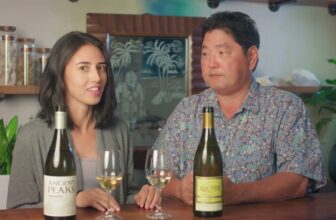
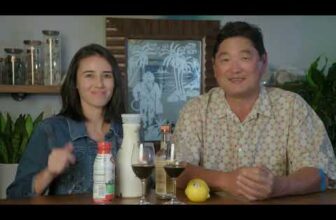
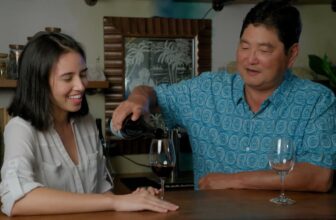
In this episode of Chuck Furuya Uncorked, Chuck is joined by Taro Kurobe, who oversees the wine program for G.Lion Group restaurants including Hy’s Steak House, La Vie, and Quiora.
The episode begins as a half Wine of the Week, half blind-tasting exercise. Taro is not asked to guess the grape, vintage, producer, or soil. Instead, Chuck asks him to break down the wine the way a professional would when deciding whether to buy it for a restaurant program.
The wine is later revealed as Au Bon Climat Pinot Gris / Pinot Blanc 2015, a white wine from one of California’s most respected Burgundian-minded producers.
From there, the conversation moves into Taro’s wine journey, study group, Advanced Sommelier path, mentorship, failure, Hawaii’s wine community, and the deeper meaning of hospitality.
The result is a useful episode about how to taste wine thoughtfully and how to serve wine without intimidation.
What This Episode Is About
Chuck frames the blind tasting clearly.
This is not a guessing game.
The point is not to identify the wine. The point is to show viewers how a wine professional evaluates a bottle.
Would it work in a restaurant?
What price range would make sense?
What foods would it pair with?
Is it approachable?
Is it balanced?
Does it have acidity, texture, freshness, oak, or complexity?
This is the kind of tasting method that helps normal wine drinkers too. Instead of walking into a store and saying, “I want a good wine,” you can learn to describe what you actually want.
That is the purpose of the exercise.
It builds a shared language between the buyer and the seller.
Taro’s First Impression
Taro’s first reaction is positive.
He likes the wine immediately. He describes it as vibrant, tense, fresh, and approachable.
That word — approachable — becomes important.
In a restaurant setting, approachability matters. A wine may be complex, rare, or age-worthy, but if it takes two days to open up, it may not be useful for many guests. A sommelier has to think about the real moment of service.
Will the guest enjoy it now?
Will it work with the food?
Will it make the meal better?
Taro sees this wine as approachable enough for restaurant use while still having enough structure and freshness to be interesting.
Freshness and Acidity
Taro notices elevated acidity and freshness.
Chuck connects that acidity to the idea of a squeeze of lemon. If a wine has that bright, lemony edge, it can work with foods that benefit from citrus.
That is one of the most useful pairing ideas in the episode.
If you would squeeze lemon over a dish, a fresh white wine with good acidity may work.
Taro thinks immediately of appetizers and seafood: scallops, shrimp, and similar dishes. The wine’s acidity can brighten those foods without overwhelming them.
This is a practical way to think about wine pairing.
Not by memorizing rules, but by asking what the food needs.
Dry, Light-to-Medium, and Food-Friendly
Chuck breaks the wine down for viewers.
The wine is dry.
It is light-to-medium to medium in body.
It has medium to medium-high acidity.
It does not show obvious new oak.
It has subtle complexity.
That combination makes the wine especially food-friendly.
It is not heavy. It is not buttery. It is not showy. It has lift, but also texture. It can work as a Chardonnay alternative for someone who wants something serious and white, but more food-oriented.
That is an important category.
Many people ask for Chardonnay because it is familiar. But sometimes they might actually want a white wine with texture, balance, and food compatibility rather than overt butter or oak.
This wine can fill that role.
Texture, Balance, and Warmth
Taro says the wine feels balanced, though he notices a little warmth from alcohol.
That leads to a useful discussion about serving temperature.
If the wine is served colder, the alcohol may feel less obvious. But serving it colder may also mute the aromatics, which are already subtle.
This is a real service decision.
Temperature changes how wine shows.
Too cold, and the wine may feel tight, muted, and less expressive.
Too warm, and alcohol may stand out.
A sommelier has to find the right point for the bottle, the food, and the guest.
That is part of professional wine service: not just opening a bottle, but helping it show its best.
Old Oak vs New Oak
Chuck says the wine does have oak, but not new oak.
That distinction matters.
New oak can bring obvious flavors: vanilla, toast, spice, butter, cream, coconut, or sweet wood. Old oak works differently. It can shape the texture of the wine without making it taste obviously oaky.
Chuck describes the oak here as framing the wine.
It gives texture and roundness, but it does not dominate.
Taro agrees that the wine shows texture, structure, and a long finish. The oak is not loud. It does not make the wine buttery or flashy.
That is part of why the wine feels classical and understated.
The Reveal: Au Bon Climat Pinot Gris / Pinot Blanc 2015
The wine is revealed as Au Bon Climat Pinot Gris / Pinot Blanc 2015.
The blend is 60% Pinot Gris and 40% Pinot Blanc, with 13% alcohol. Chuck notes that the wine is made entirely in old oak, not stainless steel.
The producer, Au Bon Climat, is closely associated with Burgundian-style winemaking in California. Chuck mentions Jim Clendenen and longtime associate winemaker Jim Adelman.
This context helps explain the wine.
It is Californian, but not in a loud, fruit-forward way.
It has old-world inspiration.
It is about balance, texture, minerality, and food.
Pinot Gris and Pinot Blanc
Chuck gives a simple explanation of the Pinot family.
Many people believe Pinot Noir is the original grape. Pinot Blanc is a white mutation, while Pinot Gris sits in between — “gris” meaning gray.
That connection matters because Pinot Gris and Pinot Blanc can feel like part of a broader Burgundian family. Au Bon Climat, being dedicated to Burgundian grape varieties and style, treats them with that sensibility.
This is not a simple, fruity white wine.
It is a carefully made white with texture, acidity, minerality, and a quiet shape.
It does not need to shout.
Why This Wine Is a Value
Taro and Kale suggest they would pay around $30 for the bottle.
Chuck reveals that he saw it in a store for around $22.
That makes it a strong value in the context of the tasting.
For the price, the wine offers:
balance;
old-oak texture;
food compatibility;
subtle complexity;
a respected producer;
and a long, refined finish.
It may not appeal to someone looking for a buttery, obvious, showy white. But for someone who wants a classical, understated, food-friendly wine, it is a strong buy.
Chuck sees it as a great alternative to Chardonnay.
Food Pairings for Au Bon Climat Pinot Gris / Pinot Blanc
The wine’s acidity and texture make it flexible with food.
Taro thinks of scallops, shrimp, lobster, and seared fish.
Chuck agrees and connects the wine’s acidity to the lemon effect. If the dish would benefit from lemon, this wine can help fill that role.
Good pairings could include:
scallops;
shrimp;
lobster;
seared fish;
light seafood appetizers;
shellfish;
and dishes with butter, herbs, or citrus.
Because the wine has texture from old oak, it can handle more than the lightest seafood. It has enough body for richer preparations, but still enough freshness to keep the pairing lifted.
Wine as a Shared Language
One of the bigger ideas in the episode is that wine tasting language helps people communicate.
When you can say “dry, light-to-medium body, medium-high acidity, no obvious new oak, subtle texture,” you give a wine professional something useful.
That is much better than only saying, “I want something good.”
Chuck’s goal is to help viewers build vocabulary.
Not to sound fancy.
To be understood.
Once you can describe what you want, a good wine seller or sommelier can guide you more effectively.
Taro’s Wine Community
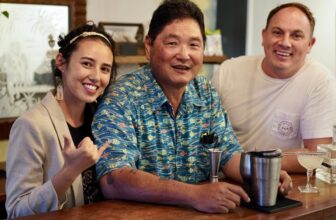
After the wine tasting, Ariana joins Chuck and Taro to talk about Taro’s journey.
Ariana explains that Taro was one of her first friends in the wine industry. He became part of a core group of young Hawaii wine professionals, including Ariana, Michael Winterbottom, Sang Moon, Chris Ramelb, and others.
Chuck says he has loved watching this group grow because they help each other unselfishly. They push each other, support each other, and create real synergy.
That community becomes a major theme.
Wine education is hard to do alone.
It becomes more powerful when people study, taste, fail, improve, and celebrate together.
The Young Sommelier Competition
Ariana and Taro remember meeting through the Chaîne des Rôtisseurs National Young Sommelier Competition.
Ariana was nervous and found herself competing against Taro Kurobe and Michael Winterbottom. The competition itself was stressful, but the most important result was what happened afterward.
The next day, they began tasting together.
That became a regular Monday tasting group that continued for about two years.
This is a classic wine-learning story.
A competition created pressure, but it also created friendship and accountability.
The real growth happened in the repeated work afterward.
Monday Blind Tasting Group
Every Monday, the group met, tasted blind, and pushed each other to improve.
Ariana credits that training with helping her recognize certain wine markers later, including pyrazines.
The group eventually expanded, with others joining or making appearances.
This kind of group is one of the best ways to improve in wine. It gives you consistency, comparison, feedback, and humility. You taste things you would not have chosen yourself. You learn from other people’s descriptors. You get better at speaking clearly.
Most importantly, you keep showing up.
That is how wine skill develops.
Taro’s Advanced Sommelier Journey
Taro is an Advanced Sommelier, which means he has passed Level 3 through the Court of Master Sommeliers.
That is a major achievement.
He explains that he first attempted the Advanced exam and did not pass. His service and blind tasting were strong, but he came up short on theory.
That feedback forced him to reconsider how he studied.
Flashcards were not working for him. So he changed his method.
Instead of just memorizing isolated facts, he began tracing maps and working from macro to micro: country, region, subregion, village, notable sites.
That helped him build a geographical mental structure.
Studying from Macro to Micro
Taro’s map-tracing method is one of the most useful practical lessons in the episode.
He describes it like zooming in on Google Earth.
Start with France.
Then Burgundy.
Then Chablis.
Then the smaller places and notable vineyards.
This method helps because wine is geographical. Regions, climates, soils, grapes, laws, and styles are connected to place.
If you only memorize random facts, it can feel chaotic.
If you build a map in your mind, the information has a home.
That is why his method worked better for him.
Failure and Not Giving Up
Ariana asks Taro about failure and what made him return after not passing the Advanced exam the first time.
His answer is simple: he did not want to give up.
He knew what he had fallen short on. He changed his process. He worked on theory. He leaned on community.
He also felt he was representing Hawaii’s wine community.
That gave him motivation beyond himself.
This is a strong part of the episode because it shows that professional success is rarely clean or instant. Even skilled people fail exams. The difference is what they do after.
Taro adjusted and kept going.
Representing Hawaii
Taro also competed nationally in the Young Sommelier Competition.
A friend reminded him that he was representing Hawaii, which brought both pride and pressure.
That phrase matters in the episode because Hawaii’s wine community is presented as tight, supportive, and meaningful. Taro’s success is not framed as individual ego. It is connected to mentors, peers, friends, and the broader community.
He says he passed because of everyone around him.
That humility is part of his character.
Mentorship
Mentorship runs through the whole conversation.
Taro mentions Kevin Toyama as an important influence. He first met Chuck while working as a concierge at Halekulani and taking early steps toward the Court of Master Sommeliers.
Kevin encouraged him to take the intro course.
Chuck later lectured at that course.
Ariana, Michael Winterbottom, Chris Ramelb, Sang Moon, and the broader wine community all became part of the path.
This is how wine careers often happen.
Not through one big moment.
Through a chain of people who open doors, answer questions, taste with you, challenge you, and keep you moving.
Taro’s Hospitality Philosophy
Ariana brings up a memorable compliment: her husband Michael Field described Taro working the floor as a “Kingsman,” like a polished gentleman in service.
That leads into one of the best sections of the episode: Taro’s view of hospitality.
For him, hospitality means being sensitive to how one person feels.
Whether you are a wine director, sommelier, server, busser, or manager, the guest has chosen your restaurant for a reason. Your job is to make them comfortable, put them at ease, and help them have a good experience.
That is the core.
Hospitality is not performance for its own sake.
It is care.
Being on Stage
Taro says that when the doors open, you are on stage.
That does not mean acting fake. It means being present. Guests are in your care, and you are there to help them.
If they want something adjusted, if they need guidance, if they are nervous about ordering wine, the hospitality professional’s job is to help.
This applies especially to wine.
Wine can be intimidating. The list can be long. Prices can be uncomfortable. Guests may fear being judged.
A good sommelier removes that pressure.
Listening First
When asked how he applies hospitality to wine recommendations, Taro says the most important thing is to listen.
What is the guest asking?
What are they looking for?
What do they usually enjoy?
What mood are they in?
What food are they eating?
What price range feels comfortable?
Listening narrows the path.
Instead of imposing a bottle, the sommelier finds the right fit.
Chuck agrees and says one of his favorite questions is: “What wine do you normally drink?”
That answer gives a lot of information quickly: white, red, rosé, sparkling, dry, sweet, full-bodied, light, old world, new world, price range, and comfort zone.
Avoiding Wine Shaming
The episode directly addresses wine shaming.
Some guests feel intimidated by sommeliers. They fear ordering the “wrong” wine or being judged for what they like.
Taro does not like that intimidation factor. He believes that tradition should disappear.
Sommeliers are not there to shame people. They are no different from servers or managers in the sense that everyone on the floor is there to make the restaurant successful and the guest happy.
Chuck gives an example of a guest asking for Sauvignon Blanc and being served something more expensive and stylistically different. That kind of disconnect can make guests avoid sommeliers in the future.
That is a failure of service.
How Guests Can Help the Sommelier
Chuck gives useful advice for viewers.
Before asking for a recommendation, think about what you want.
Do you want white, red, rosé, or sparkling?
Dry or slightly sweet?
Full-bodied or light-to-medium?
What price range?
Old World or New World?
Refreshing or rich?
Familiar or adventurous?
Those details help the sommelier guide you. The goal is not to test you. The goal is to find a wine that meets your expectations and works with the food.
This is why the blind-tasting language matters.
It gives guests better tools.
Mood Matters
Taro adds another layer: mood.
Just like a bartender might ask what kind of drink you feel like, a sommelier can think about the guest’s emotional state.
Maybe the guest wants something comforting.
Maybe they want something celebratory.
Maybe they had a bad day and want something bold.
Maybe they want something light and easy.
Wine is not only technical.
It is emotional.
A good wine recommendation considers both the palate and the person.
Final Takeaway
This episode works on two levels.
First, it teaches a practical way to evaluate wine. The Au Bon Climat Pinot Gris / Pinot Blanc 2015 is dry, fresh, light-to-medium in body, medium to medium-high in acidity, subtly complex, textured by old oak, and excellent with seafood. It is a strong Chardonnay alternative and a good value around the low $20s.
Second, it shows what good wine service should feel like.
Taro Kurobe’s approach is built on listening, humility, study, community, and genuine hospitality. He does not want wine to intimidate people. He wants guests to feel comfortable enough to say what they like, what they want, and what they are willing to spend.
That is the real lesson.
A good sommelier does not make wine harder.
A good sommelier makes wine easier, more personal, and more enjoyable.
FAQ
Who is Taro Kurobe?
Taro Kurobe is a wine professional associated with G.Lion Group restaurants, including Hy’s Steak House, La Vie, and Quiora.
What wine is blind tasted in this episode?
The wine is revealed as Au Bon Climat Pinot Gris / Pinot Blanc 2015.
What grapes are in the wine?
The wine is 60% Pinot Gris and 40% Pinot Blanc.
What does the wine taste like?
It is dry, fresh, light-to-medium in body, medium to medium-high in acidity, subtly complex, and textured by old oak.
Is this wine oaky?
It is aged in old oak, but it does not taste obviously oaky, buttery, or heavy.
What foods pair with Au Bon Climat Pinot Gris / Pinot Blanc?
It pairs well with scallops, shrimp, lobster, seared fish, shellfish, and seafood dishes that benefit from a lemon-like lift.
Why does Chuck call it a Chardonnay alternative?
It has texture and sophistication like a serious white wine, but it is more food-oriented and less buttery or showy than many Chardonnays.
How much did the wine cost in the episode?
Chuck says he saw it in a store for around $22 to $23.
What is the purpose of the blind tasting?
The goal is not to guess the wine, but to show how professionals break down wine by dryness, body, acidity, texture, oak, value, and food pairing.
How did Taro study for the Advanced Sommelier exam?
After not passing theory the first time, he changed his method and began tracing maps from country to region to subregion to village and notable sites.
What does hospitality mean to Taro?
Hospitality means listening, making guests comfortable, putting them at ease, and caring for them during the meal.
What is the biggest lesson from this episode?
The biggest lesson is that wine service should be based on listening, not intimidation. A good sommelier helps guests find the right wine for their taste, food, mood, and budget.


What are some good food pairings for the Au Bon Climat Pinot Gris/Pinot Blanc? I often struggle with choosing the right dish for white wines.
Yes, the Au Bon Climat Pinot Gris/Pinot Blanc is known for its acidity and texture, making it great for seafood and dishes that benefit from citrus. Enjoy experimenting!
I read that this wine pairs well with seafood like scallops and shrimp. You might also consider light appetizers! Sounds like a versatile choice.
I had the pleasure of tasting the Au Bon Climat Pinot Gris/Pinot Blanc at a wine dinner last month. It was served alongside seared scallops, and the pairing was fantastic! The acidity complemented the dish perfectly, enhancing the flavors without overwhelming them. I found it to be a great alternative to the usual Chardonnay.
That sounds amazing! I usually stick with Chardonnay, but I’m curious about trying something new. Do you think it’s widely available? I’d love to find a bottle!
Absolutely! It’s generally available at many wine retailers, often around $22-30. It's a great value for the quality you get.
How does the Au Bon Climat Pinot Gris/Pinot Blanc compare to other white wines like Sauvignon Blanc or Pinot Grigio? I’m trying to understand its flavor profile better before I buy.
It’s definitely more about balance and texture. While Sauvignon Blanc can be zesty and aromatic, this one is subtler and focuses more on food compatibility. It’s a nice shift if you're looking for something less fruity and more nuanced.
Great point! The Au Bon Climat Pinot Gris/Pinot Blanc has a more classical feel, focusing on minerality and subtle complexity, making it a perfect choice for food pairings.
What exactly is the difference between old oak and new oak in wine? I keep hearing these terms but am unsure what they mean.
New oak can impart strong flavors like vanilla and spice, whereas old oak offers structure without overwhelming taste. It’s more about enhancing texture than adding obvious flavors.
Exactly! Old oak is often used for aging wines to enhance mouthfeel and complexity while keeping the wine's original character intact.
I just bought a bottle of the Au Bon Climat Pinot Gris/Pinot Blanc! Can’t wait to try it with some shrimp tacos this weekend.