
Great wine knowledge is not only about memorizing regions, grapes, vintages, and producer names.
It is also about taste, humility, curiosity, mentorship, patience, and knowing how to recognize wines with energy and soul.
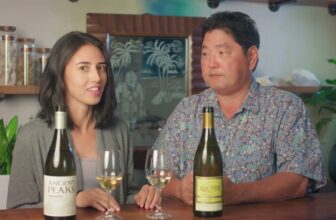
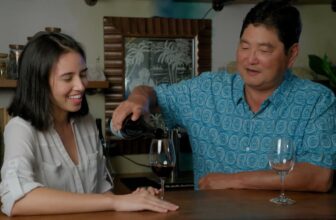
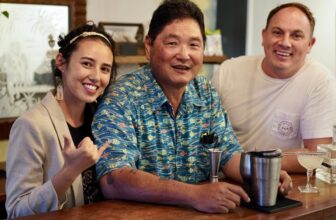
In this episode of Chuck Furuya Uncorked, Chuck and Ariana Suchia sit down with Kevin Toyama, wine cellar master at the Halekulani Hotel in Waikiki and a longtime figure in Hawaii’s wine community.
The conversation moves through several decades of wine history: R. Field Wine Company, The Still, La Mer, Ihilani, great wine lists, old Bordeaux, German Riesling, California Cabernet, Raúl Pérez Albariño, Paul Fürst, Lodi old vines, and the importance of passing knowledge to the next generation.
This is not just an interview with a wine professional.
It is a conversation about how a wine culture is built.
Who Is Kevin Toyama?
Kevin Toyama is introduced as the wine cellar master at the Halekulani Hotel, one of Hawaii’s most important luxury hospitality properties.
His work is tied closely to La Mer, Halekulani’s fine dining restaurant. Chuck describes La Mer as one of Hawaii’s top-rated restaurants and as a place associated with high standards, elegance, and serious wine service.
Before Halekulani, Kevin worked with several important wine programs in Hawaii, including Ihilani Resort and Spa in Ko Olina and R. Field Wine Company.
Chuck also notes that Kevin passed the Advanced Sommelier level in 1993, at a time when very few Americans had reached that level.
That detail matters because it shows the level at which Kevin was playing long before modern wine education became more visible and accessible.
The Importance of R. Field Wine Company
Much of the episode begins with R. Field Wine Company and the world around it.
For Chuck, R. Field was not just a wine store. It was a cultural force in Hawaii. It helped bring serious wine, fine cheese, cigars, caviar, smoked salmon, and other specialty foods to people who otherwise may not have encountered them locally.
Kevin started in the wine industry working for Richard Field. He describes it as his first wine industry job and a place where he began to learn seriously.
At the time, there was far less information available. There was no internet, no instant producer database, no social media wine education, and no easy way to compare notes from around the world.
If you wanted to learn, you had to taste, read, ask questions, and find people who cared.
That is what R. Field provided.
Richard Field as a Teacher
Kevin remembers Richard Field as a great resource and teacher.
One of the details that stands out is that Richard allowed staff to call him anytime with wine questions. Kevin says they sometimes took him up on that offer late at night after tasting something and wanting to understand it better.
Richard would answer patiently.
That kind of access matters.
Wine education is often built through moments like that: a bottle, a question, a conversation, and someone more experienced willing to explain.
The episode makes clear that Hawaii’s wine culture did not appear by accident. It was built by people who cared enough to teach and by younger professionals who cared enough to ask.
Hawaii’s Early Wine Community
Chuck names several important people who came through or were connected to that wine era, including Tim Lehrman, Dave Gochros, Marvin Chang, Randy Caparoso, Roberto Viernes, and others.
The point is not only the names.
The point is that a community formed.
Kevin describes the feeling back then as more camaraderie than competition. People wanted to learn. They wanted to taste. They wanted to talk story about wine. The driving force was not ego, but curiosity and pleasure.
That is one of the strongest messages in the episode.
Good wine culture is not built by gatekeeping.
It is built by people tasting together.
Wine Gangs and Learning Together
Chuck and Ariana talk about wine groups, blind tasting, and how useful it is to build a circle of people who want to learn.
Chuck suggests that viewers can do the same thing: create a tasting group, choose a theme, bring bottles, wrap them, taste blind, and talk through the wines together.
That is still one of the best ways to learn wine.
You do not need to start with expensive bottles.
You need curiosity, openness, and consistency.
Blind tasting removes some of the label bias. It forces you to pay attention to what is actually in the glass rather than what you think you are supposed to taste.
Kevin’s generation learned this way, and the episode encourages the next generation to continue that practice.
What Makes a Wine Worth Choosing?
Ariana asks Kevin what he looks for when selecting wines.
His answer is one of the central ideas of the episode.
In his early days, Kevin looked for purity, freshness, and vibrant fruit. Those qualities still matter, but he also emphasizes something harder to define: soul.
A wine can be technically correct and still feel lifeless.
A wine can be a little wild, rustic, or unusual and still feel alive.
Kevin values wines with resonance, energy, personality, and the ability to provoke thought. These are wines that keep pulling you back to the glass.
That is different from simply chasing points or obvious polish.
Wines with Soul
Chuck and Kevin discuss wines like Whitcraft Pinot Noir and Domaine Maume as examples of wines with soul.
These wines were not always perfect in the conventional sense. They could be wild, woolly, earthy, rustic, or challenging. But they had personality.
Kevin says that sometimes even experienced tasters might smell a wine like that and wonder if something is wrong. But the “wrong” thing may actually be character.
This is a useful distinction.
Flaws exist. Bad wine exists. But not every wine that smells different is bad.
Some wines are simply not engineered to be obvious.
They require thought.
They reward attention.
Aha Moments in Wine
Kevin says that aha moments never really stop.
As you taste more wine and experience more food, you keep building a larger memory bank of flavors. Early aha moments and later aha moments are all part of the same journey.
He talks about Riesling as an early draw. Producers like Fritz Haag and J.J. Prüm gave him wines with purity, focus, vibrancy, and sweetness that pulled him into wine.
He also talks about older California Cabernet experiences, including wines like Jordan and Beaulieu Vineyard Georges de Latour, which he revisited years later and found still alive and compelling.
That is another important lesson.
Your taste changes, but some wines can still surprise you decades later.
Evolving Taste
Kevin admits that he once moved away from Cabernet, looking instead for wines with more brightness, freshness, and balance.
Then, years later, he tasted older California Cabernets and found that they still sang.
That is a mature wine perspective.
It is easy to reject a whole category because of modern examples or personal fatigue. It is harder to remember that regions and styles are broad, and older bottles may show a different story.
Taste evolves.
Wine evolves.
The best tasters stay open enough to be surprised.
Building a Great Wine List
One of the most valuable parts of the episode is Kevin’s approach to building wine lists.
At Ihilani, he worked with a deep cellar that included major old Bordeaux and important classic wines. But Chuck emphasizes that Kevin did not simply let the trophy bottles define the list.
Instead, he layered the program.
A great wine list needs breadth.
It needs classic bottles, but also value.
It needs depth, but also drinkability.
It needs serious selections for world-class diners, but not every bottle should start at an intimidating price.
That balance is what made Kevin’s wine lists special.
The Ihilani Cellar
Ihilani’s wine cellar was a major opportunity for Kevin.
Chuck describes an enormous inventory, including old Bordeaux and rare bottles, with examples reaching back to legendary vintages. But what impressed him most was how Kevin built around those wines.
He added verticals, thoughtful producers, and a range of styles so that the cellar was not just a trophy collection.
That is a key idea.
A cellar is not great because it is expensive.
A wine list is not great because it has famous names.
It becomes great when the selections are orchestrated, balanced, and useful to the guest.
How to Choose Producers
Ariana asks how Kevin gets so specific with producers, parcels, and wine selection.
Kevin’s answer is practical: research and practice.
If you are going to have one Amarone producer, who should it be?
If you are going to have one Northern Rhône producer, who should it be?
You have to do the homework.
That means reading, tasting, cross-referencing opinions, understanding producer track records, studying regional styles, and considering how a wine will age if it sits in the cellar for years.
This is not about buying random labels.
It is about choosing wines with pedigree, quality, and purpose.
Quality, Value, and Track Record
Kevin says he looks for quality and value.
That does not mean cheap wine. It means the wine should justify its place.
A bottle may need to sit in a cellar for one year, two years, three years, five years, or longer. If the producer has a strong track record and the wine has real structure, it can handle that time.
This is especially important in restaurant buying.
The wine list is not just for today.
It has to work over time.
That is why producer trust matters so much.
Testing Wine Over Time
Kevin describes a useful tasting habit: open a bottle and see how it changes.
Taste it now.
Come back three days later.
Come back a week later.
Observe whether the wine still has energy and vibrancy.
This is one way to understand whether a wine has depth or is only immediately attractive.
Many wines are made to be opened and consumed right away. That is fine. But other wines come from specific vineyards, traditions, and producers, and they reveal themselves over time.
Those wines may need air, patience, and repeated attention.
Be Careful with Vintage Chart Thinking
The conversation also touches on vintage charts.
Vintage knowledge can be useful, but Chuck and Kevin warn against oversimplifying. A vintage may be generally weak or strong, but that does not tell you everything about a specific producer, vineyard, or bottle.
At a certain quality level, every vintage gives a different snapshot of the vineyard and winemaker.
That is especially true with great producers.
The danger is reducing wine to a chart.
Wine is more complicated than that.
Producer, site, farming, winemaking, storage, and bottle evolution all matter.
Find the Right Wine People
Chuck gives very practical advice: find a wine retailer or buyer you trust.
A good wine person should not just say, “I like this” or “I do not like this.” They should ask questions, understand what you enjoy, explain options, and help guide you.
That relationship matters more than chasing the lowest price.
Storage matters too. If a retailer saves money by turning off air conditioning or mishandling bottles, a cheaper price may not really be a better deal.
Wine is alive.
Where and how you buy it matters.
Raúl Pérez and Atalier Albariño
The episode shifts into a featured wine: an Albariño associated with Raúl Pérez, one of Spain’s most respected and thought-provoking winemakers.
Chuck and Kevin discuss this wine as something outside the normal Albariño profile.
It comes from Rías Baixas, on Spain’s Atlantic coast, from very old pre-phylloxera vines grown in sandy soils near the ocean. Chuck explains that the vines are own-rooted because phylloxera struggles in sand.
The result is an Albariño with minerality, citrus oil, white flowers, quince-like perfume, and a different kind of texture than the more stainless-steel-driven versions many people know.
Why This Albariño Is Different
Many Albariños are bright, fresh, stainless-steel fermented, citrusy, lively, and straightforward.
This wine is different.
Chuck explains that Raúl Pérez uses old large barrels rather than relying only on stainless steel. The goal is not to make the wine taste oaky. Large old barrels do not create the same obvious oak flavor as new small barrels.
Instead, they can round the edges, add texture, and create more dimensional mouthfeel.
The wine still has freshness, but it also has layering.
It is not just tutti-frutti brightness.
It has depth.
Old Vines, Sand, and Ocean Air
The vineyard story is central.
The wine comes from parcels less than a kilometer from the ocean. That cold Atlantic influence allows the grapes to hang longer on the vine while retaining freshness.
Chuck connects this to a larger issue: climate change and how winemakers must rethink old assumptions.
In the past, growers often wanted maximum sun exposure. Today, in warmer conditions, some may need to slow ripening, preserve acidity, and seek cooler exposures or different vessels.
Raúl Pérez is presented as a winemaker asking those questions seriously.
He is not chasing trends.
He is rethinking farming and winemaking.
Albariño as a Spanish Great Grape
Chuck says Albariño may be Spain’s finest indigenous white grape in his opinion.
He compares its aromatic quality to Riesling in one sense: it can smell like it might be sweet, even when it is dry. It can be striking, captivating, and mineral.
That makes Albariño a powerful food wine.
It can be fresh enough for seafood but aromatic enough to be interesting on its own.
This Raúl Pérez version takes that foundation and adds texture, old-vine depth, and a more thoughtful winemaking approach.
Food Pairings for Albariño
Kevin immediately connects the wine to seafood.
Rías Baixas is coastal, and the wine naturally sings with ocean flavors. He mentions oily fish such as sardines and mackerel, along with lighter Mediterranean-style seafood preparations using olive oil and herbs.
Chuck adds that because this wine has some bitterness, tannin, and texture, it may need seafood with enough fat.
That could mean:
sardines;
mackerel;
lobster;
swordfish;
seafood with olive oil;
seafood with butter;
grilled fish;
shellfish with herbs;
and richer coastal preparations.
The wine is fresh, but not thin. It needs food that can meet its texture.
Raúl Pérez as a Game Changer
Chuck sees Raúl Pérez as a game changer for Spanish wine.
He is not chasing overripe, high-score, Parkerized styles. Instead, his wines are about transparency, balance, texture, heritage, indigenous grapes, and rethinking how things should be done in the vineyard and winery.
That makes him important.
Chuck also notes that some of Raúl Pérez’s reds may need air and patience. If they do not show everything immediately, put the bottle aside and return to it later.
That fits the larger theme of the episode.
The most interesting wines do not always speak loudly at first.
Sometimes they need time.
Paul Fürst and German Pinot Noir
Another major producer discussed is Paul Fürst.
Kevin has a strong connection to Fürst wines and speaks about their purity, quietness, minerality, texture, and long finish.
For many American drinkers, German Pinot Noir may not be an obvious category. They may expect Pinot Noir to be fruity, plush, and immediately aromatic.
Fürst is different.
The wines are more austere, mineral, savory, and subtle. But Kevin recognized that the finish told a deeper story. The wine had stuffing behind it. The clues were there if the taster was willing to listen.
That is one of the most important wine lessons in the episode.
Do not judge only by the first impression.
German Pinot Noir Beyond the Obvious
Chuck contrasts Fürst with big, oaky, ripe Pinot Noirs that often receive attention in magazines.
Fürst is not that.
Fürst is about intricacy, nuance, finesse, purity, minerality, and texture. The wines are not designed to slap your palate.
They are designed to reveal themselves.
This is exactly the kind of wine Kevin and Chuck value: purposeful, place-driven, and crafted to show vineyard character rather than just winemaking impact.
For someone used to obvious Pinot Noir, Fürst can open an entirely new horizon.
Fürst White Wines
Fürst also makes white wines, including Riesling, Müller-Thurgau, and Pinot Blanc.
Chuck and Kevin discuss Müller-Thurgau in particular as a food-friendly wine that can work with Vietnamese cuisine, Asian cuisines, Mediterranean foods, and lighter dishes.
That is another useful takeaway.
A serious wine does not always have to be a famous variety.
A less fashionable grape, handled by the right producer, can become an excellent food wine.
The producer matters.
The place matters.
The intention matters.
Purposeful Winemaking
Ariana points out a connection between the Raúl Pérez Albariño and the Fürst wines: both feel purposefully made to show the vineyard and sense of place.
Kevin and Chuck agree.
That is one of the central themes of the entire conversation.
The best wines here are not made simply for market appeal. They are not made only to be polished, obvious, or high-scoring.
They are made to express grape, soil, place, farming, and heritage.
That is why they feel different.
That is why they matter.
Mentorship and the Next Generation
Near the end, Ariana asks Kevin what he hopes for the next generation of Hawaii wine professionals.
Kevin emphasizes mentorship.
He wants the next generation to learn from the experience of earlier professionals, without becoming overly enamored with the glamour or business side of wine.
He warns against getting lost in jargon, points, and marketing.
Some of the most insightful and soulful wines may not be the ones with the biggest scores. They may live in the less glamorous zone, where people actually need to taste and think.
That is a powerful message for anyone learning wine.
Do not chase only the obvious.
Earn Your Chops
Kevin says something especially memorable: even though he passed the Advanced Sommelier certification in 1993, he did not feel truly advanced until years later.
That humility is important.
A certificate matters, but experience matters too.
You still have to taste.
You still have to serve.
You still have to travel.
You still have to make mistakes.
You still have to earn your chops.
That is the difference between passing an exam and becoming a real wine professional.
Travel and Seeing the Vineyards
The episode also touches on travel.
Kevin says that when producers came or tastings were happening elsewhere, he would travel to learn. Ariana notes that the next generation should visit regions when possible.
Wine makes more sense when you see the place.
A map can tell you where a region is. A book can tell you the soil. A bottle can show you the flavor. But walking a vineyard, feeling the climate, and meeting producers gives a different kind of understanding.
That is how knowledge becomes embodied.
Future Regions: Australia, South Africa, and Lodi
Kevin mentions interest in cooler parts of Australia, including places like Tasmania, as Australia moves away from some of the big, alcoholic styles that once dominated perception.
He also finds South Africa interesting.
The conversation ends with California, especially Lodi.
Kevin and Chuck discuss Lodi’s old vines, sandy soils, own-rooted vineyards, multigenerational farming, and rising interest from serious producers. They mention figures connected to Turley, Sandlands, Bedrock, Neyers, and Camino.
The message is clear: Lodi has major potential and is no longer just a region to ignore.
Why Lodi Matters
Lodi is hot and flat, but it has important old vines.
Some vineyards survived because of historical planting decisions and the white Zinfandel boom, which helped preserve old vine material that might otherwise have been ripped out.
The sandy soils can allow vines to remain own-rooted. Some vineyards are dry-farmed, with deep soils holding water from seasonal flooding.
That combination creates serious potential.
Chuck says he has wanted to visit Lodi for years and believes the region is already being discovered.
This fits the episode’s broader theme: look before everyone else arrives.
Final Takeaway
This episode with Kevin Toyama is really about how wine culture is built.
It is built by teachers like Richard Field.
It is built by communities that taste together.
It is built by professionals who study, travel, serve, listen, and stay humble.
It is built by people willing to look past points, labels, and fashion to find wines with energy, soul, and purpose.
Kevin’s approach is not about chasing the loudest bottle.
It is about finding wines that resonate.
Raúl Pérez Albariño, Paul Fürst Pinot Noir, old Rieslings, soulful California bottles, thoughtful Lodi producers, and carefully built wine lists all point to the same idea:
Great wine should feel alive.
It should make you think.
It should connect to place.
And it should keep calling you back to the glass.
FAQ
Who is Kevin Toyama?
Kevin Toyama is a longtime Hawaii wine professional and wine cellar master at the Halekulani Hotel in Waikiki.
What is Kevin Toyama known for?
He is known for his work with serious wine programs, including Halekulani, La Mer, Ihilani, and R. Field Wine Company.
What role did R. Field Wine Company play in Hawaii wine culture?
R. Field helped bring serious wines, cheeses, cigars, caviar, smoked salmon, and specialty foods to Hawaii and became an important training ground for wine professionals.
What does Kevin look for in wine?
Kevin values purity, freshness, vibrant fruit, energy, personality, and soul.
What does “soulful wine” mean?
A soulful wine has character, energy, personality, and something that keeps drawing you back, even if it is not conventionally perfect.
What were some of Kevin’s early wine aha moments?
He mentions Rieslings from producers like Fritz Haag and J.J. Prüm, as well as older California Cabernets that remained vibrant decades later.
What makes a great wine list?
A great wine list has balance, depth, quality, value, producer pedigree, and selections that serve guests rather than simply showing off expensive bottles.
What is special about Raúl Pérez Albariño?
The wine comes from old vines, sandy soils, and Atlantic-influenced vineyards, with texture and minerality beyond simple stainless-steel Albariño.
What foods pair with Albariño?
Albariño works well with seafood, especially oily fish, shellfish, grilled fish, lobster, swordfish, and dishes with olive oil or herbs.
Why is Paul Fürst important?
Paul Fürst is known for precise, mineral, nuanced German wines, especially Pinot Noir and food-friendly whites.
What is the main lesson for people learning wine?
Taste with other people, stay curious, avoid chasing only points or marketing, and look for wines with balance, purpose, and soul.
Why does Kevin mention Lodi?
Lodi has old vines, sandy soils, own-rooted vineyards, multigenerational farming, and growing interest from serious producers, making it a region worth watching.



What do you think makes a wine truly have 'soul'? Is it more about the grape or the winemaking process?
I think it might be a mix of both. A good grape can shine through a skilled winemaker's hands, but there's also something about the story behind the wine that adds to its character.
Great insights! 'Soul' in wine often comes from the uniqueness of the vineyard and the passion of the winemaker. It's about personality and how well it connects with the drinker.
I've had the pleasure of trying some wines from the Ihilani cellar, and I can say that Kevin’s selections really are something special. The balance of classic and approachable wines made the experience memorable. It's nice to see someone focus on both quality and drinkability in their lists!
Thanks for sharing! Some standout selections often include older Bordeaux and vibrant Rieslings. Kevin’s approach indeed puts an emphasis on both heritage and accessibility.
That's awesome! I’ve heard so much about the cellar but haven't had a chance to visit yet. Do you have any favorites from that list?
I love hearing how wine culture in Hawaii has developed. It’s inspiring to see a community grow around shared passion!
I’ve been part of a few tasting groups, and they truly enhance the experience. How does blind tasting compare to just trying to identify wines straight up?
Blind tasting removes bias, which is a game-changer. It forces you to focus on flavors rather than names or points.
Exactly! Blind tasting encourages openness and can lead to surprising discoveries about your preferences.
I see the value in Kevin's approach, but I think some wines really are just flawed. Not every unusual taste is a sign of character—sometimes it’s just not good!
You raise a valid consideration! While some wines may not suit every palate, 'character' often encourages exploration and deeper understanding.
That’s a fair point! There is a difference between character and outright flaws. It’s subjective, really.