
Some people sell wine.
Other people change the way a place thinks about wine.
In this episode of Chuck Furuya Uncorked, Chuck sits down with Richard Field, founder of R. Field Wine Company and one of the most influential wine retail figures in Hawaii. The conversation is part wine history, part business lesson, part mentorship story, and part father-son talk story with Richard’s son Michael Field and Chuck’s son Kale.
The episode shows how Richard helped move Hawaii beyond ordinary retail wine shelves and into a deeper world of better sourcing, better storage, better food, better education, and better storytelling.
This is not only about one store.
It is about what happens when someone refuses to accept the normal standard and keeps asking a simple question:
How can this be better?
What This Episode Is About
Chuck introduces Richard Field as a game-changing wine mind in Hawaii and the founder of R. Field Wine Company. Ariana Suchia notes that many people who later became part of the Hawaii wine community were influenced in some way by the R. Field movement.
The conversation begins with Richard’s early retail history. He started with stores called The Still, first in Kaimuki, then in Kapahulu. Over time, the business evolved from beer, snacks, soda, and basic beverages into a more serious wine and specialty food concept.
Then came the move to Ward Centre and the launch of R. Field Wine Company.
That move mattered because it was not only a new location. It was a new kind of retail experience for Hawaii.
From The Still to R. Field Wine Company
Richard explains that the Ward Centre location was not an obvious choice for a wine store.
A shopping center is not the easiest place to sell wine by the case. People do not naturally want to walk long distances from the parking lot carrying heavy bottles. The first-floor location was also challenging because much of Ward Centre’s traffic was drawn to second-floor destination businesses and restaurants.
So Richard had to make the store a destination.
He could not behave like a passive shopping center tenant. He had to create reasons for people to come in.
That meant events, tastings, publicity, specialty products, and constant activity.
The store became more than a place to buy wine. It became a place where people discovered a lifestyle of better food, better drink, and better hospitality.
Building a Destination Store
R. Field did not grow by simply stocking the same wines everyone else had.
Richard created a store that carried the finest products he could find: smoked salmon, caviar, cigars, foie gras, specialty foods, Champagne, Kermit Lynch wines, German wines, Santa Barbara wines, coffee, produce, and other items that were not easy to find in Hawaii at the time.
Chuck describes it as the place you went if you wanted the best.
Not necessarily the most expensive.
The best.
That distinction matters. Richard’s approach was not about luxury for the sake of status. It was about raising the standard.
If a product was better, more authentic, more carefully sourced, or more meaningful, it deserved attention.
Refusing the Distributor-Driven Market
One of Richard’s key insights was that the Hawaii wine market was heavily distributor-driven.
In other words, stores and restaurants often sold what distributors happened to offer. The market was shaped by what was available, not necessarily by what was best.
Richard pushed back against that.
He did not simply accept the standard selection. He studied, traveled, tasted, asked questions, and looked for better products. If the wines available locally did not match what he had tasted elsewhere, he wanted to know why.
That refusal to accept the default became one of his defining traits.
It also became one of the reasons R. Field mattered.
The store did not just stock bottles. It challenged the market.
The Chianti Lesson in Florence
One of the best stories in the episode begins with Chianti.
Richard had been studying wine through books like Hugh Johnson’s wine atlas and Jancis Robinson’s writing. The books described regions, grapes, and food pairings, but something was missing. They did not fully explain how to recognize the difference between wines in the glass.
He tasted Chianti in Hawaii with tomato pasta and found the pairing disappointing. The wine tasted metallic. The fruit seemed gone. The food did not match the romance described in the books.
So he flew to Florence.
There, he ordered Chianti with a pasta dish and realized that nothing was the same.
The wine tasted different.
The pasta tasted different.
The tomatoes tasted different.
The sauce tasted different.
That experience changed the way he thought.
The problem was not only the wine. It was the whole chain: ingredients, transport, storage, place, and context.
Wine Is Not Just What Is in the Glass
Richard’s Florence experience led him to a larger question:
How did the wine get into the glass?
That became central to his thinking.
A wine does not begin when it is opened. It begins with farming, winemaking, transport, storage, retail handling, and the food around it.
When Richard returned to Hawaii, he started investigating why wines tasted different locally. He visited distributor warehouses and noticed heat problems. Wines were stacked high in warm conditions, and he knew that could not be good.
So he wrote about it.
Before social media, he used a newsletter. He documented how wine was transported to Hawaii, how containers were handled, whether they were refrigerated, how they sat on barges, and how they were stored in warehouses.
A newspaper picked up the story, and things began to change.
That is a major lesson from the episode:
Better wine culture requires better logistics.
Temperature Matters
Wine is fragile.
If it is exposed to heat during shipping or stored poorly, it can arrive tired, dull, or damaged. Richard understood this early and made it part of his mission.
He was not only trying to sell more interesting wines. He was trying to improve the condition of wine in Hawaii.
This is especially important in an island market.
Wine has to travel. It has to survive ocean shipping, containers, warehouses, trucks, shelves, and warm climates. If no one cares about that chain, the final bottle suffers.
Richard cared.
That care helped raise expectations for the whole market.
Creating a New Standard
Chuck explains that Richard created a new tier of quality in Hawaii.
He championed products before they were obvious. He brought attention to Kermit Lynch wines, Santa Barbara wines, German wines, serious Champagne, single-barrel Cognac, specialty foods, smoked salmon, cigars, coffee, and other products that were outside the standard retail model.
The important word is championed.
Richard did not just buy unusual things and leave them on the shelf. He taught his team to understand them, sell them, and explain them.
That made R. Field different.
The staff were not only unpacking bottles. They were learning stories, producers, regions, styles, and reasons why those bottles mattered.
The R. Field “Mafia”
Chuck jokingly refers to the R. Field group as a kind of wine “mafia” because so many important Hawaii wine people passed through or were influenced by the store.
People such as Kevin Toyama, Marvin Chang, Tim Liermann, Catherine Fallis, Roberto Viernes, Randy Caparoso, David Gock, and others are mentioned in connection with the R. Field world.
The point is not simply name-dropping.
The point is that the store became a training ground.
People learned to taste.
They learned to argue about wine.
They learned to sell better products.
They learned to tell stories.
They learned to become passionate.
Richard says they were tasting constantly: wine, beer, Scotch, whatever it took. If there was a bar with a great selection of liqueurs or spirits, he might order one of everything so the team could understand the differences.
That is mentorship through exposure.
Mentorship Through Tasting
Richard says he did not come from money, and some of his best employees did not come from backgrounds where they had exposure to fine wine or luxury food.
That made discovery exciting.
The store created access. It gave people a chance to taste things they would not have otherwise encountered. Then those people carried the knowledge forward.
This is one of the strongest themes in the episode.
Mentorship does not always look like a formal lecture.
Sometimes mentorship is opening bottles, asking questions, pushing people to understand, and letting them argue about what they tasted until two in the morning.
That kind of environment can change lives.
Müller-Thurgau from Rudolf Fürst
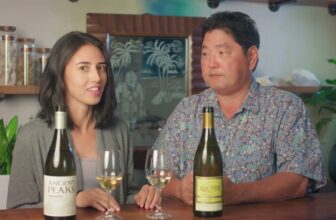
In the second segment, the group tastes a Müller-Thurgau from Rudolf Fürst in Franken, Germany.
Richard was one of the first people to help bring Rudolf Fürst wines to Hawaii, including Pinot Noir and Müller-Thurgau. Chuck uses the wine as an example of something game-changing and outside the obvious Chardonnay-Sauvignon Blanc pathway.
Müller-Thurgau is not usually treated as a glamorous grape, but this wine shows why producer and place matter.
The group describes it as crisp, refreshing, mineral, pure, transparent, and lightly spritzy. It has freshness without the sharp edge of some Sauvignon Blanc and enough richness to be approachable for people who like Chardonnay.
That makes it a useful bridge wine.
It can move drinkers away from the same familiar choices and into something more interesting.
What Terroir Really Means
Richard gives a thoughtful explanation of terroir.
He says people often talk about soil, but terroir is not only dirt and rocks. It includes depth, water tables, fog line, aspect, wind, surrounding countryside, flora, fauna, organisms, grape variety, and more.
That broader understanding matters.
A wine is not just a grape in a bottle. It is the result of a whole place.
Richard also says that traveling to wineries, walking vineyards, or talking with people who truly understand a region helps create “somewhere-ness” in your mind.
Even if you have never been to Franken, someone who has can help you imagine it. That gives you a reference point when tasting the wine.
This is one of the best educational moments in the episode.
Wine knowledge is not just memorizing maps. It is building mental pictures of place.
Food Pairing: Fish, Lemon, and Chicken Curry
When the group discusses food for the Müller-Thurgau, the first ideas are light fish dishes. The wine’s crispness and minerality can act like a squeeze of lemon over fish.
Then Richard gives a more unexpected pairing:
L&L chicken curry plate.
That moment is perfect for the show because it brings fine wine back to real local food.
The logic makes sense. The curry is not overly spicy or heavy. The wine refreshes the palate, works with chicken or fish, and keeps the pairing in balance.
This is the kind of idea that makes wine more useful.
You do not need fine dining to enjoy a good bottle. Sometimes a mineral German white with a local curry plate is exactly the point.
Fine Wines and Local Grinds
The L&L chicken curry pairing also connects to a recurring theme in the series: fine wines and local grinds.
Wine does not have to be trapped beside French cuisine or formal restaurant food. It can work with plate lunches, pizza, fried chicken, curry, fish, barbecue, and home cooking.
Later in the conversation, Michael asks what wines can help his friends get into wine without requiring “wine snobby” food beside it.
Richard points to pizza as a huge opportunity.
Pizza can go in many directions depending on the toppings. You can use northern Italian reds, southern Rhône wines, Corsican reds, and many other affordable, food-friendly bottles.
That is a practical way to teach wine.
Start with food people already eat.
Then show how wine can make it better.
Richard and Chuck: A Symbiotic Relationship
The episode also explores Richard’s long relationship with Chuck.
Chuck says the two inspired each other. Richard was on the retail side. Chuck was in restaurants and hotels. Both were trying to find and present better products.
They pushed each other forward.
If Richard carried the best cigars, Chuck wanted better cigars at La Mer or Kahala. If Chuck found better cheeses or pairings, Richard noticed. They both chased better Cognac, Scotch, Champagne, cigars, foods, and wines.
This is not competition in the ordinary sense.
It is a creative pressure.
Two people trying to raise the standard from different angles.
That kind of relationship can move an entire scene forward.
Travel as Education
Travel plays a major role in Richard’s story.
He traveled to Florence to understand Chianti and pasta. He visited stores like early Whole Foods locations to understand what made certain food retailers exciting. He tasted, watched, compared, and asked questions.
He also relied on relationships.
If a great producer makes great wine, that producer often knows other serious producers in the same area. One relationship leads to another. That is how discovery happens before algorithms and easy search.
This is an important lesson for anyone trying to learn wine seriously.
Books help.
Retail helps.
Distributors help.
But travel and relationships create a deeper kind of knowledge.
Searching Before Google
Michael asks a very modern question: how did Richard find great producers before Google?
Richard’s answer is simple but powerful.
He visited great stores.
He looked at what they carried.
He built relationships.
He asked serious people who else was serious.
That method still matters today. Search engines can show information, but they cannot replace trust. The best discoveries often still come from people who care deeply and have already done the work.
In a world full of information, taste and judgment matter even more.
From Music to Wine
Richard also shares how he first got into wine.
He was going to school, playing music, and working part-time at a liquor store in Pearl Ridge. The store was mainly a high-volume beer business. At the end of the night, after stocking and closing, a coworker named Albert Perez opened a bottle of Parducci Chenin Blanc and poured two glasses.
Richard had little wine experience beyond simple sweet wines. Albert started talking about the wine, and Richard was drawn into a world he had not known.
A few nights later, another bottle appeared.
Then another.
That was the beginning.
It is a reminder that one person taking the time to share a bottle can change the direction of someone’s life.
Find a Mentor
Richard says that if he wrote a book about life, not only wine, one of the main lessons would be:
Find a mentor.
A mentor can save you time, money, and mistakes. They can point you in the right direction and help you focus. Without a mentor, Richard had to learn a lot the hard way.
That is one of the most useful lessons in the episode.
You can study alone, but mentorship accelerates understanding.
The same applies to wine, restaurants, business, and life.
Publicity, Events, and Making Wine Fun
Richard also understood that education alone was not enough.
People had to care.
So he created events and publicity stunts that made wine visible. The Hawaii California Wine Festival brought in California wineries and sold thousands of tickets. For Beaujolais Nouveau, he arranged attention-getting arrivals involving Santa Claus, an outrigger canoe, helicopters, media crews, and local television personalities.
Some of it was silly.
That was the point.
It got people talking about wine.
Wine culture grows when people notice it, ask about it, and feel invited into it. Richard understood that marketing did not have to be boring. It could be theater, celebration, and community.
The Father-Son Layer
The second half of the episode adds a father-son layer with Michael Field and Kale Furuya.
Michael grew up around food and wine in a way most people do not. Richard took him to serious restaurants in France as a young child. Michael jokes that the first wine name he knew was Krug.
That upbringing gave him an early sense of curiosity and openness toward food.
He remembers being exposed to foods that his friends at school had never heard of. Chuck also notes that Michael was grounded in great food through his family, including serious Chinese cooking from his grandparents.
The point is not that everyone needs a childhood filled with Michelin restaurants.
The point is that exposure matters.
When children are allowed to taste, smell, observe, and ask questions, they develop curiosity.
Food Memory and Wine Memory
The episode shows how food and wine memories pass through families.
Richard remembers his first wine lessons from Albert.
Chuck remembers traveling with Richard and tasting with iconic producers.
Michael remembers growing up around unusual foods and wines.
Ariana, Kale, and Michael listen as the older generation connects stories to bottles, restaurants, people, and places.
That is how wine culture is transmitted.
Not only through facts.
Through stories.
Through meals.
Through arguments.
Through trips.
Through bottles opened at the right moment.
Final Takeaway
This episode is one of the most important historical conversations in the Chuck Furuya Uncorked series because it shows how wine culture gets built.
Richard Field did not change Hawaii wine retail by waiting for the market to improve. He studied, traveled, questioned distributors, challenged storage practices, wrote newsletters, created events, trained staff, championed unfamiliar producers, and built a store that became a destination.
He understood that better wine requires better sourcing, better transport, better storage, better storytelling, and better mentorship.
The Müller-Thurgau tasting adds the practical wine lesson: great wine does not always come from famous grapes. A humble grape in the hands of a serious producer can be pure, mineral, refreshing, and perfect with local food.
The deeper lesson is even larger.
Wine culture is created by people who care enough to raise the standard.
They do not settle for what is available.
They ask better questions.
They open bottles.
They teach others.
They create excitement.
And they leave behind a community that keeps tasting, learning, and moving forward.
FAQ
Who is Richard Field?
Richard Field is the founder of R. Field Wine Company and one of the most influential figures in Hawaii’s wine retail history.
What is R. Field Wine Company?
R. Field Wine Company was a specialty wine and food retail concept in Hawaii known for serious wine, specialty foods, cigars, Champagne, coffee, and products that were not widely available locally at the time.
Why was Richard Field important to Hawaii wine culture?
He helped raise the standard for wine retail by bringing in better wines, improving expectations around storage and transport, training staff, and educating customers.
What was The Still?
The Still was Richard’s earlier retail business before R. Field Wine Company. It began more focused on beer, snacks, and beverages before evolving toward wine.
Why did Richard travel to Florence?
He traveled to Florence to understand why Chianti and pasta tasted different in Italy than they did in Hawaii. That trip helped shape his thinking about wine, food, ingredients, and context.
What did Richard learn about wine transport?
He realized that how wine is shipped and stored matters. Heat exposure during transport and warehouse storage can damage wine before it reaches the customer.
What does the episode say about mentorship?
Richard emphasizes the value of finding a mentor. The episode also shows how R. Field became a training ground for many important Hawaii wine professionals.
What wine is tasted in the father-son segment?
The group tastes Rudolf Fürst Müller-Thurgau from Franken, Germany.
What is Müller-Thurgau?
Müller-Thurgau is a white grape variety often associated with Germany. In the episode, the Rudolf Fürst version is described as crisp, mineral, pure, refreshing, and lightly spritzy.
What foods pair with Müller-Thurgau?
The episode suggests lighter fish dishes, foods that benefit from lemon-like freshness, and even L&L chicken curry plate.
Why does Richard mention terroir?
He explains that terroir is not just soil. It includes water tables, fog, wind, aspect, surrounding countryside, flora, fauna, organisms, and grape variety.
What is the biggest lesson from this episode?
The biggest lesson is that wine culture improves when people refuse to settle. Better wine requires curiosity, better sourcing, better handling, education, mentorship, and a willingness to champion quality.


I'm curious about how Richard Field managed to create that community around wine in Hawaii. Did he have specific events or strategies that really engaged people?
I think he focused a lot on tastings and educational events. Those experiences can really draw people in and build a loyal customer base.
Yes, Richard emphasized events and constant activity at his store to engage customers. It's a great way to introduce people to wine culture!
I remember going to R. Field Wine Company for the first time. The selection was unlike anything I'd seen in Hawaii, but it was the atmosphere that really blew me away. The staff were so knowledgeable and passionate about the wines. It felt like a community, not just a store. That’s how I got hooked on better wine!
That's so true! I had a similar experience. I went in looking for a gift, and the staff helped me find the perfect bottle while sharing great stories about the wines.
Can someone explain what Richard meant by the term 'distributor-driven market'? How does that affect wine quality?
Great question! A distributor-driven market means that stores often stock what distributors offer, regardless of quality. This can limit the selection to what's popular rather than what's truly the best.
I get that Richard changed the wine culture in Hawaii, but I think there are still many small businesses trying hard to offer quality products. It’s not all driven by large distributors.
You bring up a valid point! There are definitely small businesses committed to quality. Richard's work, however, helped set a new standard and inspire many others.
How does the wine culture in Hawaii compare to other places like California? Is it really that different?
Hawaii's wine culture has unique challenges due to its isolation, but Richard's approach has definitely helped elevate it. In comparison, California has a more established market and variety.