
Hospitality is not only bringing food to a table or pouring wine into a glass.
At its best, hospitality is the feeling that someone sees you, understands the moment you are in, and wants to make that moment better.
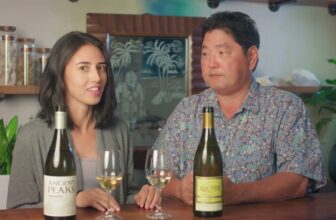
That is the heart of this episode of Chuck Furuya Uncorked, featuring Micah Suderman, food and beverage director at the Royal Hawaiian Hotel and Sheraton Waikiki, co-owner of Zia’s in Kaneohe, and one of Hawaii’s respected wine professionals.
The episode begins with a glass of Roland Lavantureux Petit Chablis, paired with a seafood sausage and lobster uni sauce. But the conversation quickly becomes much larger than one bottle.
It becomes a discussion about wine, restaurants, mentorship, Hawaii’s next generation of sommeliers, the aloha spirit, leadership, and why hospitality may be Hawaii’s most important export.
What This Episode Is About
Chuck introduces Micah as a Kailua boy, restaurant professional, sommelier, and one of Hawaii’s standout hospitality voices. He is also someone deeply connected to Zia’s, a restaurant with personal history for him and his wife.
Micah’s career has included restaurant work, wine sales, hotel leadership, wine dinners, and service at a high level. He was also recognized by Wine Enthusiast as part of its 40 Under 40 list, which reflects how far his work has reached beyond Hawaii.
The episode has two main parts.
First, Chuck, Kale, and Micah talk about Petite Chablis, Zia’s, wine pairing, and Micah’s journey into hospitality.
Then Ariana Suchia and Chris Ramelb join the conversation, bringing in mentorship, wine study, Hawaii’s sommelier community, leadership, and the deeper meaning of aloha in service.
The Wine: Roland Lavantureux Petit Chablis
The wine featured early in the episode is Roland Lavantureux Petit Chablis.
Micah paired this wine at Zia’s with a seafood sausage and lobster uni sauce created by chef Keith Endo. The dish included seafood such as lobster, scallop, and shrimp, with fennel, black pepper, and a richer lobster uni sauce.
The wine made sense because Petit Chablis brings freshness, acidity, saltiness, and transparency.
Micah describes the wine as pure, transparent, precise, and expressive of where it comes from. He loves that it does not feel noisy. Some Chardonnay can feel shaped heavily by winemaking choices, oak, butter, or richness. This wine is different. It lets the region speak.
That makes it especially useful with seafood.
Why Petit Chablis Works with Seafood
Petit Chablis is made from Chardonnay, but it does not behave like rich, buttery New World Chardonnay.
This style is leaner, brighter, more mineral, more saline, and more mouthwatering.
With seafood sausage and lobster uni sauce, the wine works in several ways:
It acts like a squeeze of lemon.
It refreshes the palate.
It connects with the briny, oceanic character of the seafood.
It cuts through the richness of the sauce.
It adds lift without overpowering the dish.
That is why high-acid, mineral Chardonnay from Chablis can be such a powerful seafood wine. It does not need oak or weight to be serious. Its power comes from precision.
Chablis vs Petit Chablis
Chuck explains that Petit Chablis is a separate appellation within the larger Chablis area.
He tells a story about standing in a vineyard with Roland Lavantureux, where one side was classified as Chablis and the other as Petit Chablis. The vineyards may look continuous, but legally and geologically they are different.
Chablis is often associated with Kimmeridgian limestone.
Petit Chablis is often associated with Portlandian limestone.
That difference can be subtle, but it matters in the glass.
Chuck describes Petit Chablis as a little rounder, more casual, and more fun than Chablis, while Chablis can feel more laser-like, precise, and riveting.
This is a good reminder that appellation names are not just labels. They can point to real differences in soil, slope, exposure, and wine character.
Terroir You Can Smell
One of the strongest wine lessons in the episode is Chuck’s defense of terroir.
He mentions that scientists may say vines cannot literally absorb minerals from soil and transport them into grapes in the way wine lovers sometimes describe. But when he smells Chablis or Petit Chablis, he finds unmistakable sea-shell, salt, brine, and limestone character.
For him, the wine clearly expresses place.
Micah agrees that when you line up Chardonnays from different places, they can taste completely different even when they come from the same grape. That is one of the beauties of wine.
Chardonnay from Chablis does not taste like Chardonnay from the Côte d’Or.
Chardonnay from California does not taste like Petit Chablis.
The grape is the same, but the place changes the message.
Micah’s Restaurant Journey
Micah describes himself as a true restaurant person.
He started working very young at Kalapawai, legally at fourteen, and even before that was around the restaurant world making sandwiches, stocking beer and wine, and learning the rhythm of hospitality.
One of his turning points happened at Zia’s when he was working as a waiter.
On one side of the restaurant, he was serving a couple who had their first date there, later got married, and came back with their baby. On the other side, he was serving a family gathered after the death of their matriarch.
He realized that the dining room table is where major human moments happen.
Celebration.
Grief.
Family.
Love.
Memory.
Food and wine are not the whole story. They are the vessel through which people experience life together.
That realization made him want to go all in.
The Dining Room as a Vessel for Humanity
Micah’s phrase is one of the best ideas in the episode: the dining room table is a vessel where humanity happens.
That is what makes restaurant work meaningful.
A server may think they are only taking an order. A sommelier may think they are only opening a bottle. A chef may think they are only finishing a dish.
But for the guest, the moment may be much bigger.
It may be a first date.
A reunion.
A birthday.
A goodbye.
A proposal.
A recovery.
A family meal after loss.
Good hospitality recognizes that the meal may matter more than the staff can see on the surface.
Learning the Business Side
Micah also talks about learning the financial side of restaurants.
One mentor gave him the keys to a restaurant and told him to keep it in the black. When he later ran short on payroll money, that mentor made him write up a proper loan agreement and understand the real mechanics of cash flow.
That lesson mattered.
Hospitality is emotional, but restaurants are also businesses. If the numbers do not work, the experience cannot survive. To create great wine dinners, hire great people, train staff, buy good products, and take care of guests, the business has to function.
This is an important part of Micah’s story.
He is not only romantic about hospitality. He understands the grind behind it.
Hawaii’s Wine Community
A major theme in the episode is Hawaii’s wine community.
Micah talks about wanting Hawaii to be known not only as a place people visit for beaches, but as a place that can inspire the world in food, wine, beverage, and hospitality.
He describes feeling competitive about that. People often travel to San Francisco, New York, or other major markets for inspiration. He wanted Hawaii to have that same seriousness and discipline.
Chuck connects this to Hawaii’s earlier hospitality and wine history, when sommeliers, chefs, and restaurant professionals helped put the islands on a national map.
Now, he sees a new generation coming together: Micah, Chris Ramelb, Ariana Suchia, and many others across the islands.
The driving force is not only technical knowledge.
It is the desire to represent Hawaii well.
Hospitality Is Aloha
One of the episode’s central lines is simple:
Hospitality is aloha.
Chris and Micah discuss how teaching wine classes for free was part of paying it forward. Wine is expensive to study. Not everyone has access to formal training or great bottles. If people had saved them tastes, opened doors, or given them opportunities, then they wanted to do the same for others.
That is hospitality outside the restaurant floor.
It is not only what happens when you clock in.
It is how you live, teach, share, and help others grow.
That is why the phrase matters: hospitality is aloha. It is care in action.
Mentorship and Paying It Forward
Ariana talks about being taught by Micah and Chris when she was starting out.
Their classes were free. They helped her study. They pushed her. They built pressure into the training so exams and service situations would feel less frightening.
She remembers being anxious before her certified exam, pacing and trying to cram facts. Micah helped her calm down by reminding her that the knowledge was already in her head.
That is mentorship.
It is not just giving someone information.
It is helping them trust themselves when pressure hits.
The episode shows how wine knowledge is passed down: Chuck and Mark Shishito influenced the older generation, Micah and Chris taught Ariana, and Ariana began teaching her own students.
That is how a community becomes stronger.
Knowledge Without Pretension
Micah says one of the things he dislikes about the sommelier world is the perception of pretension.
Knowing more should not mean talking down to people.
He compares it to a doctor using overly technical language when a patient just wants help. Wine professionals can make the same mistake. A guest asks a simple question, and the sommelier responds with a lecture that makes the guest feel small.
That misses the point.
The purpose of knowledge is service.
A good sommelier should make wine easier, more enjoyable, and more personal. They should not use knowledge as a weapon.
This is especially important in Hawaii, where the aloha spirit should make hospitality warmer, not colder.
Wine, Food, and Everyday Local Joy
Micah is serious about wine, but he also talks about loving local food: mac salad, teriyaki beef, two scoops rice, and a glass of Riesling.
That is one of the best parts of the episode.
Fine wine does not only belong with formal food. It can belong with local grinds, plate lunch, comfort food, and casual meals. The right wine can make everyday food more joyful.
This is also part of making wine approachable.
You do not have to wait for a white-tablecloth dinner to drink something good. You can drink meaningful wine with the food you actually love.
Leadership in Hospitality
Ariana asks Micah how he leads such different personalities at the Royal Hawaiian.
His answer is grounded in individualized hospitality.
People speak different languages emotionally. A Japanese guest may want one style of service. A couple from Illinois may want another. A chef, server, manager, or coworker may each need a different kind of communication.
You cannot use one robotic approach.
You have to read people.
That applies to guests and employees alike.
Micah’s leadership philosophy is to make people feel good about what they are doing and help them see that their work means something larger than the task itself.
A person is not just setting up POS access.
They are helping create a guest experience.
A server is not just carrying plates.
They are part of someone’s memory.
You Cannot Fake Hospitality
Micah says hospitality cannot be faked, just like aloha cannot be faked.
You either have it, or you choose to develop it like a muscle.
That does not mean people are born perfect. It means true hospitality requires inner work. You cannot be careless with coworkers and suddenly become deeply hospitable with guests. The spirit has to be consistent.
This is why the episode moves beyond wine.
Wine knowledge is useful.
Service technique is useful.
Business discipline is useful.
But without genuine hospitality, the experience becomes hollow.
When Does Service Begin?
Micah shares a powerful lesson from an advanced class with Bobby Stuckey and Yoon Ha.
The question was: when does service begin?
People gave practical answers: pre-shift, when the guest walks in, second seating, and so on.
The answer was that if you have to think about when to turn hospitality on, you are in the wrong business.
That idea hits hard because it removes the performance element.
Hospitality is not a switch.
It is not something you activate when a guest arrives.
It is a way of being.
Hawaii’s Last Great Export
One of the most important ideas in the episode is that Hawaii’s last great export is happy memories.
Micah says Hawaii no longer exports sugarcane in the old way. Other industries have faded. What Hawaii still sends into the world is the memory people carry after visiting.
A restaurant dinner.
A hotel breakfast.
A glass of wine at sunset.
A server who made someone feel cared for.
A vacation that becomes part of a family’s story.
That is why hospitality matters so much.
People come to Hawaii for beauty, but they remember the people. They remember how they felt.
That makes hospitality not just a job, but a responsibility.
Rebuilding the Future of Hawaii Hospitality
The episode was recorded during a difficult time for the hospitality industry, and Micah speaks directly about fighting for its future.
His motivation is preservation.
If hospitality in Hawaii disappears or comes back weaker, what will future generations do? Will his children and grandchildren be able to live there? What will the islands be known for?
This gives the conversation urgency.
Hospitality is not only about today’s guest.
It is about the future identity of Hawaii.
Micah sees the shutdown and disruption as a chance to look in the mirror and ask what Hawaii wants to be known for over the next thirty years.
Advice to the Industry
Near the end, Chris asks what Micah would tell not only the next generation, but also his peers.
Micah’s answer is to remember the beauty of sharing something great with another person.
The industry can wear people down. Long nights, difficult guests, angry chefs, inventory, stress, financial pressure, and exhaustion can make people jaded.
But the core is still simple:
Pick up something great.
Share it with someone.
Watch them enjoy it.
That is why people fall in love with hospitality in the first place.
The advice is to remember why you loved it, keep sharing that love, and keep the enjoyment alive.
Final Takeaway
This episode begins with a glass of Petit Chablis, but it becomes one of the most important hospitality conversations in the series.
The wine itself is a perfect symbol: pure, transparent, precise, mineral, and deeply connected to place. It works with seafood because it brings freshness, saltiness, and clarity.
Micah’s philosophy works the same way.
Hospitality should be clear.
It should be genuine.
It should reflect where it comes from.
For Hawaii, that means aloha.
The biggest lesson is that wine service is not about showing off knowledge. Restaurant work is not just a job. Hospitality is not a script.
It is the act of making people feel cared for during the moments that matter.
A good bottle can help.
A good meal can help.
But the real memory comes from the people who make the experience feel human.
FAQ
Who is Micah Suderman?
Micah Suderman is a Hawaii food and beverage professional, sommelier, food and beverage director at the Royal Hawaiian Hotel and Sheraton Waikiki, and co-owner of Zia’s in Kaneohe.
What wine is featured in this episode?
The episode features Roland Lavantureux Petit Chablis, a Chardonnay-based white wine from northern Burgundy.
What is Petit Chablis?
Petit Chablis is an appellation within the Chablis region of Burgundy. It is made from Chardonnay and is often crisp, mineral, fresh, and seafood-friendly.
How is Petit Chablis different from Chablis?
Petit Chablis is often a little rounder and more casual, while Chablis can be more laser-like and precise. The two areas are also associated with different limestone formations.
What food was paired with the Petit Chablis?
Micah paired it with seafood sausage and lobster uni sauce at Zia’s. The wine’s acidity and briny minerality helped lift the seafood and cut through the richness.
Why is Petit Chablis good with seafood?
It acts like a squeeze of lemon, refreshes the palate, and connects with the briny, oceanic flavors of seafood.
What does “hospitality is aloha” mean?
It means true hospitality is not just technical service. It is genuine care, generosity, warmth, and making people feel welcome.
Why is mentorship important in Hawaii’s wine community?
Mentorship helps younger wine professionals learn, gain confidence, and carry the culture forward. The episode emphasizes paying it forward through free classes, study groups, and shared experience.
What does Micah dislike about some sommelier culture?
He dislikes pretension and using wine knowledge to make people feel small. Wine knowledge should serve the guest, not intimidate them.
What does Micah mean by individualized hospitality?
Different people need different styles of service. A good hospitality professional reads the guest or coworker and adjusts rather than using one robotic approach.
When does hospitality begin?
The episode suggests that hospitality should not need to be switched on. It should be part of who you are before the guest even arrives.
What is Hawaii’s “last great export”?
Micah describes Hawaii’s last great export as happy memories — the experiences visitors take home after being cared for by the people of Hawaii.
What is the biggest lesson from this episode?
The biggest lesson is that hospitality is about creating meaningful human moments. Wine, food, and service matter most when they make people feel cared for, connected, and happy.


What makes Petit Chablis a good pairing for seafood? I've always thought Chardonnays were too heavy for fish dishes. Can someone explain?
I've found that high-acid wines like Petit Chablis really cut through the richness of seafood sauces. They brighten up the dish instead of overpowering it.
Great points! Petit Chablis has a refreshing acidity that complements seafood beautifully, making it a popular choice for many seafood dishes.
I had the Roland Lavantureux Petit Chablis at Zia's and I really enjoyed how it enhanced the seafood flavors. Definitely a solid recommendation!
Thanks for sharing your experience! It's great to hear how the wine paired well with the seafood at Zia's.
What’s the difference between Chablis and Petit Chablis? I get confused since they both seem similar in name and grape type.
Chablis is often more intense and precise, while Petit Chablis is a bit rounder and more casual. They come from different soil types too, which affects the taste.