
Blind tasting does not always have to be about guessing the grape, region, vintage, or producer.
For most wine drinkers, that kind of tasting can feel intimidating. It can turn wine into a test instead of something enjoyable. But there is another way to blind taste wine: use it as a method for understanding what is actually in the glass.
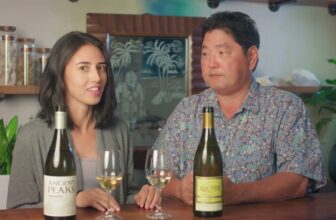
In this episode of Chuck Furuya Uncorked, Chuck asks Ariana Suchia to blind taste a white wine. The goal is not to identify it perfectly. The goal is to break it down systematically so viewers can learn how to think through a wine.
At the end, the wine is revealed as Hans Wirsching Silvaner from Franken, Germany — a mineral, dry, food-friendly white wine that overdelivers for the price.
What This Episode Is About
Chuck sets up the episode as a learning exercise.
He does not want Ariana to perform a formal exam-style blind tasting. He is not asking her to name the grape, soil, vintage, or producer. Instead, he wants her to answer practical questions:
Is this a good wine?
Why or why not?
How much would you pay for it?
What kind of food would you serve with it?
That is a much more useful way for normal wine drinkers to think.
You do not need to become a Master Sommelier to improve your wine judgment. You need a method for looking, smelling, tasting, and deciding whether the wine works.
Start With What You Can See
Ariana begins with the appearance.
The wine is white, but not completely pale or water-clear. It has a yellow-gold tone, without a greenish tinge. That can suggest several possibilities: grape variety, winemaking, or age.
Chuck also points out that the wine is not especially viscous. When swirled in the glass, it does not move like a heavy, rich, high-alcohol wine. That suggests it probably does not come from a very warm growing region.
This is an important beginner point.
You do not need to identify the wine from sight alone. You simply gather clues.
Color, viscosity, and brightness can all give early hints about weight, ripeness, age, and style.
The Nose: Mineral, Not Fruity
On the nose, Ariana does not describe the wine as highly fruity.
It is not dominated by apple, pineapple, pear, or tropical fruit. Instead, it is more mineral-driven. She mentions wet river rock, a slightly yellow apple background, and a subtle corn shoot quality.
Chuck agrees that the wine is not “tutti-frutti.” It is much more about rocks, minerals, and earthier impressions.
That is one of the first major conclusions:
This wine is not trying to be obvious.
It is not a simple fruit-forward white wine. It has a quieter, more mineral personality.
Is There Oak?
Chuck then asks whether the wine smells oaky.
Does it show smoke, vanilla, butterscotch, caramel, or obvious barrel notes?
Ariana does not see strong evidence of new oak. She considers whether there could be old oak, but she does not find the typical new-oak markers. Chuck also does not get strong butter or malolactic character.
That is another practical tasting step.
When tasting white wine, ask:
Does it smell like new oak?
Does it smell creamy, buttery, smoky, or vanilla-like?
Or does it feel clean, mineral, and direct?
This wine points away from new oak and toward minerality.
The Palate: Dry, Medium-Bodied, Medium-High Acidity
The next step is structure.
Chuck asks Ariana and Kale to identify the sweetness level, body, and acidity.
They describe the wine as dry to medium-dry, medium-bodied, and medium-high in acidity.
That gives the wine a clear profile:
not sweet;
not heavy;
not thin;
fresh;
mineral;
balanced;
and food-friendly.
Chuck notes that the wine does not finish bitter, alcoholic, or oaky. It flows evenly from beginning to end. It has lift from both acidity and minerality.
That is one of the most important quality markers in the episode.
A good wine should not have one element sticking out awkwardly. It should feel balanced.
How to Judge Whether a Wine Is Good
Ariana gives a useful beginner answer when Chuck asks whether the wine is good.
She says that when judging quality, Chuck often asks whether a wine finishes bitter, alcoholic, or oaky, and whether it feels balanced.
In this case, nothing feels glaring. The wine does not have harsh bitterness, obvious alcohol, or dominant oak. It is seamless, mineral, and refreshing.
So yes, she considers it a good wine.
This is a simple test anyone can use:
Does the wine feel balanced?
Does the finish turn bitter?
Does alcohol stick out?
Does oak dominate?
Does the wine make you want another sip?
If the answer is positive, you are already judging wine in a practical way.
Price and Value
Chuck then asks how much the wine might cost.
Ariana guesses below $25. She sees it as a country-style, value-driven wine that delivers more than expected. From a restaurant or retail perspective, she sees it as something that could work for casual dining, happy hour, beachside settings, and home dinners.
Chuck agrees that the wine overdelivers for the dollar.
It is not simple. It has layers, nuance, and mineral complexity. It is not a basic fruity white wine, but it is still approachable and useful.
That is the sweet spot for everyday wine:
not expensive trophy wine;
not mass-market simplicity;
but something affordable with real character.
The Reveal: Hans Wirsching Silvaner
The wine is revealed as Silvaner from Hans Wirsching in Franken, Germany.
Chuck explains that Franken is famous for dry and medium-dry wines, especially Silvaner. Silvaner is a grape that does not have the prestige of Riesling, but in the right hands it can make outstanding, food-friendly wines.
Hans Wirsching is described as a legendary, multi-generation family estate. Chuck notes that the family has been growing and operating the estate for many generations and that the estate is highly regarded in Germany.
The key point is that this wine would be easy to overlook in a store.
Most casual shoppers are not walking in asking for Silvaner from Franken. But tasted blind, without any label bias, it clearly shows quality.
Why Silvaner Matters
Silvaner can be a very useful food wine.
Chuck explains that unlike some sharper white grapes, Silvaner can feel more pliable. It does not have the same hard, rigid edges that can make certain wines more difficult with food.
That makes it useful with everyday cooking.
It can be mineral and fresh, but still gentle enough to work across a range of dishes.
In Chuck’s view, some of the best Silvaner examples come from producers such as Hans Wirsching in Germany, André Ostertag in Alsace, and Manni Nössing in northeast Italy.
The larger lesson is simple:
A less famous grape can still make world-class wine when grown and made by the right producer.
The Alsace Food Lesson
Chuck shares a story from Alsace, where he and Cheryl visited a local bistro away from the tourist areas.
The place was packed with local people. Almost everyone had wine with lunch, but they were not swirling, analyzing, and trying to sound impressive. They were drinking wine naturally with food.
They ordered different dishes and tried several wines by the glass and half bottle. In that setting, Chuck noticed that although Riesling and Pinot Noir may be the nobler grapes of the region, Silvaner was often the wine that worked best with the food.
That is a major lesson.
The most famous grape is not always the best pairing.
Sometimes the humbler, more flexible wine is the better table wine.
What Foods Work With This Wine?
For this Hans Wirsching Silvaner, Chuck recommends simple food.
A sautéed fish with salt and pepper.
A squeeze of lemon at the end.
Maybe pasta underneath.
Maybe greens underneath.
Nothing too heavy, too sweet, or too complicated.
The wine acts almost like a squeeze of lemon. It lifts the dish, adds freshness, and brings mineral energy.
Ariana also imagines it with fresh, approachable seafood dishes, especially in a beachside restaurant setting.
The wine is especially logical with fish, fresh preparations, and simple food where minerality and acidity can brighten the plate.
Why This Is Not a Trophy Wine
This wine is not presented as a luxury bottle.
It is not about status, oak, power, or label recognition. It is not trying to be a big impressive wine.
It is valuable because it is pure, mineral, transparent, balanced, and useful.
That fits perfectly with the recurring theme of the series: everyday wine can still be serious.
A wine does not need to be expensive or famous to be excellent. It simply needs to be well made, balanced, expressive, and appropriate for the moment.
Blind Tasting as a Practical Skill
The biggest lesson in the episode is not only about Silvaner.
It is about how to taste.
Start with color.
Look at viscosity.
Smell for fruit, mineral, oak, butter, and other clues.
Taste for dryness, body, acidity, alcohol, bitterness, and balance.
Ask whether the wine is good.
Ask what it might cost.
Ask what food it belongs with.
That is a practical blind tasting method for real people.
You are not trying to impress anyone.
You are learning how to trust your own palate.
Final Takeaway
This episode shows that blind tasting can be useful without becoming intimidating.
You do not have to guess the grape to learn something. You do not have to name the region to judge quality. You do not have to know the producer to decide whether a wine is balanced, interesting, and worth buying.
The Hans Wirsching Silvaner works because it is mineral, dry, fresh, seamless, and food-friendly. It does not finish bitter, alcoholic, or oaky. It has enough complexity to stay interesting, but enough drinkability to work at home with simple food.
The larger lesson is even more valuable:
Taste what is in the glass first.
Judge the wine honestly.
Then learn the label.
That is how wine becomes less intimidating and more enjoyable.
FAQ
What is this episode about?
This episode is about blind tasting a white wine in a practical way. The goal is not to guess the wine, but to evaluate its color, aroma, structure, quality, value, and food pairing.
What wine is tasted in the episode?
The wine is Hans Wirsching Silvaner from Franken, Germany.
What is Silvaner?
Silvaner is a white grape variety grown in parts of Europe, especially Germany’s Franken region and Alsace. It can make dry, mineral, food-friendly wines.
What does Silvaner taste like?
In this episode, the Silvaner shows minerality, wet stone, subtle yellow fruit, medium body, medium-high acidity, and a clean, balanced finish.
Is Silvaner similar to Riesling?
Silvaner can be mineral and refreshing like Riesling, but it often feels more pliable and less sharply edged. It can be very useful with food.
Is this wine oaked?
The tasting does not show obvious new oak. The wine is more about mineral freshness than vanilla, smoke, butter, or caramel.
Is this wine dry?
The wine is described as dry to medium-dry, with medium body and medium-high acidity.
What foods pair with Silvaner?
Simple sautéed fish, seafood, lemon, greens, pasta, fresh herbs, and lighter dishes can work well with this style of Silvaner.
Why does Chuck like this wine?
Chuck likes it because it is pure, mineral, transparent, balanced, food-friendly, and offers strong value for the price.
What is the biggest blind tasting lesson?
The biggest lesson is to taste systematically without worrying about guessing. Look, smell, taste, judge balance, consider price, and think about food.





What exactly makes Silvaner such a good food wine compared to other whites? I’m curious if it actually pairs well with a variety of dishes or if it's more suited for specific types of food.
I think it's all about the wine's profile! Silvaner is often described as having a mineral quality that doesn't overpower food. It's versatile, which is why it works well with lighter dishes like fish.
Great observation! Silvaner's minerality and balanced acidity indeed make it a flexible pairing choice. It complements seafood and light pasta dishes wonderfully without dominating them.
I had a Silvaner at a restaurant recently, and it was surprisingly good! Definitely had that mineral taste they talk about.
I had a similar experience! It feels refreshing, doesn’t it? I was surprised how well it paired with my grilled fish.
I’m not sure if I agree that Silvaner is better than Riesling. Riesling has its own unique flavors that can be amazing with food, too!
That’s a valid perspective! Both varietals offer distinct characteristics, and the best choice often depends on the specific food pairing.
I see your point, but I think it depends on the dish. Riesling can be fruit-forward, which is great, but sometimes you want something more subtle like Silvaner.
I love that this article points out not needing to identify everything about the wine! Makes it less intimidating for beginners.
How does this Silvaner compare to other white wines like Sauvignon Blanc or Chardonnay? I’m curious about the texture and flavor differences.
Sauvignon Blanc tends to be more aromatic and fruity, while Chardonnay can be richer, especially if oaked. Silvaner, on the other hand, offers a clean, mineral-focused taste which is quite refreshing.
Exactly! Silvaner often has a more subdued profile compared to the boldness of Sauvignon Blanc or the creaminess of oaked Chardonnay, making it a unique choice for those looking for something different.
You mentioned that Hans Wirsching is a legendary estate. Can someone recommend other producers of Silvaner to try?
Definitely check out André Ostertag in Alsace! They make some fantastic Silvaners as well.
Great suggestion! Manni Nössing is another producer known for quality Silvaner. Exploring different estates can really enhance your tasting experience.