
Great drinking is not only about what is in the glass.
It is about the person making the drink, the mood of the room, the speed of service, the quality of ingredients, the story behind the bottle, the people sharing it, and the feeling that someone is taking care of you.
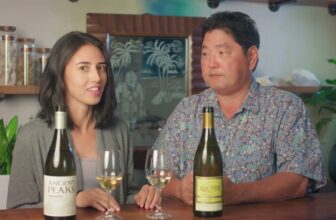
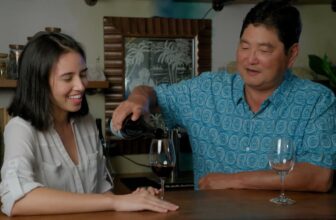
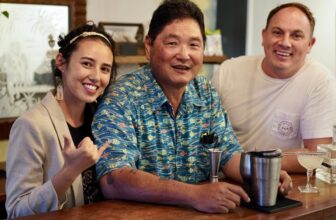
In this episode of Chuck Furuya Uncorked, Chuck and Kale Furuya sit down with Dave Newman, one of Hawaii’s respected cocktail and hospitality professionals. The conversation moves through Dave’s path from restaurant work in California to Nobu Malibu, Nobu Hawaii, Pint, craft beer, cocktails, tiki culture, indigenous ingredients, wine, Riesling, Müller-Thurgau, rosato, and the deeper meaning of hospitality.
Although Dave is primarily known for cocktails and beer, this episode fits beautifully into a wine education series because it shows how all good beverage culture shares the same foundation: balance, service, curiosity, and enjoyment.
What This Episode Is About
Chuck introduces Dave as one of the top mixology professionals in Hawaii. But the episode quickly shows that Dave is not only a cocktail person.
He understands beer.
He understands wine.
He understands restaurant rhythm.
Most importantly, he understands hospitality.
The conversation begins with Dave’s early restaurant path, then moves into his philosophy of bartending, the creation of Pint, the evolution of Hawaii’s cocktail scene, the importance of classics, indigenous Hawaiian ingredients, tiki drinks, wine as a communal beverage, and a tasting of several wines that connect with the larger themes of the episode.
This is not a technical cocktail class or a formal wine seminar. It is a conversation about how beverage professionals think when they care deeply about the guest.
From Busboy to Bartender
Dave started in restaurants the way many hospitality people do: he needed a job while going to college.
His first restaurant job was at an Italian restaurant called Piatti’s, where he began as a busboy and moved up to server. He eventually got behind the bar almost by accident when a bartender could not make it to an event and Dave claimed he knew how to bartend.
The first drink ordered was a Cuba Libre, and he did not know what was in it. When he learned it was basically rum, Coke, and lime, he wondered why the guest had not just ordered it that way.
That story is funny, but it also shows a starting point. Dave did not enter the bar already polished. He learned through work, mistakes, mentors, and repetition.
That becomes one of the main themes of the episode:
Craft is built from the ground up.
Nobu and the Push Toward Better Drinks
Dave eventually worked at Nobu Malibu, where the bar environment changed how he thought about cocktails.
At earlier Hollywood and Los Angeles bars, he felt that bartending often had more to do with image than drink quality. So he tried to make drinks taste better than the bartender next to him. That simple competitive instinct pushed him toward craft.
At Nobu, the situation was different. The food was world-class, the guests expected quality, and the bar had the freedom to use better ingredients. Dave mentions using fresh citrus and seasonal ingredients at a time when many bars were still relying on bottled sour mix.
That freedom mattered.
The bar could aim higher because the restaurant allowed it.
Dave wanted the cocktails to live up to the food.
Hospitality Came Early
Chuck asks Dave when he started thinking about hospitality rather than just making drinks.
Dave says that came early, through an old-school bartender mentor who was serious about service. Nobu later elevated that standard even further because of the level of clientele and expectations.
One lesson from his mentor stands out: knowing every bottle on the back bar is only one part of being a good bartender. If all you can talk about is what you love, you force every guest into your world. A bartender should be able to connect with people on their terms.
Read the front page.
Know who is in the playoffs.
Be able to talk to different guests about what matters to them.
That is hospitality.
It is not only technical drink knowledge. It is finding common ground.
The Bartender’s Happy Place
Dave explains that he loves being behind the bar. It feels like his happy place.
That matters because guests can feel when someone genuinely belongs in the role. Hospitality is harder to fake when the room is busy, people are waiting, orders are piling up, and the bartender has to keep moving.
A great bartender does not just make drinks. They create comfort.
They recognize people.
They keep the room moving.
They notice who wants conversation and who wants space.
They make guests feel welcome without making the experience about themselves.
This is very similar to the best kind of wine service. A sommelier, bartender, or server should use knowledge to support the guest, not dominate the guest.
Pint and the Neighborhood Bar Idea
After moving to Hawaii with Nobu, Dave eventually opened Pint.
The idea was to create an approachable neighborhood bar that brought a higher level of cocktails and craft beer to Hawaii without making the room feel stiff or exclusive.
Chuck describes Pint as a place where expertise and hospitality worked together. It had craft cocktails, craft beer, good food, and a welcoming neighborhood feeling.
Dave explains that one important idea was speed.
He did not like going to bars and waiting twenty minutes for a drink. So he built the program in a way that could serve guests quickly while still offering quality. Craft beer could be poured quickly. Cocktails on tap could be served quickly. Bottled cocktails could be even faster. Batched drinks also allowed consistency.
That is a practical hospitality lesson.
Quality matters, but the guest experience also includes time.
A great drink loses some of its magic if the guest has to wait forever for it.
Consistency Is Hospitality
Dave says that with batched or bottled cocktails, he could personally put his hand on every drink that went out.
That matters because consistency is part of care.
A guest should not have to wonder whether the drink will be good depending on which bartender is working, how busy the bar is, or whether the ingredients are slightly different that day.
The goal is not just creativity.
The goal is repeatable pleasure.
That is the same reason wine producers, chefs, and restaurant teams think so carefully about process. Consistency lets the guest relax.
Cocktail Aha Moments
Dave shares two cocktail aha moments.
The first was the Aviation, made with gin, Luxardo, crème de violette, and lemon juice. He describes it as floral, sophisticated, balanced, and not sweet when made correctly. It was the drink that made him want to make craft cocktails.
The second was a riff on El Diablo, usually a highball with tequila and ginger beer. In this version, the bartender used ginger syrup and served it up. Dave remembers sitting there alone, laughing because the drink was so good.
These moments show what great cocktails can do.
They can surprise you.
They can reframe what a drink can be.
They can make you want to learn the craft behind them.
Craft Beer Aha Moment
Dave’s craft beer aha moment came at Father’s Office in Santa Monica.
At the time, he thought drinking Newcastle meant he had upgraded his beer game. Then he tasted a serious craft beer with a great burger and realized how powerful beer and food pairing could be.
That experience later influenced Pint.
When Dave and his partners were deciding whether they could work together, they each made a list of bars they loved. Several of them listed Father’s Office. That shared reference point helped confirm the kind of experience they wanted to build.
Again, the lesson is not only about beer.
It is about how a place can teach you what kind of hospitality you want to create.
Learn the Classics First
One of the strongest sections of the episode is Dave’s advice for young bartenders.
He says many new bartenders want to create bartender’s choice drinks or invent something new before they can make the classics. But almost every cocktail is a riff on a small group of foundations.
Learn the classics first.
Learn the Daiquiri.
Learn the Margarita.
Learn how to balance rum, sugar, and citrus.
Learn how to make lemonade.
A Daiquiri has nowhere to hide. If the proportions are wrong, the drink fails. Lemonade is the same. If you cannot balance citrus, sugar, and water, you are not ready to waste good alcohol.
That is a perfect beginner lesson.
Great craft often starts with simple things done very well.
Balance Changes Every Day
Chuck adds an important point: ingredients change.
Not every lime tastes the same. Not every lemon has the same acidity. Citrus changes over a shift. Fresh juice pressed at the beginning of service may taste different later.
That means a bartender cannot simply memorize a recipe and stop tasting.
They have to adjust.
Dave agrees. If you are not tasting your drinks throughout the shift, you are not making the best possible version.
This connects directly with wine.
Every vintage is different. Every vineyard block is different. Every winemaker has to respond to conditions. Balance is not a fixed formula. It is a living judgment.
Take Pride in the Small Things
Dave’s lemonade example leads into a broader hospitality idea.
A bartender should take pride even in making the best lemonade possible. A cook should take pride in staff meal. A server should take pride in basic setup. A wine professional should take pride in the small details before the guest ever sees them.
This is where skill becomes character.
Anyone can care when the task is glamorous.
The real professional cares when the task is basic.
That is what separates people who talk about craft from people who live it.
Sharing Knowledge Builds the Community
Dave says that one of the most rewarding parts of his work now is passing knowledge on.
He wants to see Hawaii’s food, wine, cocktail, and beer scenes keep improving. He does not want to withhold knowledge. He wants more people to get better.
Chuck compares the modern Hawaii cocktail movement to the Hawaii Regional Cuisine movement. It is not just one person doing something interesting. It is a group of people raising standards together.
That is a strong theme across many episodes in this series.
Wine, cocktails, food, and hospitality improve when people share knowledge rather than guard it.
Indigenous Ingredients and the Future of Hawaii Cocktails
Ariana brings up Dave’s work with indigenous foods.
Dave explains that he was invited to participate in an indigenous food class connected to chefs and local farms. The class explored ingredients such as Samoan crab, ulu, kalo, barracuda, and other local products.
One of the most interesting examples is his experiment with ulu skins.
Inspired by tepache, a Mexican fermented pineapple drink made with pineapple skins, sugar, spices, and natural fermentation, Dave tried using ulu skins in a similar way. The result was surprisingly citrus-forward, even though there was no citrus in it.
That idea is exciting because it turns something that might have been discarded into something flavorful and creative.
He also talks about using invasive mangrove wood to smoke cocktails, creating a lighter smoke than kiawe, useful for aperitif-style, gin-based, or vodka-based drinks.
This section shows how cocktail culture can become more rooted in place.
Not by copying trends from elsewhere.
By looking at what Hawaii actually grows, wastes, forages, and values.
Tiki Culture: Embrace It, Improve It
Ariana asks Dave about tiki culture.
Dave says tiki should be embraced, but made properly.
He acknowledges that many hotels and high-volume places continue serving simplified or commercial versions of drinks like Mai Tais because that is what many guests expect. From a business standpoint, those drinks fill a role.
But he also says tiki can be amazing when done well.
The better direction is not to reject tiki culture. It is to move away from watered-down, overly commercial versions and show what these drinks can be when treated with care.
Chuck adds that there is room for all levels of drinking. Some guests want consistency and simplicity. Others want boutique, craft, handmade, more expressive drinks.
The important thing is knowing what kind of place you are and what experience you are trying to provide.
There Is a Time and Place for Everything
One of Dave’s most grounded ideas is that there is a time and place for almost every beverage.
There is a time for a craft cocktail.
There is a time for a beer.
There is a time for Champagne.
There is a time for a poolside piña colada.
There is even a time for simple comfort drinks that are not trying to be profound.
That attitude keeps the conversation from becoming snobbish. The episode is not about replacing everyday pleasure with expert-approved drinking. It is about expanding the possibilities.
You can enjoy simple drinks and still appreciate serious ones.
You can drink wine, cocktails, beer, sherry, Riesling, and rosato without turning any one category into a religion.
Why Wine Feels Different From Cocktails
Dave gives one of the best observations in the episode when he talks about wine as a shared experience.
When people go out for cocktails, each person usually orders what they personally want. One person gets an Old Fashioned. Another gets a Margarita. Another gets a gin drink.
Wine is different.
A bottle is usually shared.
The table chooses something together. Everyone tastes the same wine with the same food and the same moment. Their palates are different, but the experience is communal.
That is one of the special things about wine.
It turns the table into a shared experience in a way cocktails often do not.
Wine, Cocktails, and Business Reality
Dave also talks about trying to create a bar program that included cocktails, spirits, beer, and wine at Pint. The wine side did not work the way he hoped. Guests felt more comfortable drinking beer and cocktails there.
That became a business lesson.
You may have an idea of what you want your place to be, but if you listen to your guests, you adjust. A bar is not built only for the owner’s imagination. It is built for the community it serves.
This is another practical hospitality lesson.
Vision matters.
Listening matters too.
Wine Cocktails and Fortified Wine
The conversation also touches on wine-based cocktails.
Dave mentions sangria, Champagne-based drinks, and a sparkling sangria-style drink he once made at Nobu using open Cabernet, peach liqueur, Calpico concentrate, and Champagne.
He also talks about playing with aperitifs, fortified wines, and sherry.
Chuck notes that sherry can be difficult in Hawaii because freshness, storage, service temperature, and alcohol level all matter. But served properly, possibly chilled or over a large rock, it can be interesting.
This section shows how the line between wine and cocktails can blur.
Wine is not only something poured by itself. It can also become part of a larger drink structure.
Dr. Konstantin Frank Dry Riesling
Dave brings a wine to the episode: Dr. Konstantin Frank Dry Riesling from the Finger Lakes in New York.
He likes it because it is mineral-forward, dry, food-friendly, refreshing, and reasonably priced.
The discussion also points out a common misunderstanding: many people hear “Riesling” and immediately assume sweet. But Riesling can be dry, medium-dry, medium-sweet, sweet, or dessert-style. The winemaker decides the style.
Dave likes Riesling because it can work across many foods and moods. Dry Riesling can offer bracing acidity and minerality, while still having rounder edges than some other high-acid white grapes.
That makes it very useful at the table.
Why Finger Lakes Riesling Matters
Chuck and Ariana explain that Dr. Konstantin Frank is an important name for Finger Lakes wine and for growing European grape varieties in colder parts of the United States.
The episode contrasts this with Germany, where Riesling historically ripened only in certain years because the climate was so marginal. In cool regions, grape growing requires the right site, the right varieties, and often a lot of persistence.
That makes Finger Lakes Riesling interesting because it gives American wine drinkers a domestic example of a grape most people associate with Germany.
It also shows that good wine does not only come from the most obvious regions.
Müller-Thurgau From Rudolf Fürst
Chuck then pours a German Müller-Thurgau from Rudolf Fürst in Franken.
He explains that Müller-Thurgau is a crossing associated with Riesling and another grape, created in part because growers wanted grapes that could ripen earlier in marginal climates.
This particular wine is not presented as ordinary Müller-Thurgau. Chuck describes it as a special example: light, ethereal, mineral, silky, and almost cloud-like in texture.
Dave notices the mouthfeel, the lingering mid-palate, the longer finish, and a touch of petrol-like character that reminds him of Riesling.
Chuck compares the wine stylistically to very light, weightless wines such as Marquiliani rosé from Corsica. It is not about apple, pineapple, or obvious fruit. It is about mineral delicacy.
The point is not “go buy any Müller-Thurgau.”
The point is that a great producer can make a supposedly modest grape feel world-class.
Elvio Tintero Rosato
The final wine is Elvio Tintero Rosato from Piemonte in northwest Italy.
Chuck describes it as a country-style, café-style rosato made from grapes such as Barbera, Dolcetto, and a little Nebbiolo, handled gently and directly pressed so it stays light. The wine is slightly fizzy, pink, refreshing, and unpretentious.
Ariana calls it scrumptious and spritzy.
Chuck’s pairing idea is simple: do not overthink it.
This is a wine for salads, pizza, sausages with roasted peppers, lunch, picnics, afternoon conversation, and casual food. It is not meant to be dissected like a trophy wine. It is meant to wash down food and create pleasure.
That is pure country wine.
Serious Wine vs Gulpable Wine
The episode gives a useful contrast between the Müller-Thurgau and the Tintero Rosato.
The Müller-Thurgau is serious, ethereal, delicate, mineral, and quietly sophisticated.
The rosato is fizzy, cheerful, gulpable, and about pure enjoyment.
Both are valid.
One asks for attention.
The other invites you to relax.
This is one of the best lessons in the episode:
Not every good wine has to do the same job.
Some wines are for contemplation.
Some wines are for brunch, pizza, hot afternoons, and loud conversation.
Small Producers Chuck Wants to See More Often
Near the end, Dave asks Chuck which producers he wishes were more available in Hawaii.
Chuck mentions several small producers, including Enrico Esu from southern Sardinia, a small father-and-son winery in Bonifacio at the southern tip of Corsica, and Raúl Pérez from northwest Spain.
The details matter because Chuck is not talking about famous trophy names. He is talking about small, distinctive producers from places with specific soils, old vines, family histories, and limited production.
That connects with the larger theme of the whole series.
The most exciting wines are often not the loudest, most famous, or most marketed.
They are the bottles that someone had to search for.
Final Takeaway
This episode is valuable because Dave Newman brings the perspective of someone who understands more than one beverage world.
He knows cocktails.
He knows beer.
He appreciates wine.
He understands restaurant business reality.
He understands hospitality.
And he keeps returning to the same core ideas: balance, service, timing, community, and pleasure.
For wine drinkers, the episode is a reminder that wine does not exist in isolation. It shares a table with cocktails, beer, food, local ingredients, tiki traditions, fermentation, smoke, service, and the people sitting around the bottle.
The biggest lesson is simple:
Drink better, not narrower.
Learn the classics.
Care about balance.
Respect hospitality.
Explore local ingredients.
Share bottles with people.
And remember that there is a time and place for almost everything, from serious Riesling to fizzy rosato to a poolside piña colada.
FAQ
Who is Dave Newman?
Dave Newman is a Hawaii-based cocktail and hospitality professional associated with Pint. In the episode, Chuck introduces him as one of Hawaii’s top mixology figures.
What is the main idea of this episode?
The episode explores cocktails, craft beer, hospitality, tiki culture, indigenous Hawaiian ingredients, wine, Riesling, Müller-Thurgau, rosato, and how different beverage worlds connect.
What was Dave Newman’s first bartending experience?
He first got behind the bar after claiming he knew how to bartend when a bartender could not make it to an event. His first ordered drink was a Cuba Libre.
What cocktail made Dave interested in craft cocktails?
The Aviation was one of his major aha cocktails. He describes it as floral, sophisticated, balanced, and not sweet when made correctly.
What beer experience influenced Dave?
Father’s Office in Santa Monica opened his eyes to serious craft beer and beer-and-food pairing, especially through Belgian beer and their burger.
What is Dave’s advice for young bartenders?
Learn the classics first. Learn balance through simple drinks such as Daiquiris, Margaritas, and even lemonade before trying to create complex original cocktails.
Why is lemonade important for bartenders?
Lemonade teaches the basic balance of citrus, sugar, and water. If a bartender cannot balance that, they are not ready to build more complicated drinks.
What does the episode say about tiki culture?
Dave says tiki should be embraced, but made properly. The problem is not tiki itself, but watered-down or overly commercial versions that do not show what the drinks can be.
Why does Dave find wine special?
He likes that wine is often shared by the table. Unlike cocktails, where everyone orders separately, a bottle of wine can create a communal experience.
What is Dr. Konstantin Frank Dry Riesling?
It is a dry Riesling from the Finger Lakes in New York. Dave brings it as an example of a mineral, food-friendly, refreshing wine.
Is Riesling always sweet?
No. Riesling can be dry, medium-dry, sweet, or dessert-style depending on the winemaker.
What is Müller-Thurgau?
Müller-Thurgau is a grape crossing associated with Riesling. In the episode, Chuck pours a special example from Rudolf Fürst in Franken, Germany.
What is Elvio Tintero Rosato?
Elvio Tintero Rosato is a lightly fizzy rosato from Piemonte in northwest Italy. In the episode, it is presented as a gulpable, country-style wine for casual food and pure enjoyment.
What foods pair with fizzy rosato?
It can work with salads, pizza, sausages with roasted peppers, lunch foods, picnics, and casual outdoor meals.
What is the biggest lesson from this episode?
The biggest lesson is that great beverage culture is built on balance, hospitality, curiosity, and shared enjoyment — whether the drink is wine, beer, cocktails, Riesling, rosato, or a simple piña colada.



What do you think makes a cocktail truly great? Is it just the ingredients or is the bartender's skill more important?
Great point! The balance of ingredients and the skill in preparing them are both crucial for a memorable cocktail experience.
I believe both play a huge role. Good ingredients mean a lot, but if the bartender doesn't know how to balance them, it won't matter. It's all about the execution.
I had my own ‘aha moment’ with cocktails when I tried a properly made Old Fashioned at a local bar. It changed my view on how cocktails can be not just drinks but experiences. The bartender explained the ingredients and the history behind the drink, which made it even more special. Have you guys had similar experiences?
Those moments of connection with a bartender can really elevate the experience! It's amazing how knowledge and storytelling enhance enjoyment.
Absolutely, I had a similar moment with a Negroni. The bartender took time to explain the balance of flavors, and I felt like I was learning something new.
This discussion about the importance of service and atmosphere got me thinking. How does the vibe of a bar compare to that of a fine dining restaurant? Is one more important than the other for a good drinking experience?
I think the vibe of a bar is crucial, especially if you're looking for a casual night out. But a fine dining experience has its own charm, especially when it comes to the quality of service.
You're right! Both environments serve different purposes and can contribute uniquely to the overall drinking experience.
What does ‘consistency is hospitality’ actually mean? Can someone explain that further?
Exactly! Consistency helps guests feel comfortable and ensures they have a great experience every time they visit.
It means that guests should expect the same quality in their drinks, no matter who's behind the bar or how busy it is. It builds trust.
I love that the episode touches on indigenous ingredients in cocktails. It's something that adds so much character!
Totally agree! Using local ingredients really ties the drink to the place it comes from.
I don’t think speed is that important when it comes to drinks. A little wait can build anticipation and make the experience more enjoyable. What do you all think?
You've brought up an interesting perspective! Anticipation can enhance the experience, but service speed also plays a vital role in hospitality.