
Wine becomes much easier to understand when people are allowed to ask real questions.
Not every wine conversation needs to begin with experts talking at other experts. Sometimes the most useful lessons come from simple questions: What is skin-contact white wine? Why do people ferment wine in clay pots? Why are some wines so hard to describe? How do you study wine without getting overwhelmed? How do you find bottles from small producers instead of only drinking mass-market brands?
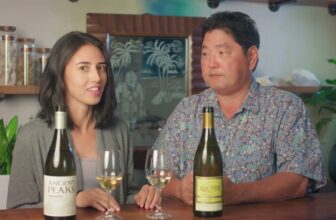
In this episode of Chuck Furuya Uncorked, Chuck, Kale, and Ariana Suchia answer viewer questions in an AMA-style format. The goal is practical: help people enjoy wine more confidently at home, in restaurants, and in wine shops.
The episode covers several important topics, but they all connect to one larger idea:
Wine is easier to enjoy when you stop chasing labels and start understanding what the wine is trying to say.
What This Episode Is About
This episode is built around viewer questions.
Chuck and the team explain that the purpose of the channel is to make wine more useful for everyday life. That includes choosing bottles for home, pairing wine with food you actually cook, finding affordable wines, and learning enough language to avoid feeling intimidated.
The questions in this episode cover:
skin-contact white wines;
clay pots and amphora fermentation;
why some wines are hard to describe;
Chuck’s own wine aha moments;
how to study wine;
how to use resources like GuildSomm;
and why small producers deserve attention.
This makes the episode feel like a casual wine class, but without the stiffness of a formal lecture.
What Is Skin-Contact White Wine?
The first question is about white wines made with skin contact.
Most modern white wines are made by pressing the grapes and separating the juice from the skins quickly. This is often called direct pressing. The goal is usually to make a lighter, fresher, cleaner, brighter wine.
But there is another way.
A winemaker can leave the juice in contact with the grape skins during fermentation. This is common in red wine, but it can also be done with white grapes. When white grape skins stay in contact with the fermenting juice, they can add more color, texture, bitterness, aroma, and character.
Chuck uses a simple food analogy: shrimp and crab shells.
The meat has flavor, but the shells contain a huge amount of character. If you cook crab or shrimp with the shells, you can make a richer sauce, broth, or stew. The same idea applies to grape skins.
The skins are not just waste. They can hold flavor, texture, and personality.
What Does Skin Contact Add to White Wine?
Skin contact can make a white wine feel more complex.
It may add:
more texture;
more grip;
more bitterness;
more color;
more aroma;
more savory character;
more structure;
and sometimes a more rustic or natural feeling.
This does not automatically make the wine better. It simply creates a different style.
Chuck is careful about that point. Skin contact is not a magic quality sign. A skin-contact wine still has to be good. It still has to taste balanced. It still has to be worth the price. And once you decide whether the wine is good, you can then think about what foods it might work with.
That is a recurring Chuck principle:
First, is the wine good?
Second, is it worth the price?
Third, what food does it work with?
Skin Contact Is Old and New at the Same Time
Skin-contact white wines can feel trendy today, especially in natural wine circles. But the technique itself is not new.
In many older winemaking traditions, white grapes were not always handled in the clean, quick, stainless-steel way that became popular later. Leaving skins in contact with juice was part of more traditional winemaking in several regions.
That is why some people see skin-contact whites as a return to older methods.
But again, the method itself is not the final point. The wine has to work in the glass.
Some skin-contact whites are fascinating, textured, and food-friendly. Others can feel bitter, heavy, awkward, or strange. The winemaker’s skill matters.
What Are Clay Pots and Amphora Wines?
The next question is about wines fermented or aged in clay pots, often called amphorae.
Chuck explains this by first talking about vessels in general. A winemaker can ferment or age wine in many different containers: stainless steel, concrete, oak barrels, clay pots, old vats, or other traditional vessels.
The vessel changes the wine.
It affects temperature, oxygen exposure, texture, freshness, flavor, and the way the wine develops.
Stainless steel is popular because it is clean, durable, easy to control, easy to sanitize, and can preserve bright fruit and freshness. It helps make consistent wines.
Oak barrels can add flavor and texture. New oak can contribute vanilla, toast, smoke, caramel, spice, and roundness. Old oak can shape the wine more gently.
Concrete and clay sit somewhere in a different category. They do not add strong oak flavors, but they can change texture, oxygen exposure, and the feel of the wine.
Why Use Clay Pots?
Clay pots and amphorae are often associated with ancient winemaking. Chuck mentions the idea of wines made in large clay pots, sealed and buried in the ground to help keep temperatures cool.
The appeal today is partly historical and partly stylistic.
Clay can give the wine a different shape from stainless steel. Stainless steel can preserve very sharp, vivid fruit and freshness because it is so controlled and non-reactive. Clay can round out some edges without giving the wine vanilla, smoke, or woody flavor.
In other words, clay can create a more natural-feeling texture without making the wine taste like oak.
That is why amphora wines are attractive to some producers and drinkers. They can feel traditional, textural, earthy, and different from modern stainless-steel wines.
Is Clay Better Than Stainless Steel or Oak?
Not automatically.
Chuck’s answer stays consistent: the first question is whether the wine is good.
A wine fermented in clay is not automatically better than a wine fermented in stainless steel. A wine aged in concrete is not automatically better than one aged in barrel. A wine made in old oak is not automatically more authentic than one made in tank.
The vessel is a tool.
The winemaker’s choices determine whether that tool helps the wine.
For beginners, this is a useful way to avoid getting caught in trends. Skin contact, amphora, concrete, natural wine, old oak, stainless steel — these are all methods and styles. They can produce great wines or bad wines.
Taste the wine first.
Why Some Wines Are Hard to Describe
Another viewer asks whether Chuck and Ariana have ever tasted wines that were hard to describe.
Ariana answers from a younger wine drinker’s perspective. She remembers smelling Gamay for the first time and encountering an earthy smell she did not yet have language for. She describes the process as linking wine aromas to memories.
That is an important beginner lesson.
Wine descriptors are not fixed mathematical terms. They are memory triggers.
One person might say a wine smells like wet leaves. Another might say forest floor. Another might say mushrooms, earth, barnyard, or something personal from childhood. The words are tools for communication, not absolute truth.
The challenge is not always identifying the “correct” note.
The challenge is learning what the wine is trying to express.
What Is the Wine Trying to Say?
Chuck says one of the biggest hurdles in wine is moving beyond “I like it” or “I do not like it.”
Those reactions matter, but they are only the beginning.
If a wine comes from an unfamiliar grape or region, the goal should not be to force it into the shape of Cabernet, Chardonnay, Sauvignon Blanc, or some familiar commercial style.
Some wines are rugged.
Some are severe.
Some are savory.
Some are earthy.
Some are thick and brawny.
Some are light, ethereal, and pretty.
The question is:
Is this wine good at being what it wants to be?
That is a more mature way to taste.
For example, a wine from an unusual region may not taste delicious in the easy, fruity sense. It may be structured, austere, or challenging. But if it is authentic, well-made, and expressive, it may still be a very good wine.
Finding Benchmark Wines
Chuck talks about the importance of finding benchmark wines.
A benchmark wine gives you a reference point. Once you taste a great example of a grape, region, or style, you can measure other wines against it.
If someone shows you a great Beaujolais, you now have a better idea of what Gamay can be.
If you taste a great northern Rhône Syrah, you now have a reference point for Syrah.
If you taste a great wine from Collioure, Sardinia, Corsica, or some less familiar region, you begin building a mental map.
That is how wine knowledge develops.
Not by memorizing facts in isolation.
By tasting good examples and using them as measuring sticks.
Chuck’s Aha Moment Was a Method
One viewer asks Chuck about his own aha moments.
Instead of naming only one magical bottle, Chuck explains that his biggest aha moment was more about methodology.
Early in his career, he met Nunzio Alioto in San Francisco, who opened doors to California wines and many other regions. At the time, boutique California wines were still unfamiliar in Hawaii. There was no internet, no easy rating database, no social media, and far less information available.
That forced Chuck to judge wines by what was in the glass.
He had to taste side by side and ask practical questions:
Is this wine good?
Why is it good?
How much would I pay for it?
Which wine would I buy for the list?
What food would it work with?
That experience shaped his entire approach.
His aha moment was not only a bottle. It was learning how to taste without relying on marketing, scores, or reputation.
Taste What Is in the Glass
This may be the most important lesson in the episode.
Chuck explains that his early wine training was different because he was dealing with unfamiliar wines without many outside reference points. He could not simply depend on famous names, rankings, or established hierarchies.
He had to taste.
That gave him a different base as a wine professional. It taught him to focus on the glass first.
For everyday wine drinkers, this is powerful.
You do not need to know every famous producer. You do not need to know every score. You do not need to buy what everyone else is buying.
You can learn to ask:
Does this wine taste good?
Does it feel balanced?
Does it make me want another sip?
Is it worth the price?
Does it work with food?
That is enough to start building real judgment.
How to Study Wine Without Getting Lost
Another viewer asks about wine courses and the best way to study.
Chuck does not try to compare every formal course. Instead, he points to self-study and methodology.
He recommends GuildSomm as a serious wine resource because it is comprehensive, accurate, updated, and useful for people who want to go deeper. Ariana also mentions maps and structured resources such as those used by wine students.
But the bigger lesson is not simply “use this website.”
The bigger lesson is to study in a way that breaks wine into digestible pieces.
Do not try to learn everything at once.
Pick one region.
Break it down.
Understand the map.
Learn the main grapes.
Learn the soils.
Learn the sub-regions.
Learn a few producers.
Taste examples.
Then move deeper.
The Loire Valley Study Method
Chuck uses the Loire Valley as an example.
Instead of trying to memorize the whole region randomly, he breaks it into four broad sections:
Nantes;
Anjou;
Touraine;
and the Central Vineyards.
Then he looks at what grapes matter in each section.
Nantes is strongly associated with Muscadet.
Anjou is important for Chenin Blanc, Cabernet Franc, and other grapes.
Touraine and the Central Vineyards have their own styles, grapes, soils, and appellations.
Then he studies the soils, the climate, the location relative to the river and Atlantic Ocean, and the best producers.
This gives the learner a structure.
Once you have the skeleton, details become easier to remember.
Why European Wine Feels Confusing
Chuck explains why European wine can feel especially intimidating.
California wines are often labeled by grape variety: Chardonnay, Cabernet Sauvignon, Pinot Noir, Sauvignon Blanc. That gives beginners an easy handle.
Many European wines are labeled by place: Mâcon, Vouvray, Muscadet, Moulin-à-Vent, Barolo, Chianti, Sancerre, and so on.
If you do not know the place, you may not know the grape.
That is why maps and regional structure matter so much.
When you learn that Vouvray means Chenin Blanc from the Loire, or that Moulin-à-Vent is a Beaujolais cru made from Gamay, the bottle becomes less mysterious.
The label starts to make sense.
Turn One Bottle Into a Lesson
Chuck gives a practical way to learn from any wine.
Suppose you buy a bottle of Lacrima di Morro d’Alba as a wine of the week. You taste it. You learn that it is aromatic, red, Italian, good with pizza, barbecue, and casual food. Then you look it up. You find where it is from. You learn the grape. You look at the map.
Now that bottle is not just a drink.
It becomes an anchor in your memory.
The next time you see the region or grape, you have a reference point. That is how wine learning becomes cumulative.
One bottle at a time.
Why Small Producers Matter
The episode ends with a broader philosophy about small producers.
Chuck explains that big-box stores often carry wines based on how many times they scan per week. That means mass-market brands dominate because they sell consistently.
His mission is to give small family producers a voice.
He compares wine to farmers markets, local farms, coffee growers, tomatoes, and small food producers. If you care about where your produce comes from, why not also care about where your wine comes from?
This is not only romantic.
It affects flavor, culture, survival, and diversity.
Small producers often work with specific land, family history, tradition, and personal risk. They may not have marketing budgets, flashy labels, or huge distribution. But they may be making wines with identity.
Supporting those wines keeps the wine world more interesting.
Wine Stores as Farmers Markets
Ariana connects this idea to farmers markets.
If you go to a farmers market to find people who care deeply about their produce, you can do something similar with wine. A good wine shop can be like a farmers market for bottles.
The buyer has selected wines from people who care.
You can ask questions.
You can learn what is seasonal, new, limited, or special.
You can build a relationship and discover wines that would never appear in a basic grocery aisle.
This approach makes wine more human.
It connects the drink to farmers, families, importers, shop owners, restaurants, cooks, and the people around your table.
Final Takeaway
This episode works because it answers beginner questions without making the answers feel small.
Skin-contact white wines, amphora fermentation, hard-to-describe grapes, wine study, benchmark bottles, and small producers can all seem advanced. But Chuck and Ariana make them practical.
The key lessons are simple.
Skin contact adds texture, bitterness, color, and character.
Clay pots and amphorae are vessels that shape wine differently from stainless steel or oak.
Some wines are hard to describe because you are learning a new language of memory.
Aha moments are often not just bottles, but methods of tasting and discovery.
Wine study becomes easier when you break regions into maps, grapes, soils, and producers.
And the best wine journeys often begin by finding people who care: wine shop buyers, sommeliers, farmers, producers, and mentors.
The larger message is clear:
Do not let wine become only labels, scores, brands, and shelf tags.
Taste what is in the glass.
Ask better questions.
Build your own reference points.
And keep looking for the small producers who still make wine feel alive.
FAQ
What is skin-contact white wine?
Skin-contact white wine is made when white grape juice stays in contact with the grape skins during fermentation. This can add color, texture, bitterness, aroma, and structure.
Is skin-contact wine the same as orange wine?
Many orange wines are skin-contact white wines, though not every producer uses the term the same way. The color comes from white grapes spending time with their skins.
Does skin contact make wine better?
Not automatically. Skin contact is a technique. It can make a wine more complex and textured, but the wine still has to be balanced and enjoyable.
What does amphora mean in wine?
An amphora is a clay vessel used for fermenting or aging wine. It is often associated with ancient and traditional winemaking methods.
What does clay do to wine?
Clay can round out edges and affect texture without adding strong oak flavors. It is different from stainless steel, which preserves crispness, and oak, which can add vanilla, toast, and spice.
Is stainless steel bad for wine?
No. Stainless steel is clean, controlled, durable, and useful for making fresh, consistent, fruit-driven wines.
Why are some wines hard to describe?
Some wines are hard to describe because their aromas and textures are unfamiliar. Wine language is often built from memory, so new styles require new reference points.
What is a benchmark wine?
A benchmark wine is a strong example of a grape, region, or style. Once you taste one, you can use it as a reference point for future wines.
What was Chuck’s biggest aha moment?
In this episode, Chuck explains that his biggest aha moment was not only one bottle, but learning a method: taste what is in the glass, decide if it is good, consider the price, and think about what food it works with.
What is a good resource for serious wine study?
Chuck recommends GuildSomm as a comprehensive and updated resource for wine study. Ariana also points to maps and structured study materials used by wine students.
How should beginners study wine?
Pick one region, break it into sub-regions, learn the main grapes, soils, styles, and producers, then taste examples. Do not try to learn the whole wine world at once.
Why is European wine confusing?
Many European wines are labeled by place rather than grape variety. Once you learn the map and the grapes behind each place, the labels become much easier to understand.
Why do small wine producers matter?
Small producers often represent family, place, tradition, and distinctive farming. Supporting them helps keep wine diverse, interesting, and connected to real people.
What is the biggest lesson from this episode?
The biggest lesson is to build your own wine judgment. Taste carefully, ask questions, learn from good examples, and do not rely only on brands, labels, or scores.





What exactly is skin-contact white wine? I hear about it a lot but never understood the difference compared to traditional white wines.
Good question! Skin-contact white wines are made by fermenting the juice with the grape skins, unlike traditional whites where the skins are removed quickly. This can add more complexity and texture to the wine.
That's right! Skin contact allows for more flavors and aromas to be extracted from the skins, enriching the wine's profile.
I recently tried a skin-contact wine and was surprised by the texture. It felt different from any white I've had before. It had this almost rustic quality to it that was fascinating. I never expected that from a white! Is that typical for skin-contact wines?
Exactly, skin-contact can lead to varying textures and flavors. It's all about the winemaker's style and the specific grapes used.
Yes, that's typical! The skins can give a wine more structure and a unique mouthfeel. It can also introduce some bitterness, which not everyone enjoys.
How do amphora wines compare to those aged in oak barrels? Is there a notable difference in flavor or body?
From what I've experienced, amphora wines tend to be more earthy and less fruity than oak-aged wines. The oak can add sweetness and complexity, while clay keeps it more natural.
That's a good observation! Amphora allows for more subtle changes in texture without the heavy flavors that oak can impart.
I disagree with the idea that clay is always better than stainless steel. I find many steel-aged wines just as expressive and sometimes crisper.
It's all subjective. Each method brings its own character, and personal preference plays a big role in wine enjoyment.
I can see your point. Some wines really shine with the cleanliness of stainless steel.