
Choosing wine can feel confusing because most bottles do not clearly tell you what the wine will actually taste like.
A label might look elegant. A shelf tag might mention awards. A price might suggest quality. A familiar grape like Cabernet Sauvignon or Chardonnay might feel safe. But none of that always answers the real question:
Will I enjoy drinking this wine?
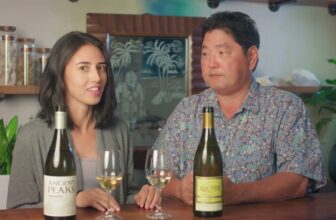
In this episode of Chuck Furuya Uncorked, Chuck and Kale are joined by Christine Gomez, a wine-curious guest who has attended wine dinners, tasted podcast recommendations, worked in hospitality, and wants to understand wine in a practical way.
Her questions are exactly the kind many normal wine drinkers have. How do you identify what you like? How do you explain your taste to someone at a restaurant or wine shop? How do you navigate a grocery store wine aisle? How do you move beyond buying by label or brand?
The episode becomes a useful beginner guide to thinking about wine more clearly.
What This Episode Is About
Christine explains that what she wants most is to learn how Chuck’s knowledge can relate to the way she actually drinks wine.
She is not trying to become a sommelier. She wants to choose wines she likes, identify why she likes them, buy similar bottles again, and share better recommendations with other people.
That is a very practical goal.
Many people taste a wine they enjoy but cannot explain why. Later, when they go to a store or restaurant, they have no language for finding something similar. They might remember the label, the color, or the price, but not the grape, region, style, producer, body, sweetness level, or food pairing logic.
This episode tries to solve that problem by giving beginners a simple framework.
The Problem With Grocery Store Wine Aisles
Christine admits that she often buys wine from convenient places such as grocery stores, Target, Safeway, or similar big-box retailers. She asks how someone can navigate those aisles when they are not shopping at a specialty wine shop.
Chuck’s answer is direct: big-box stores usually choose wine based on how often bottles sell.
If a wine scans enough times per week, it stays. If it does not sell enough, it gets replaced. That system rewards familiar brands, attractive labels, awards, common price points, and mass-market demand.
That does not mean every grocery store wine is bad. It just means the selection is shaped by volume.
If you want more distinctive, artisan, family-owned, country-style, or less commercial wines, you usually need to find a wine shop, restaurant, or buyer with real passion.
Build a Relationship With a Wine Person
A recurring lesson in the series appears again here: find someone you trust.
That could be a wine shop owner, a buyer, a restaurant wine director, a bartender, or a sommelier. The important thing is that they care about wine and are willing to learn your palate.
Chuck explains that different specialty stores often have different strengths. One shop may be better for Italian wines. Another may be better for southern French wines. Another may have better California selections. Another may carry more Spanish or Greek bottles.
So the answer is not “go to one perfect shop.”
The answer is to explore, ask questions, and build a relationship.
Once a wine buyer understands what you like, they can recommend similar wines, seasonal bottles, new arrivals, and good values that you might never find on your own.
Wine Shopping Is Part of the Journey
Kale points out that part of the wine journey is searching things out.
If you want better tomatoes, better fish, or better produce, you may not buy everything from one store. You go where the good stuff is. Wine can work the same way.
Chuck compares it to buying fresh fish. If he wants excellent swordfish or monchong, he goes to the place he trusts. He does not expect every supermarket to carry the same level of fish every day.
Wine is similar.
Some wines are seasonal. Some come in small quantities. Some disappear quickly. Some shops receive bottles that other stores never see.
This is why people who love wine often “stock up” when they find something good. They are not just buying a bottle. They are building a small stash of wines that fit their taste.
A Simple Framework for Understanding Wine
Chuck gives Christine a method for organizing wine in her mind.
Instead of trying to memorize thousands of random facts, he suggests thinking through a few categories:
What grape is used?
Where is it grown?
Who made it?
Is it Old World or New World in style?
Is it a country wine or a trophy wine?
What kind of food will it work with?
That framework gives beginners a way to talk about wine without needing advanced vocabulary.
It also helps you remember why you liked something.
Start With the Grape
The first category is the grape variety.
Chuck compares wine grapes to mangoes. Hayden mango, common mango, pirie mango, and Chinese mango are all mangoes, but they taste different. They have different weights, textures, aromas, and flavors.
Wine grapes work the same way.
Chardonnay, Sauvignon Blanc, Cabernet Sauvignon, Zinfandel, Pinot Noir, Carignan, Riesling, Malbec, and Grolleau are all different grapes. Each has its own character.
That does not mean grape variety explains everything. But it is a good starting point.
When you enjoy a wine, remember the grape if you can. That gives you the first clue for finding something similar later.
Where the Grape Is Grown Matters
The second category is place.
Chuck uses the example of hamachi. Hamachi from colder water can be fattier because the fish develops more fat to stay warm. Hamachi from warmer water can be leaner. Same fish, different environment, different result.
The same idea applies to wine.
Chardonnay from a cool climate will usually taste different from Chardonnay grown in a warm climate. Grapes grown in windy, rocky, cooler, marginal places will not behave the same as grapes grown in hot, sunny, fertile areas.
Place affects ripeness, acidity, body, texture, alcohol, freshness, and flavor.
That is why “I like Chardonnay” is only the beginning. The better question is:
What kind of Chardonnay, from where?
The Winemaker Matters Too
The third category is the producer or winemaker.
Chuck uses a food analogy. If you take one fish and give half to one chef and half to another chef, the final dishes may be completely different. The fish is the same, but the chef’s choices change the outcome.
Wine works the same way.
Two winemakers can take grapes from the same vineyard and make very different wines. One might aim for a clean, polished, commercial style. Another might make something rustic, natural, earthy, or old-school. One might use oak. Another might avoid it. One might pick earlier. Another might pick later.
So the wine is not only grape plus place.
It is also intention.
Knowing the producer helps you understand the style.
Old World vs New World
Chuck then explains another helpful category: Old World and New World.
New World wine regions include places like California, Oregon, Washington, Australia, New Zealand, Chile, Argentina, and South Africa. These wines are often labeled by grape variety: Chardonnay, Sauvignon Blanc, Pinot Noir, Cabernet Sauvignon, Malbec, and so on.
In many New World wines, especially more commercial styles, you may smell and taste more obvious fruit from the grape: apple, pear, pineapple, blackberry, plum, cherry, or blackcurrant.
Old World wine regions include France, Italy, Spain, Portugal, Germany, Austria, Greece, and others. Many of these wines are labeled by place rather than grape. Instead of simply saying “Pinot Noir,” the bottle may say Burgundy. Instead of “Sangiovese,” it may say Chianti.
Old World wines often express place more strongly. Instead of only fruit, you may notice earth, stones, herbs, funk, flowers, minerals, leather, or savory notes.
This is a general framework, not a strict rule. Some New World wines are Old World in style. Some Old World wines can be fruit-forward. But the distinction helps beginners describe what they like.
Country Wine vs Trophy Wine
Chuck also explains one of his favorite categories: country wine versus trophy wine.
Trophy wines are big, expensive, grand, opulent, powerful, cellar-worthy wines. They may need twenty, thirty, or forty years before they fully soften and develop. They are often highly rated, collectible, and serious.
Country wines are different.
Country wines are the wines people drink in cafés, bistros, and countryside restaurants. They are not meant to be worshiped. They are meant to be opened, poured, shared, and drunk with food.
They are about freshness, deliciousness, drinkability, and pure enjoyment.
One style is not better than the other. They simply serve different purposes.
For most everyday drinking, especially at casual meals, country-style wines may be more useful and more enjoyable.
Food Compatibility
The next major category is food compatibility.
Chuck gives a simple example using the same fish prepared three different ways.
One piece is cooked with salt, pepper, and butter.
One piece is served with marinara sauce.
One piece is glazed with teriyaki.
Even though the fish is the same, each preparation needs a different wine.
The butter version may work with Chardonnay because butter and Chardonnay can connect through richness and texture.
The marinara version needs something more Mediterranean, earthy, and higher in acidity because tomato sauce has acidity and earthiness.
The teriyaki version needs something lower in alcohol and possibly slightly sweet because teriyaki is sweet and salty.
That is one of the biggest beginner lessons:
You do not pair only with the protein.
You pair with the preparation.
Sweet and Salty Foods Need Care
Chuck explains that sweet, salty, spicy, and umami-rich foods can clash with certain wine elements.
They can make oak taste more bitter.
They can make alcohol feel hotter.
They can make bitterness more aggressive.
That is why a high-alcohol, oaky, tannic red wine may not work with teriyaki, spicy sauces, soy-based dishes, or sweet glazes.
In those cases, a lower-alcohol wine, sometimes with a little sweetness, may work better.
This is why Riesling keeps appearing in the series. It can handle salt, sweetness, spice, and complex sauces better than many dry, high-alcohol wines.
High Alcohol Is Not Always Obvious
Christine asks whether high alcohol always shows in the taste of a wine.
Chuck explains that it depends.
Some wines with 14% or 15% alcohol can feel balanced if they also have enough concentration, intensity, and structure to support the alcohol. In other wines, the alcohol sticks out and feels hot, harsh, or glaring.
That means alcohol is not just a number. It is part of balance.
A wine can be high in alcohol and still work if everything else is in proportion. But if the wine lacks enough fruit, acidity, texture, or depth, the alcohol can dominate.
For food pairing, this matters a lot. Alcohol may become more noticeable once the wine meets salt, spice, sweetness, or heat.
Tasting Grolleau From the Loire Valley
The main wine tasted in the episode is made from Grolleau, a grape variety from the Loire Valley in France.
Chuck explains that Grolleau is not seen very often in the United States, but it is getting more attention, especially in natural and rosé forms. The wine comes from the Nantes area, the part of the Loire closest to the Atlantic Ocean.
The wine is light, translucent, low in alcohol, earthy, funky, and barnyardy on the nose, yet very drinkable and refreshing on the palate.
Christine is surprised by how much she likes it. She has not had much experience with barnyard-style wines, but this one works for her because the taste is balanced and not off-putting.
That is another beginner lesson:
Do not reject an entire style because one bottle was strange.
You may dislike one funky wine and love another.
What Is Grolleau?
Grolleau is an indigenous Loire grape that can make light, fresh, earthy, low-alcohol red and rosé wines.
In this episode, Chuck prefers Grolleau in this area over some Pinot Noir grown there because Grolleau better fits the cool, marine-influenced environment.
The wine is light and buoyant rather than thick or heavy. It has freshness, minerality, and a slightly wild natural character.
This style is very different from a big commercial red wine. It is closer to a country-style, café wine: something to drink slightly chilled, with lunch, charcuterie, pizza, salad, or casual food.
Why Cool Climate Matters
Chuck explains why the wine feels so light and fresh.
Nantes is close to the Atlantic Ocean, which brings cool air and marine influence. The soils are less fertile, often sandy or influenced by marine material. These conditions slow down ripening.
That leads to an important concept: sugar ripeness versus physiological maturity.
Sugar ripeness is when grapes accumulate sugar. In hot, sunny, fertile conditions, sugar can rise quickly.
Physiological maturity is broader. It includes deeper flavor development, acidity, skins, seeds, texture, and overall completeness.
If sugar ripeness happens too quickly, grapes may become sweet before they develop complexity. If ripening is slower, grapes can hang longer and develop more complete flavor without becoming overly alcoholic.
That is why cooler, windier, rockier, more marginal sites can produce wines with freshness, complexity, and lower alcohol.
The Pineapple Analogy
Chuck uses a pineapple analogy from his time working in pineapple fields.
Pineapples grown higher up in cooler areas could ripen more slowly and develop more complexity than those grown lower down in hotter, sunnier areas. They were not just sugary sweet. They had more flavor dimension.
That is the idea he applies to grapes.
A grape can be sugary without being fully interesting.
Slow ripening can create more complete flavor.
For wine beginners, this is a useful way to understand why some light wines taste more complex than expected.
Light does not mean simple.
Low alcohol does not mean weak.
Freshness can carry depth.
Natural Wine and Funky Aromas
The Grolleau wine in the episode is described as organic, biodynamic, and naturally made. Chuck says it has funky aromas partly because of the natural approach and minimal sulfur use.
He compares it to cheese.
Many mass-market cheeses smell clean and mild. But some traditional French cheeses smell intense, raw, or even challenging. That does not mean they are bad. It means they are alive, characterful, and less industrial.
The wine works the same way.
It may smell funky, barnyardy, or earthy, but the palate can still be delicious, balanced, and refreshing.
This is an important distinction. A funky aroma does not automatically mean a wine is flawed. Sometimes it is part of the style. The question is whether the wine still tastes good, balanced, and alive.
How to Serve Light Funky Red Wine
Chuck recommends serving this Grolleau slightly chilled, around 55°F.
That kind of temperature helps emphasize the fruity perfume, freshness, and drinkability. It also keeps the wine from feeling too warm or loose.
He suggests around twelve minutes in the refrigerator before opening, depending on starting temperature.
This is a useful practical point:
Not all red wines should be served warm.
Light reds, country reds, low-alcohol reds, and some natural reds often taste better with a slight chill.
But this is not necessarily a wine for ice. Christine correctly senses that ice would dilute it too much. The wine is delicate, so chilling is useful, but watering it down would weaken the experience.
When to Drink a Wine Like This
Christine says this kind of wine feels like something she could drink in the afternoon or casually by itself. Chuck agrees that it is a country-style wine.
It is not a trophy bottle.
It is not a wine that demands a steakhouse setting, a special occasion, or deep concentration.
It is a wine for lunch, cooking, relaxing, or drinking slowly over a few hours. It has no harsh tannin, no heavy alcohol, no thick texture, and no aggressive finish.
This makes it especially useful for people who want wine as part of everyday enjoyment rather than a formal tasting exercise.
Food Pairings for Grolleau
Chuck suggests several foods that could work with this kind of wine:
Charcuterie.
Salami.
Light meats.
Lunch foods.
Pizza with vegetables or mild meat.
Chicken salad.
Simple salads with herbs.
Casual bistro dishes.
The wine’s earthy, light, slightly funky character makes it better with savory foods than with heavy cheese or big steak.
Because the wine has freshness and low weight, it can wash down food without overpowering it.
That is country wine at work.
Using Wine in Food to Improve Pairing
One of the most practical cooking tips in the episode is Chuck’s habit of adding a small amount of the wine to the dish itself.
For example, when making salad, he may use less vinegar and add a little of the wine. Vinegar can be difficult with wine because its acetic acid can make wine taste awkward or sour. Adding some of the wine into the dressing can make the salad more wine-friendly.
He does something similar with pasta sauces, fish, and other dishes.
The idea is simple:
If you want a dish to pair with a wine, let a little of that wine become part of the dish.
That creates a bridge.
Dry Vermouth on Steak
Chuck also shares a steak tip.
When grilling steak, he likes to sear it over high heat, turn it only once, keep the middle moist, and then add a little dry vermouth on top while the steak rests.
That adds aromatic wine-like flavor without making a heavy sauce.
He mentions that a good dry vermouth can also be used in cocktails afterward, which connects the wine and spirits side of the conversation.
This is another example of the episode’s broader theme: beverages and food are not separate worlds. Wine, vermouth, cocktails, cooking, and pairing all overlap.
Why Beverage Books Matter
Near the end, Chuck recommends books to Christine because of her bartending background.
He talks about a spirits book recommended by Dave Newman and also mentions Adventures on the Wine Route by Kermit Lynch.
The point is not simply to read for facts. These books help explain culture, family producers, place, farming, and the old-world approach to beverages.
That fits Christine’s closing thought: even if someone does not plan to become a wine professional, there is value in knowing what they like and being able to explain it.
Final Takeaway
This episode is one of the most useful beginner episodes because it turns wine into a practical language.
You do not need to memorize every region, grape, and producer. But if you can start identifying the grape, the place, the producer, the style, and the food compatibility, you become much better at choosing wine.
You also become better at explaining what you like.
That matters at wine shops, restaurants, bars, grocery stores, dinners, and casual conversations with friends.
The biggest lesson is simple:
Wine becomes easier when you stop buying only by label and start building vocabulary around your own enjoyment.
Know what you like.
Learn how to describe it.
Find people who can guide you.
Try bottles outside the obvious brands.
And remember that wine is not only about expertise. It is about drinking something you actually enjoy.
FAQ
Who is Christine Gomez?
Christine Gomez is the guest in this episode. She has worked in hospitality, has attended wine tastings and dinners, and joins the conversation as someone who wants to better understand how to choose and describe wines she enjoys.
What is the main idea of this episode?
The episode is about helping beginners understand how to choose wine, describe what they like, navigate wine stores, and think about grape variety, place, producer, style, and food pairing.
How should beginners choose wine?
Beginners can start by remembering the grape, where the wine is from, who made it, whether it feels Old World or New World, whether it is country-style or trophy-style, and what food it works with.
Why are grocery store wine aisles difficult?
Large retailers often choose wines based on how frequently they sell. That means the selection may focus on familiar brands, labels, awards, and volume rather than small producers or distinctive artisan wines.
How do you find better wine?
Find a wine shop, restaurant, or buyer you trust. Build a relationship, explain what you like, and ask for recommendations in similar styles.
What is the difference between Old World and New World wine?
New World wines are often labeled by grape and may show more obvious fruit. Old World wines are often labeled by place and may show more earth, minerality, herbs, or regional character.
What is a country wine?
A country wine is a casual, food-friendly, easy-drinking wine meant for the table. It is not a trophy bottle; it is meant for enjoyment now.
What is a trophy wine?
A trophy wine is usually more expensive, powerful, prestigious, and age-worthy. It may need years or decades in the cellar before it fully develops.
What is Grolleau?
Grolleau is a grape variety from France’s Loire Valley. It can make light, fresh, earthy red and rosé wines, often with low alcohol and a country-style feel.
Why can funky wine still taste good?
Some natural wines have earthy, barnyardy, or funky aromas, but the palate can still be balanced, fresh, and delicious. Funky aromas do not automatically mean the wine is bad.
Should red wine be chilled?
Some red wines, especially light, low-alcohol, country-style reds, taste better slightly chilled. In the episode, Chuck suggests serving the Grolleau around 55°F.
What foods pair with light funky red wine?
Charcuterie, salami, light meats, pizza, chicken salad, herb salads, and casual bistro-style foods can work well with this kind of wine.
Why add wine to food while cooking?
Adding a little of the same wine to a dish or dressing can help connect the food and wine. It can make the pairing feel more natural and seamless.
What is the biggest beginner lesson?
The biggest lesson is to learn enough vocabulary to explain what you enjoy. Once you can describe what you like, it becomes much easier to buy wine, order wine, and share wine with others.





This was a great read! I'm curious, how do I identify the right grape for my palate? Are there any tips for a beginner?
I've had good luck starting with sweeter wines like Riesling or Pinot Grigio. They tend to be more approachable for beginners!
Great question! A good starting point is to think about flavors you enjoy in other foods and drinks. If you like fruity flavors, try wines like Zinfandel or Moscato.
Navigating the grocery store wine aisle can be overwhelming. I've found that picking a bottle based on the region often helps. I once tried a Spanish Tempranillo based on a recommendation and it was fantastic!
That's a good strategy! I always look for regional wines too. They often offer great value and uniqueness.
Absolutely! Regional wines can offer a different perspective on grape varieties and styles. It's a great way to explore!
I always thought New World wines were fruitier than Old World. Is that a general rule? What’s your take on this?
Yes, generally speaking! New World wines tend to be more fruit-forward, while Old World tends to emphasize terroir. But there are exceptions!
That's correct! The styles can vary widely, but it's often a helpful guideline to start with.
I love how this episode emphasizes building a relationship with a wine shop. It really makes a difference!
I don't agree that grocery store wines are all inferior. I've found some excellent bottles at my local store that compete with wine shop selections.
I see your point, but the selection is usually more limited. Specialty shops tend to have more unique options.
You make a valid point! There are certainly good finds in grocery stores, especially if you know what to look for.